
Photographed animal encounters
Animals
Birds, mammals, amphibians, insects, and spiders from Appalachian waterlines, wooded banks, and forest floors.
A curated animal field guide
The animal and the place where it appeared.
Browse by habitat or search by common or scientific name. Know the color before the name? Browse the Color Guide →
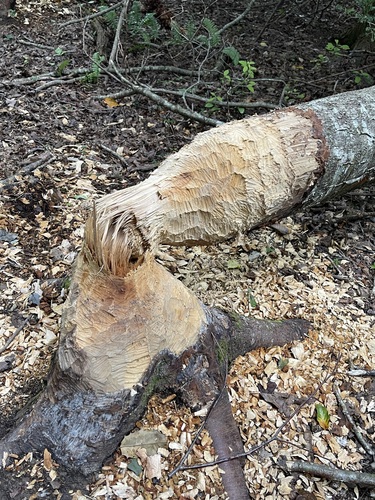
American Beaver Sign
Castor canadensisFresh cream-colored tooth marks circle a trunk until the wood narrows into a faceted point. Wider frames follow the work outward—from chips around the stump to the full tree laid across the wooded slope. Later in August, falling lake water exposed a lodge built outward from the bank, its woven gray branches continuing down the newly revealed lake edge toward the cove. September photographs return to a branch-built lodge beside green lake water, with a closer view of the tangled gray wood and its dark opening.
Research Grade gnawing record → · Research Grade lodge record → · September lodge observation →
See this entry in the Color Guide →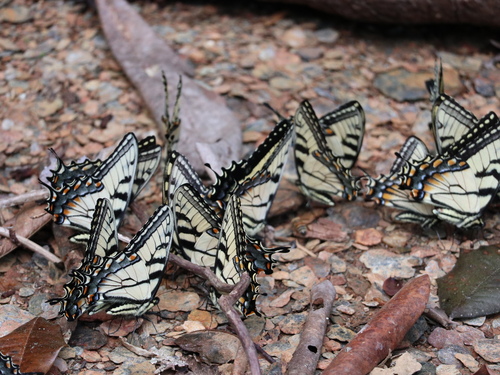
Appalachian Tiger Swallowtail
Papilio appalachiensisLemon-yellow wings repeat across the damp floor of a rock shelter, every butterfly crossed by bold black tiger stripes. Open triangles, folded profiles, and flashes of powder blue gather among wet stone, fallen leaves, and the dark sandstone ledge below the waterfall.
See this entry in the Color Guide →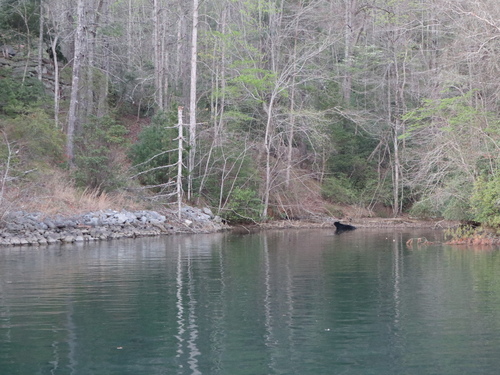
Eastern Black Bear
Ursus americanus americanusThe bear appears as a deep black form at the far edge of a quiet cove, standing and then moving along the narrow shoreline. Charcoal fur is framed by silver-gray bare trunks, evergreen rhododendron, gray riprap, and blue-green water carrying long vertical reflections from the mountain slope.
See this entry in the Color Guide →
Eastern Bobcat
Lynx rufus rufusTwo bobcats appear across the cove, small against the grassy bank and layered rock. The cropped view brings their forms closer; the wider photograph places them above the tangle of branches at the waterline. These are distant views from Laurel River Lake.
Eastern Box Turtle
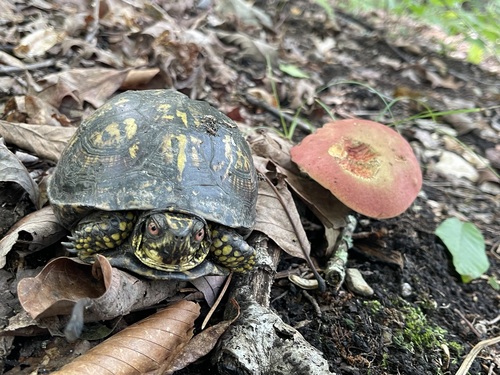
Terrapene carolina carolinaAn Eastern Box Turtle faces the camera beside the red-capped bolete it had been eating, its dark olive shell and yellow-speckled forelegs pressed into wet leaves on the wooded slope. Two other Laurel encounters place the same amber-and-olive pattern at a muddy cove edge and among shallow water and stone. Two September encounters add a close view of a face beneath the shell and another turtle whose yellow-and-dark shell pattern fills the space between crossed sticks and fallen leaves.
July observation → · August feeding observation → · August cove observation → · September 25 observation → · September 27 observation →
See this entry in the Color Guide →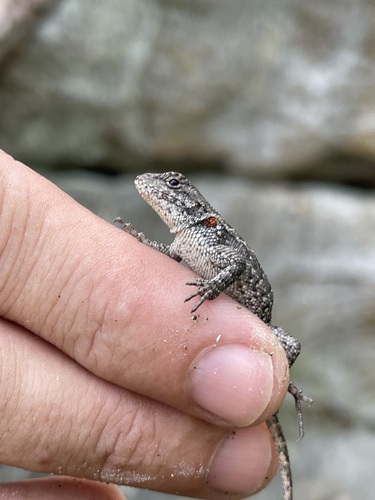
Eastern Fence Lizard
Sceloporus undulatusA tiny fence lizard braces on a fingertip, its long toes ending in needle-fine claws and one rust-red shoulder mark interrupting the gray-brown scales. Dark bands cross the body and tail; a cream-white, charcoal-speckled underside appears in the overhead view.
Eastern Newt
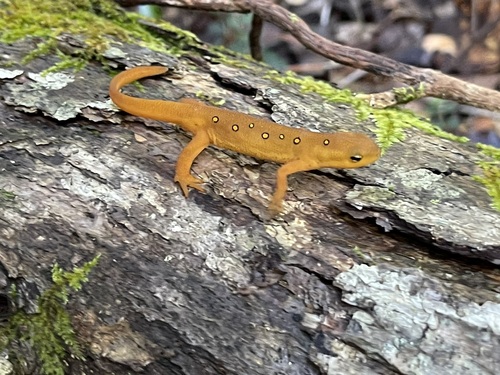
Notophthalmus viridescensAn orange eft crosses lichen-covered fallen wood, its black-ringed spots, narrow toes, and curved tail clear against the gray bark. Another October view places it beside a cream mushroom cap. The eft is the Eastern Newt’s terrestrial teenager—a juvenile stage spent on land before returning to water as an adult.
July observation 1 → · July observation 2 → · August observation → · October 13 observation →
See this entry in the Color Guide →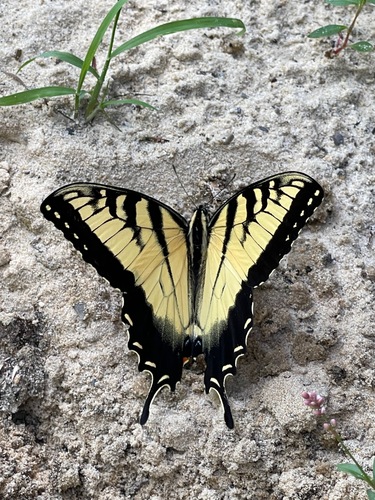
Eastern Tiger Swallowtail
Papilio glaucusLemon-yellow wings open into a broad, angular silhouette crossed by four velvety black stripes. Powder-blue crescents and two burnt-orange eyespots brighten the tailed hindwings, while sandy gray ground and a few grass blades keep the butterfly’s full span visible.
See this entry in the Color Guide →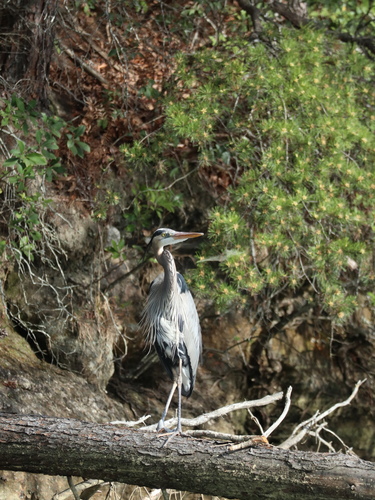
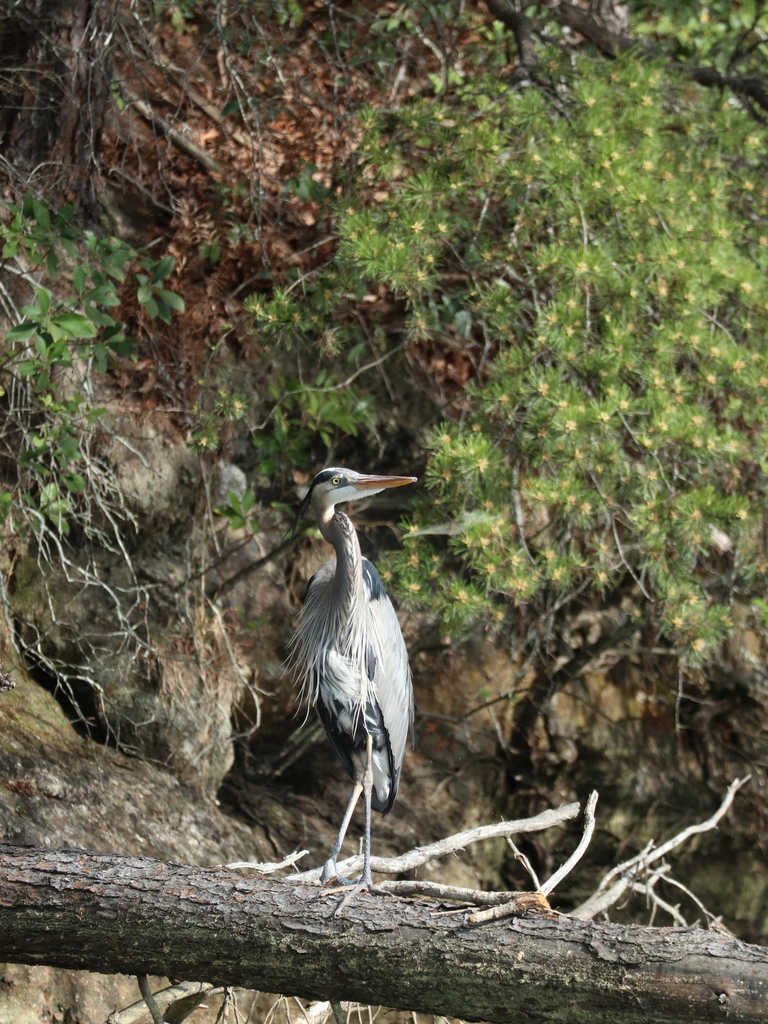
Great Blue Heron
Ardea herodiasBalanced on a fallen trunk at the waterline, the heron folds slate-blue wings beneath a silver-gray back and lifts its rust-streaked neck toward the wooded bank. Exposed roots, mossy rock, tawny leaves, and reflected water make the bird part of the shoreline rather than a figure set apart from it.
See this entry in the Color Guide →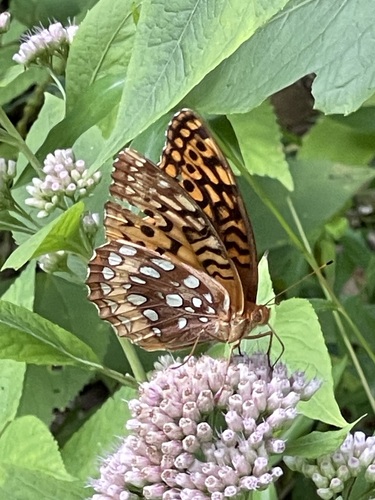
Great Spangled Fritillary
Argynnis cybeleWith its wings folded, the butterfly becomes a mosaic of warm brown, tawny orange, cream, and large pearl-silver windows. As it turns and opens, the upper wings flash a brighter stained-glass pattern of orange panes divided by black lines. The butterfly remains perched among dusty pink flower clusters and broad summer-green leaves.
See this entry in the Color Guide →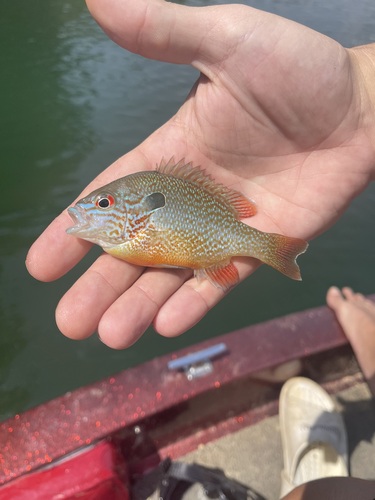
Longear Sunfish
Lepomis megalotisTurquoise lines curl across the cheek and gill cover, breaking into tiny blue flecks over olive-gold scales. The belly warms through yellow to orange, the eye glows red, and an open hand suspends the small fish above deep green water and the red edge of the boat.
May 2024 observation → · June 2026 observation →
See this entry in the Color Guide →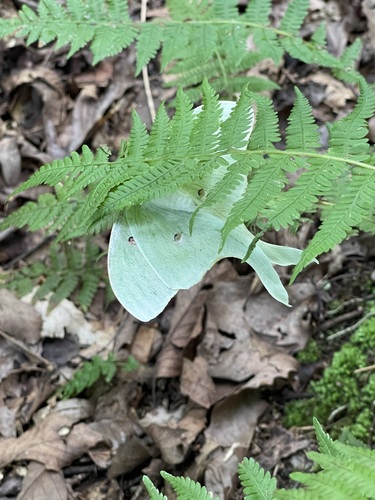
Luna Moth
Actias lunaA Luna Moth shelters from the rain by gripping the underside of a fern, its powdery blue-green wings pressed beneath the fronds and its long tails hanging into the leaf litter. Lavender eyespots and fine veins emerge in the closer views; from below, canopy light turns the wings translucent above Rachel’s upturned face.
See this entry in the Color Guide →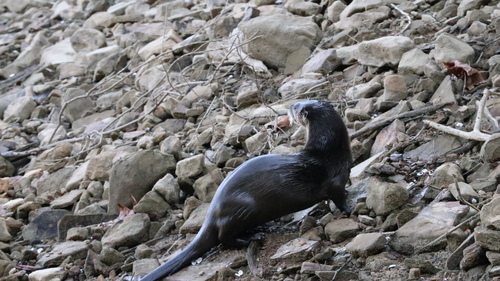
North American River Otter
Lontra canadensisAn otter stands on loose shoreline stones at Laurel River Lake, its dark body curving into a long tail. Another view catches it beside the wet rocks. Farther out, its head breaks the green water among standing tree trunks.
Pink-Striped Oakworm Moth
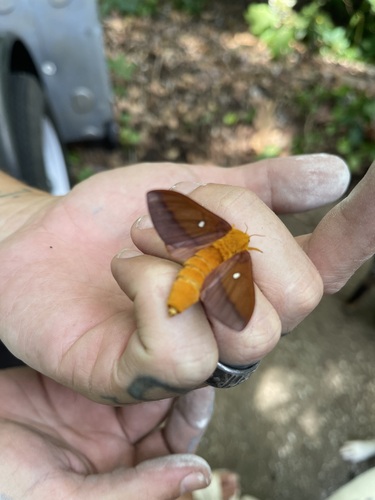
Anisota virginiensisChocolate-brown wings spread across a hand, crossed by muted rose bands and marked with one clean white spot on each side. The plump abdomen glows pumpkin orange beneath the dusky wings, with fingertips and a blurred woodland edge setting its scale.
See this entry in the Color Guide →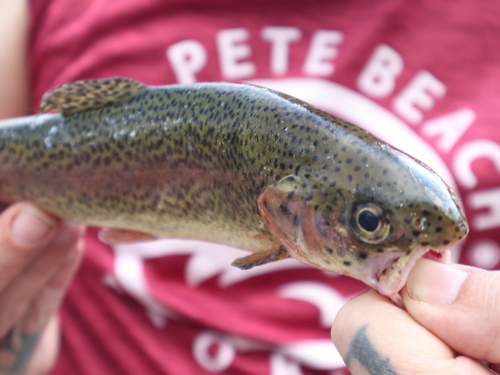
Rainbow Trout
Oncorhynchus mykissThe trout fills the frame with an olive back stippled in black, a rose-pink band along the flank, and a silver belly flashing beneath the fins. Its round eye, speckled face, and wet scales stay sharply visible against the saturated red shirt behind it.
Red-bellied Woodpecker
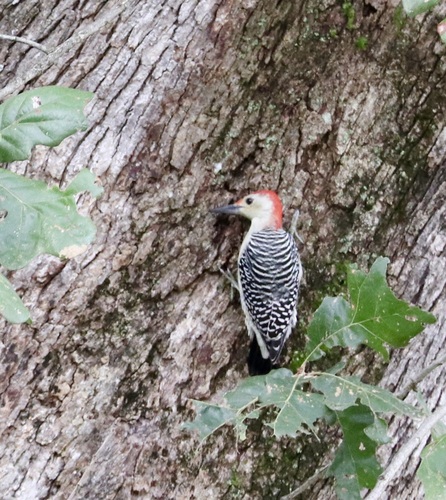
Melanerpes carolinusA red head and barred black-and-white back stand out against deeply ridged bark. The woodpecker clings beside a dark opening in the trunk; the wider view places the small bird among green leaves and branching wood.
Red-Eared Slider
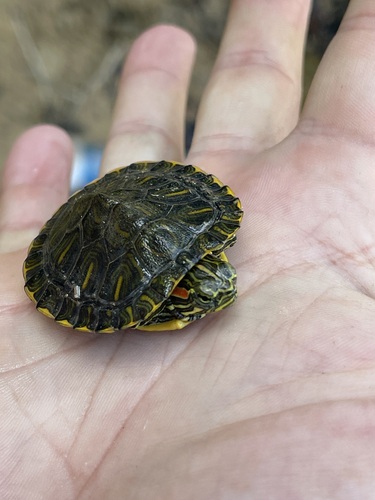
Trachemys scripta elegansCurled tightly on an open palm, the young turtle becomes a fist-sized spiral of deep olive shell, fine yellow lines, striped skin, and one vermilion mark behind the eye. Another view turns it over to reveal a luminous yellow-green underside patterned with dark rings and brushmarks.
See this entry in the Color Guide →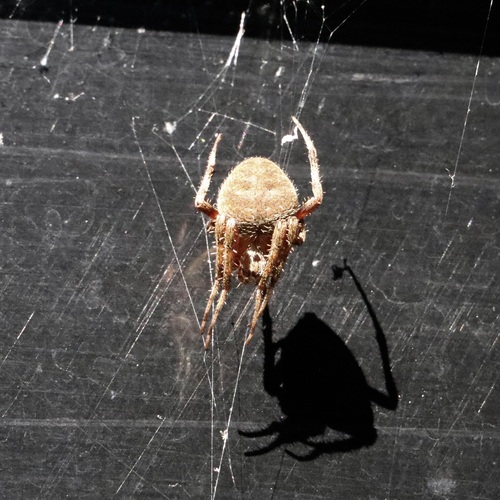
Spotted Orbweaver
Neoscona cruciferaA round tan abdomen hangs above long, banded legs in a web stretched across a dark surface. The light catches the fine silk and casts a sharp spider-shaped shadow beneath it. A wider view follows the web’s spokes and curved threads around the spider.
Striped Fishing Spider
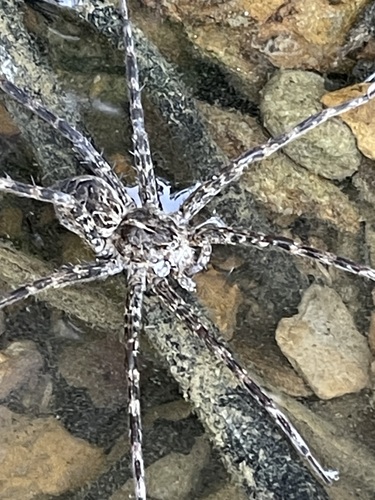
Dolomedes scriptusThe spider lies nearly flat across a submerged stone, its long legs banded in charcoal, silver, and brown until they echo the rippled gravel below. In close view, the body becomes a small drawing in white lines and smoky patches, with bright points of reflected light gathered around the eyes.
See this entry in the Color Guide →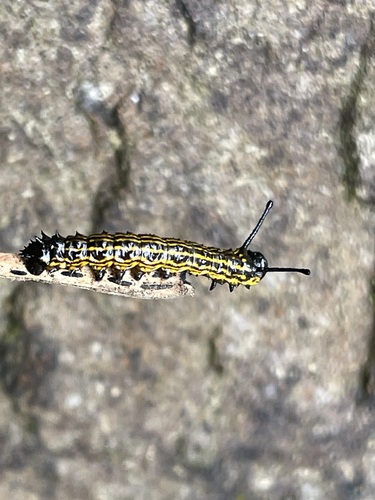
Yellow-striped Oakworm Moth
Anisota peigleriThis is the moth before wings: a black caterpillar bristling with spines and striped in narrow lines of yellow and white. Its body stretches along a thin twig above cream-gray stone, while the hand-held view makes its small scale clear.