

Freshwater Wildlife Art · Rachel Stepek
Freshwater Wildlife Art From the Waterline to the Woodland
Fish move below clear water. Turtles, herons, salamanders, and crawfish appear among flowers, stone, moss, and shaded banks. Appalachian woodland animals continue into the roots, fungi, leaves, and forest beside the water.
Canvas and paper giclées
Fish below clear water.
Branches, stone, changing light, and reflected color remain visible around the fish. Both works are available as ready-to-hang Canvas and archival paper giclées.
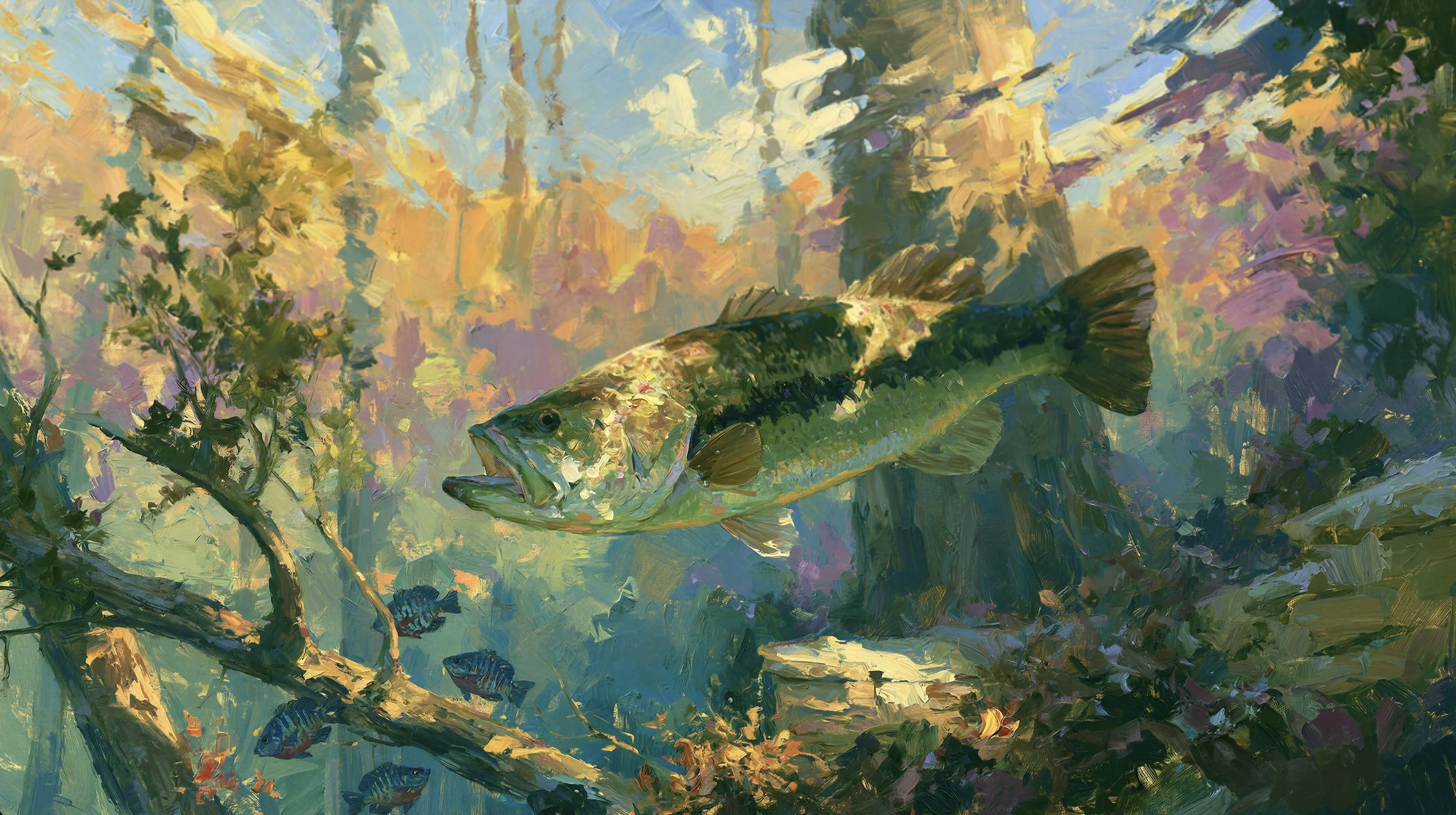
Largemouth Bass in Sunlit Water
Branches cross the clear water while reflected green and gold move around the fish.
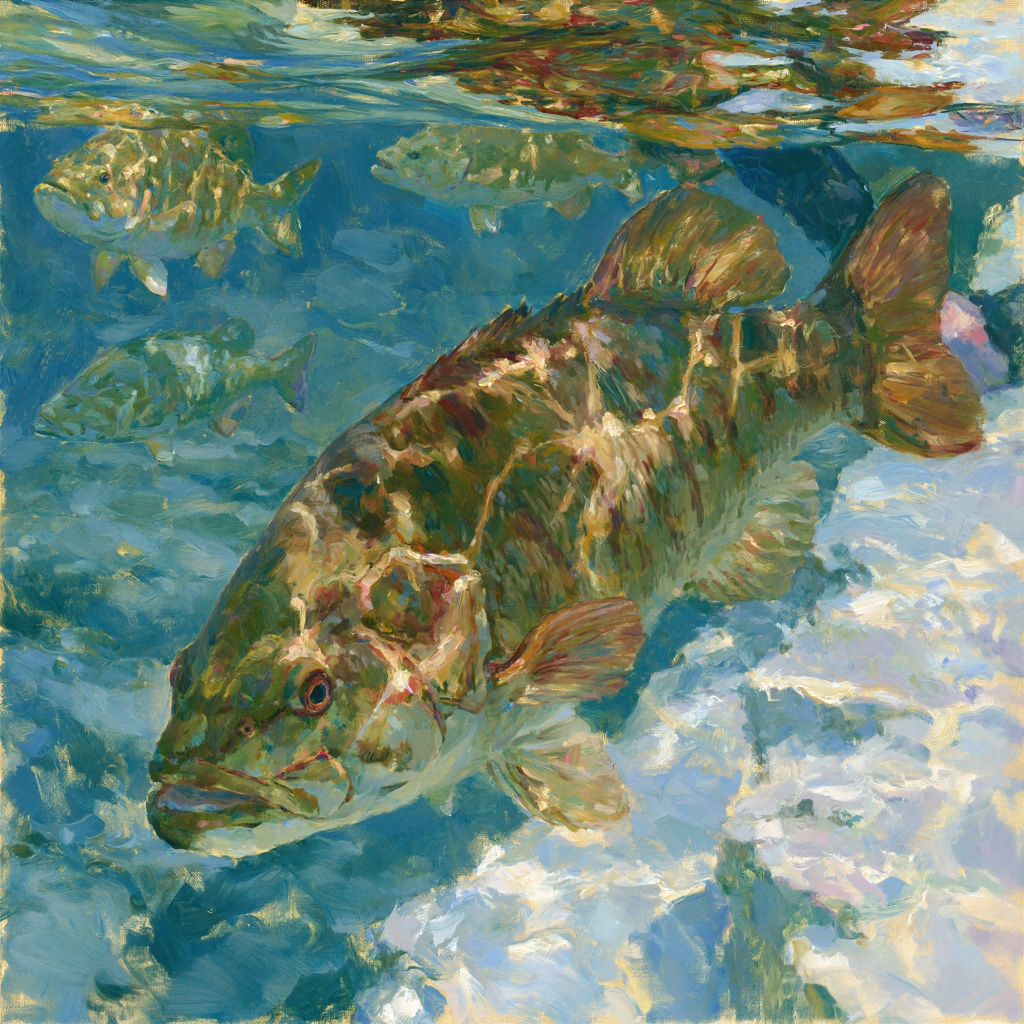
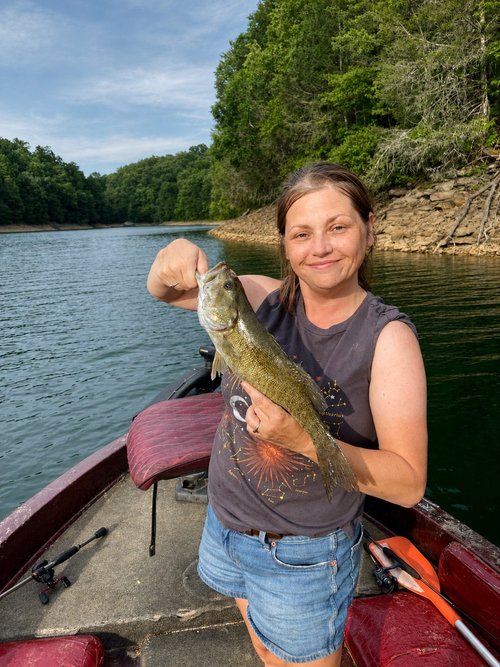
Time on the water has taught me where fish stay, how light moves below the surface, and what else is living along the bank.
Along the waterline
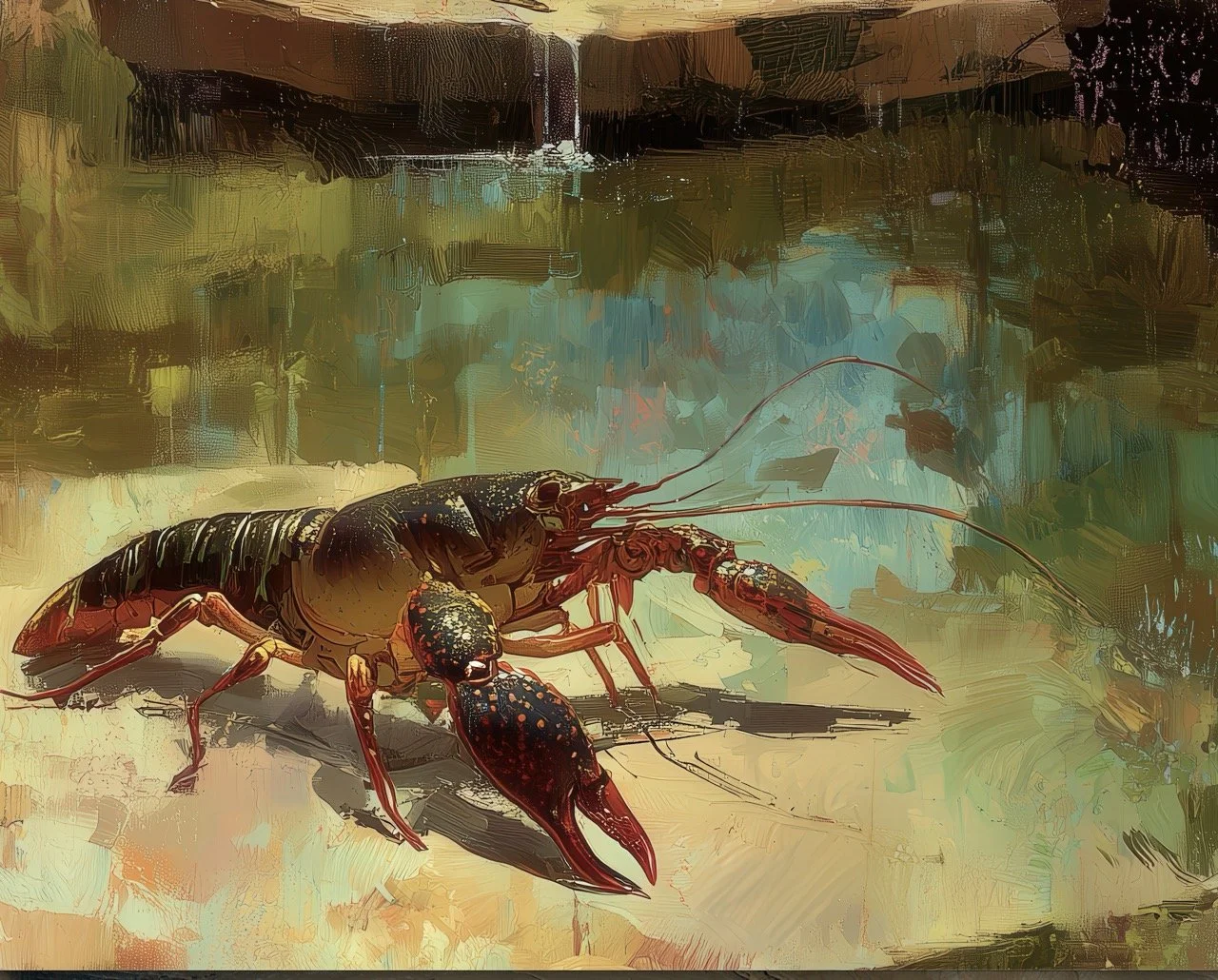
Turtle, heron, and crawfish at the bank.
Red azalea, spring-green water, copper shell, stone, and branch shadows show where each animal lives.
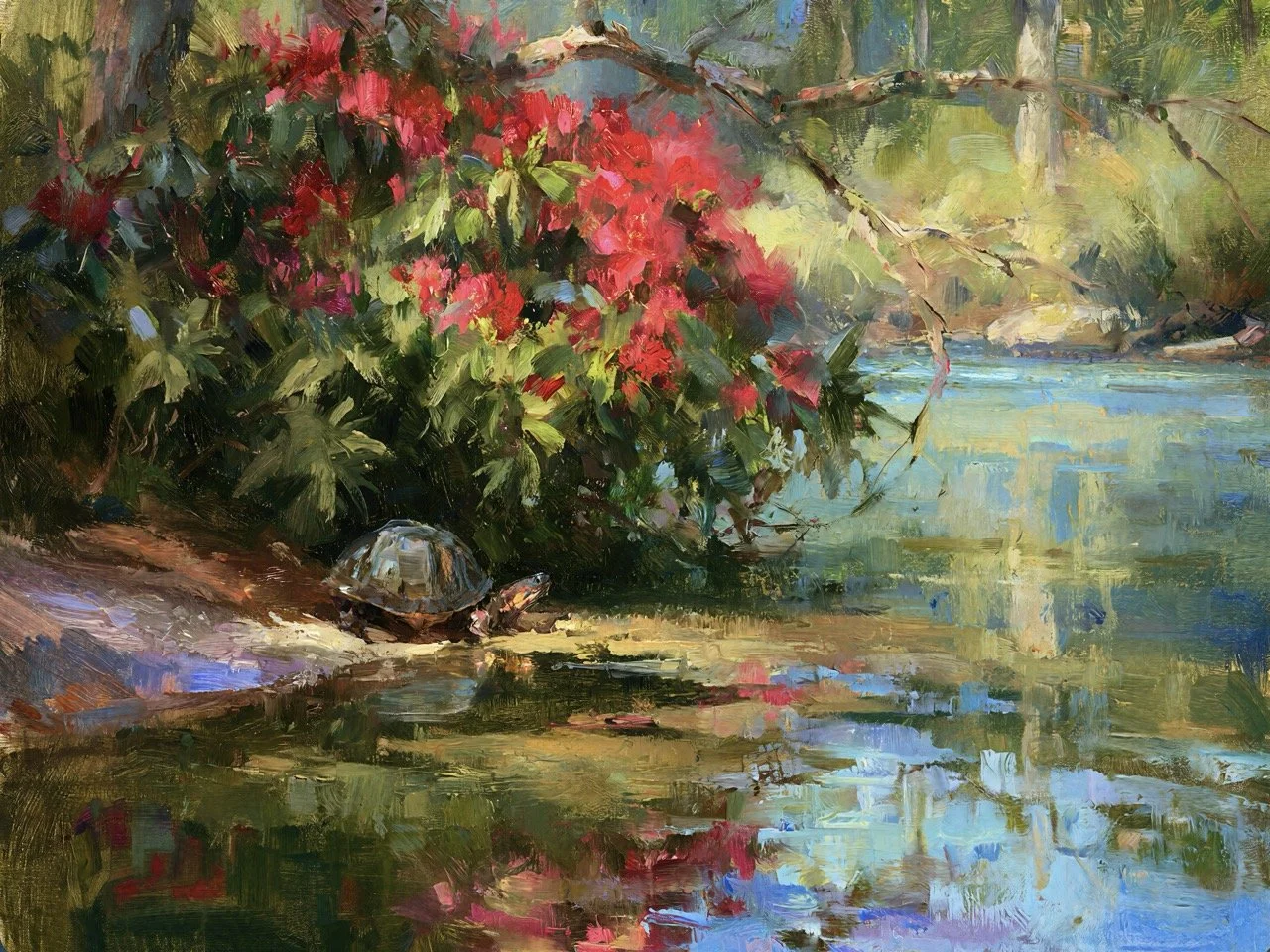

Cardinal Flowers and Turtle
Quiet blue shade, cardinal flowers, and a resting turtle.
Shop Canvas · Shop giclée from $39Salamanders in moss and shade
Moss Bank, Soft Underfoot and Green Bank in Blue Shade stay close to damp roots, cool banks, and water.
Shop Moss Bank Canvas · Shop Green Bank giclée · From $39Canvas or paper
Canvas arrives gallery-wrapped and ready to hang. Archival paper giclées arrive unframed and unmatted.
Shop wildlife Canvas · See paper giclées
Why these places look specific
I work from days on the water and close observation.
Fishing, photographs, field notes, and returning to the same banks help me decide where the animals appear, how the water moves, and what grows around them.
Lakehouse Goods
Woodland animals among roots, fungi, leaves, and stone.
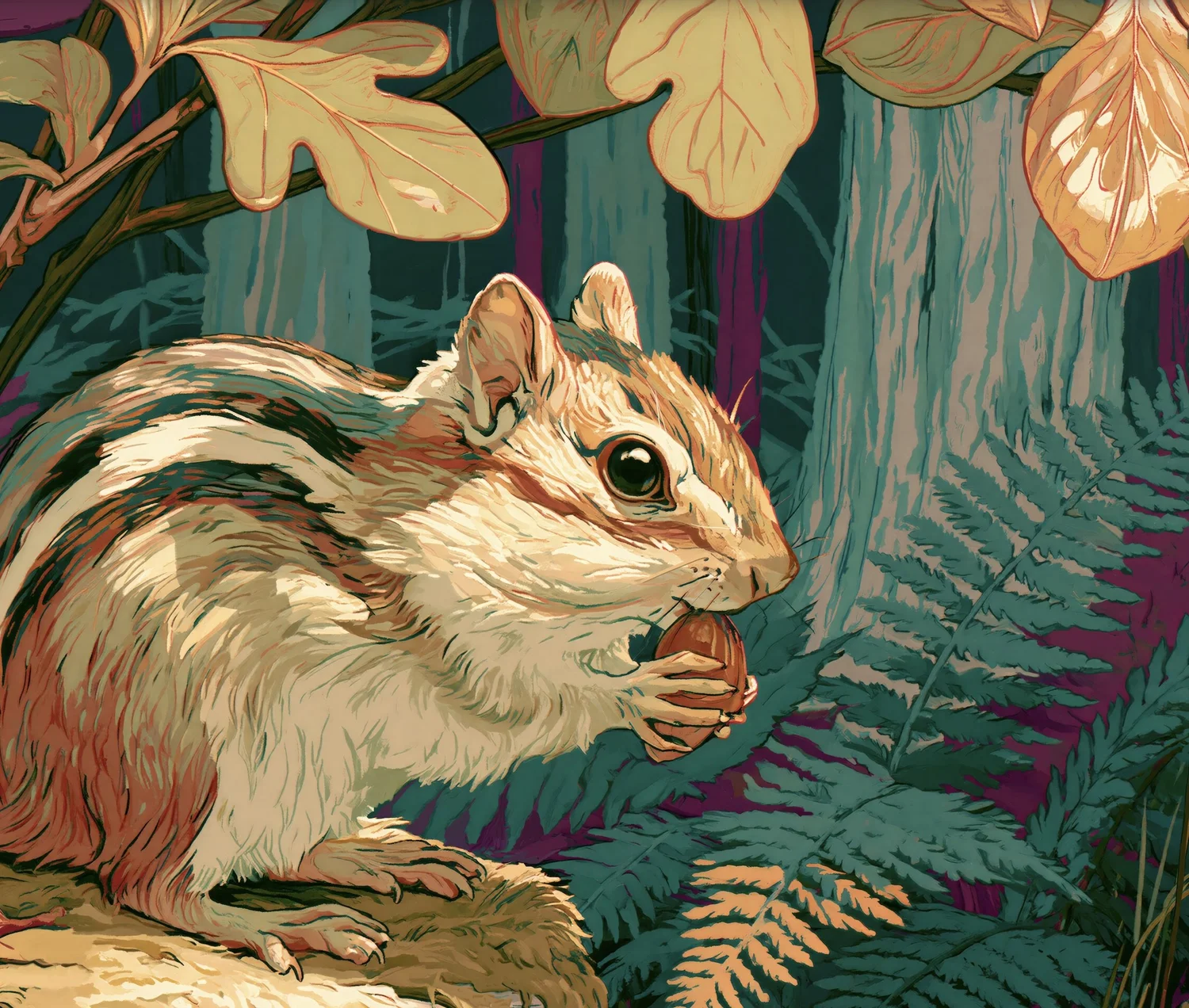
Bears, wrens, chipmunks, owls, opossums, rabbits, foxes, and wildcats live in the Appalachian woodland beside the water. Each artwork is available as a Lakehouse Goods Art Print, wall tapestry, or Art Puzzle.

 Black Bear Forest
 Carolina Wren in the Beech Roots
 Chipmunk Under the Sassafras
 Eastern Screech Owl
 Opossum on the Mossy Log
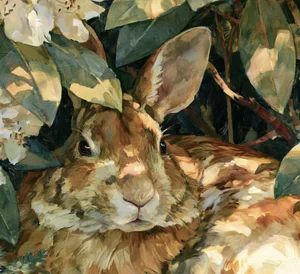 Rabbit in the Rhododendron
 Red Fox in the Muscadine Vines
 Wildcat Above the Gorge
Know what arrives
Artwork for your wall, your frame, or your puzzle table.
Canvas arrives ready to hang. Paper giclées and Lakehouse Goods Art Prints arrive unframed. Wall tapestries have clean hemmed edges, and Art Puzzles come in multiple piece counts. U.S. shipping is included.
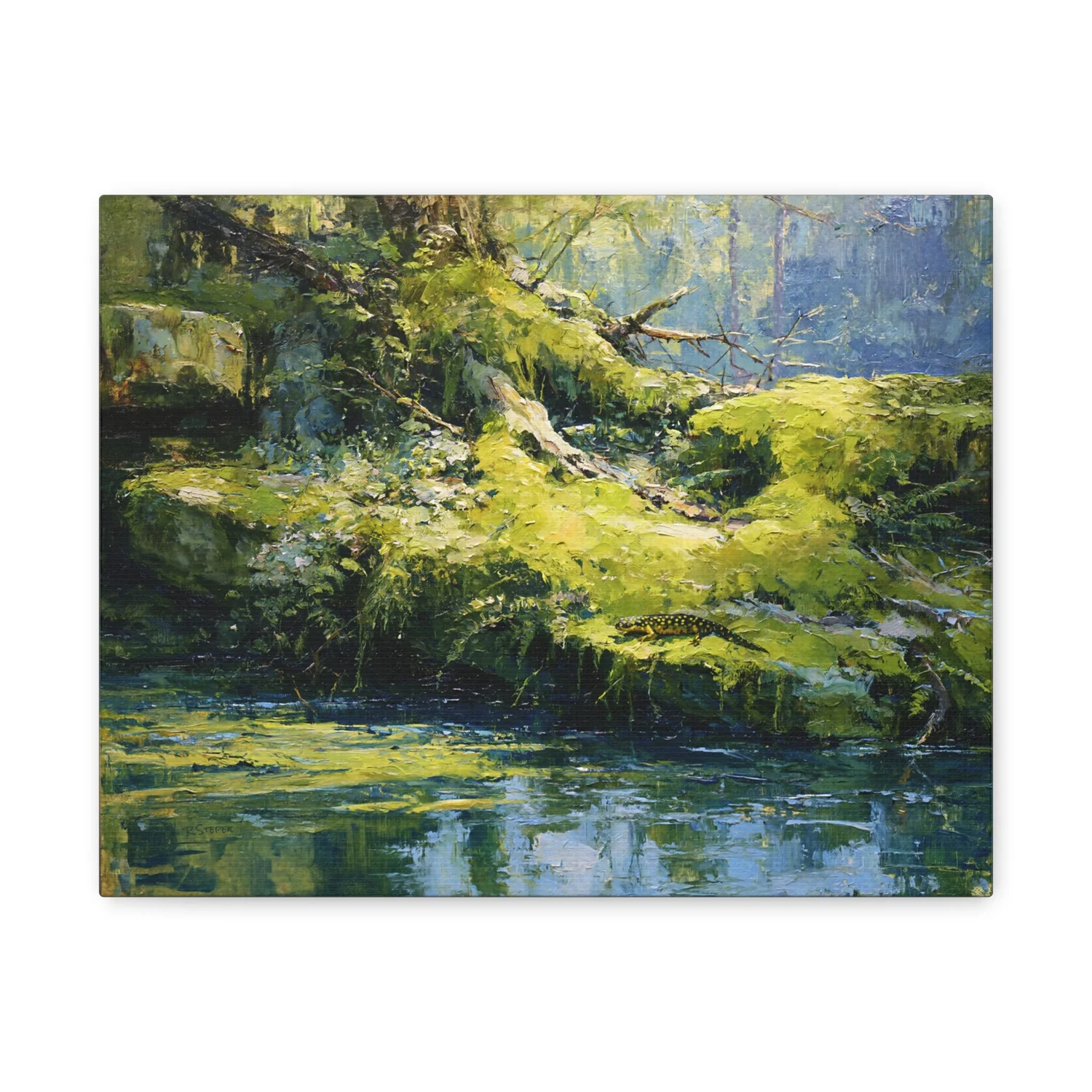
Canvas Collection
Water- and bank-led artwork on gallery-wrapped Canvas with hanging hardware included. Eligible works are also available as archival paper giclées for your own frame.

Lakehouse Goods
Appalachian woodland artwork on archival matte Art Prints, clean-hemmed wall tapestries, and Art Puzzles in multiple piece counts.
See it at home
Make room for something wild.
See Canvas and wall tapestries shown at room scale. Open any image for a closer look, then shop the exact piece beneath it.
Product details
What arrives, how it hangs, and how to choose the size
How do the Canvas Collection and Lakehouse Goods differ?
The Canvas Collection includes water-, bank-, and place-led artwork on ready-to-hang gallery-wrapped Canvas; selected works are also available as paper giclées. Lakehouse Goods includes Appalachian woodland artwork on archival matte Art Prints, wall tapestries, and Art Puzzles.
Which wildlife artworks are available as paper giclées?
Many Canvas Collection wildlife works have an exact paper giclée product, including the bass, turtle, heron, crawfish, shaded-bank, and woodpecker works linked on this page. See the Wildlife Giclée Art Prints page for the current paper selection.
How is a Lakehouse Goods Art Print different from a paper giclée?
They belong to different artwork collections and use different paper products. Goods Art Prints use smooth 230 gsm archival matte paper and begin at $19. Canvas Collection giclées use smooth matte Hahnemühle Bamboo 290 paper with archival inks and begin at $39. Both arrive unframed.
What arrives ready to hang?
Gallery-wrapped Canvas arrives ready to hang. Paper giclées and Goods Art Prints arrive unframed. Wall tapestries have clean hemmed edges, but hanging rods, hooks, and other mounting hardware are not included.
How do I find the right size?
Use the Wall Art Size Finder for recommended sizes, exact prices, and direct shopping links based on your room and available wall space. The room images above show mood and relative scale; they are not measurements of your wall.
Are the works based on real places and observations?
My fishing days, photographs, field notes, and close observation inform the work. Great Blue Heron on Lake Keowee names the exact place behind that piece; in other artworks, I bring together habitat details I have observed along freshwater banks and in Appalachian woods.
