
Freshwater Wildlife Art for People Who Actually Notice the Water
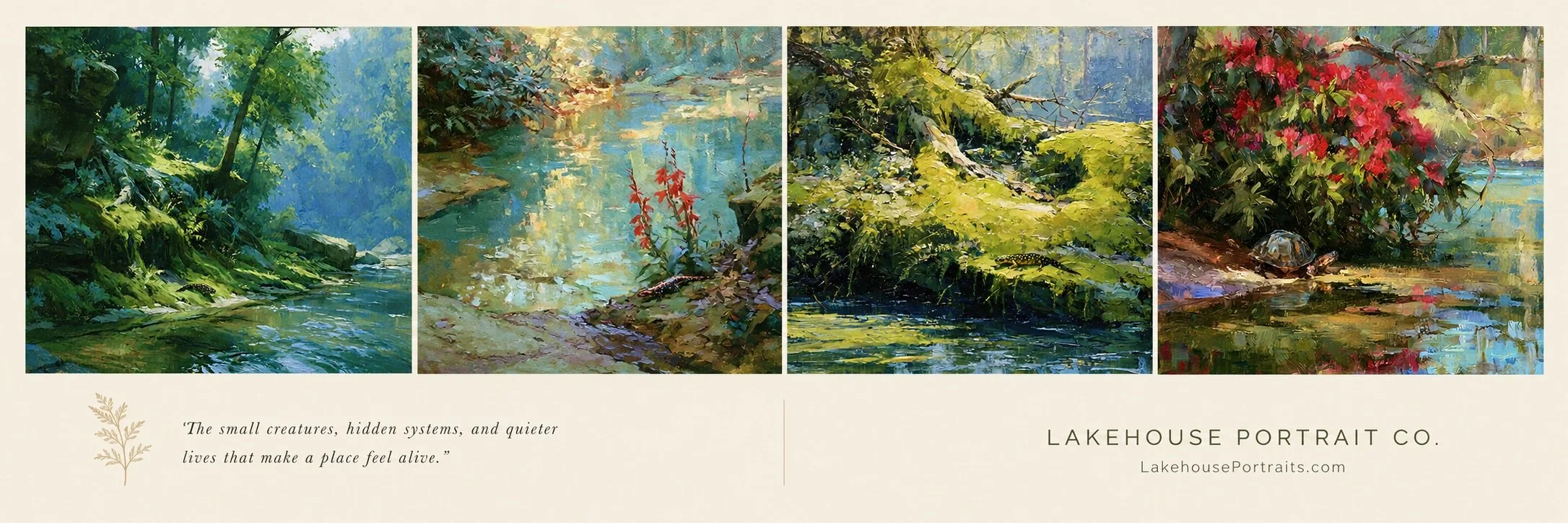
I am drawn to the small creatures.
Newts, frogs, turtles, salamanders, crawdads, minnows, little fish flashing near the rocks. The things Nathan catches when we cool off in coves. The things you only notice if you have been sitting still long enough, or looking down instead of only out across the water.
I love the big view too. Of course I do. I love the house from the lake, the curve of the shoreline, the water opening up in front of the boat.
But the small things are where a place starts to feel alive to me.
The life within the wide lake view
When people think of lake art, they often think of the wide scene first. A dock, a house, a sunset, a boat, maybe a dramatic reflection.
Those wide views are beautiful. A lake also includes what lives under the rocks around your feet. It is the spring coming out of the ground. It is the bank that faces one direction and grows one kind of plant, then another bank across the cove that gets different sun and feels completely different.
I spend enough time near the water to try to notice those things.
Where the springs come out. What is living under the rocks surrounding them. Which plants show up in one spot and not another. How the flora changes depending on which direction the bank faces and how much sun it gets.
That kind of attention changes how I experience the lake.
Freshwater wildlife art begins with habitat
I want my animal art to show where the animal lives and what surrounds it.
A frog, turtle, or crawdad tells you something about the place. Even a crawdad moving backward through the shallows belongs to the water, rocks, bank, season, and small systems that make the lake what it is.
When I paint freshwater wildlife, I paint the animal with the water, plants, stone, light, and weather that make up its world.
That is what keeps it from feeling kitschy to me. It needs observation. It needs atmosphere. It needs a little reverence without becoming overly serious.
Why freshwater subjects matter to me
Freshwater wildlife soothes my nervous system.
I don't have a plainer way of saying it. Paying attention to those small creatures brings me back into my body. It slows the world down. It gives my mind somewhere good to go.
There is something grounding about noticing a turtle sunning itself, a frog tucked into green, a salamander under a damp rock, or a crawdad in the clear shallows. These small subjects feel deeply alive. They remind me that the lake has its own world beyond our human memories.
I think people who love nature understand that immediately.
For nature lovers, fishermen, kayakers, hikers, and explorers
This kind of art is for nature lovers, fishermen, kayakers, hikers, explorers, and adventurers. It is for people who like to know what is living in the water. People who turn over rocks carefully. People who notice birds, plants, water levels, changing banks, and the places where the lake feels especially alive.
It is also for people who may not have the language for conservation, but care about it anyway because they love the place.
If you love the water, you usually love the life around it too.
Where freshwater wildlife art belongs
I think wildlife art can work almost anywhere. Smaller wildlife pieces fit naturally in bathrooms, bedrooms, offices, nooks, and hallways. Larger pieces can carry the subject across a living room, lake room, porch, or den.
In a kitchen, I tend to like edible wildlife best: fish, crawdads, anything that connects naturally to food, water, and gathering.
But really, the right piece belongs wherever you want a reminder of the life along and beneath the water.
You can browse the freshwater wildlife canvas collection or look through the fine art prints for pieces that show the smaller lives around the water.
--Rachel
