
Lakehouse Portrait Co. / Appalachian Botanicals
Appalachian Botanicals
Native Appalachian plants I found along lakes, banks, creeks, coves, and forest edges—and the water, stone, light, and surrounding growth I remember with them.
The flowers came first. The habitats stayed with me.
A collection of plants I stopped for
I remember each plant with the place around it.
I found each one by stopping the boat, walking a bankline, or following a creek because something made me want to look closer.
Cumberland Azalea above sandstone and green water. Great Laurel making shade over a clear creek. Umbrella Magnolia leaves catching rain light. Butterfly Milkweed feeding fritillaries along a sunny edge.


What I found next
Finding the plant is usually the beginning.
I photograph what made me stop, figure out what I am looking at, and keep following whatever it leads to. In the Color Guide, I start with the color. In Field Notes, I tell the story of the encounter. In Community Science, I show how Nathan and I document and identify what we find.
The color that made me stop
Appalachian Color Guide
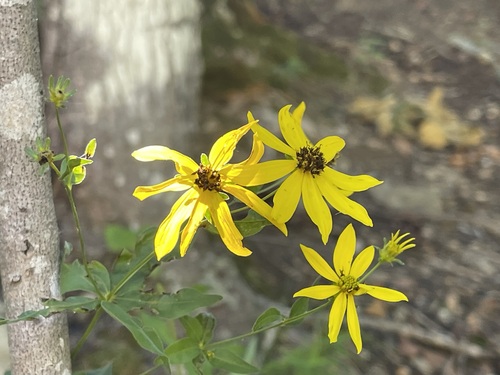
The color is what made me stop. Greater Tickseed opened bright yellow beside dark reflected water. Then I started looking at the flower, the leaves, the season, and the cove around it.
Appalachian Field Notes
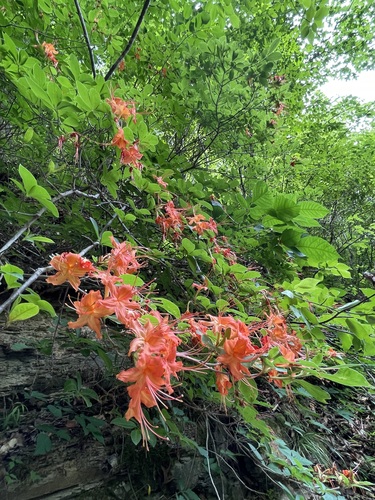
Read what happened after I found the Cumberland Azaleas: the photographs, what I learned, and the memories people shared about places where they had seen them years ago.
Community Science Journal
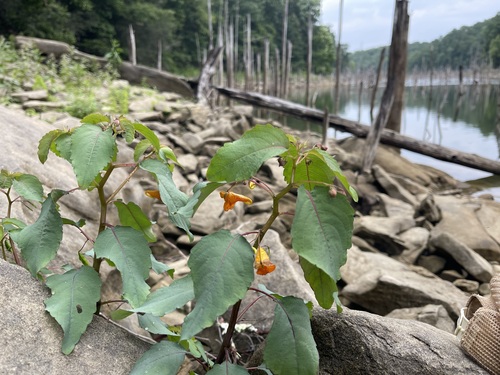
Nathan and I photograph what we find, add the observations to iNaturalist, and see what other people can help us identify.
What happens when I find one
Curiosity comes first.
Each piece started with something I noticed from the water. I stopped what I was doing and went to see it more closely.
Sometimes that means pulling the boat toward a shoreline. Sometimes it means climbing a steep bank to get photographs. Sometimes it means coming home and spending hours trying to understand what I found.
When people started telling me about places where they remembered seeing Cumberland Azaleas decades ago, I got even more interested. I started looking at the sandstone beneath them, their pollinators, why they were growing there, and the memories other people carried.
Plants in place
Once I know the plant's name, I start noticing the rest.
I look at what kind of rock it is growing over, how wet the ground is, what else is blooming, and which insects are using it.
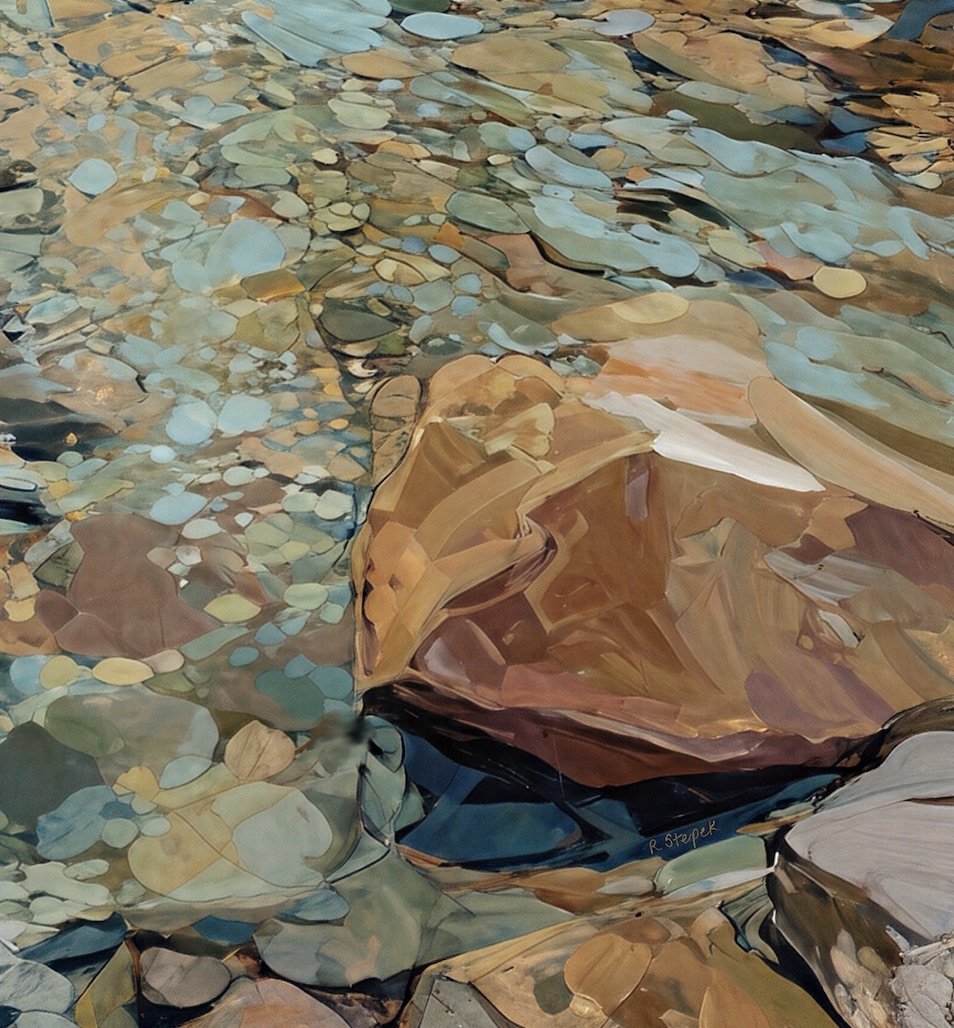
In the artwork, the plants stay in those Appalachian habitats: along creeks, on sandstone banks and ridges, beneath forest canopies, and beside the pollinators gathering around them.


01 / Sandstone bankline
Cumberland Azalea on Purple Sandstone
Cumberland Azalea, Rhododendron cumberlandense
They are amazing. I was fascinated before I understood how specific this plant was. The more I learned, the more fascinated I became.
Bright orange azalea blooms meet purple sandstone and green lake water here. The artwork grew from what happened after that first encounter: research, conversations, and people remembering places where they had seen Cumberland Azaleas decades ago.
Habitat noteCumberland Azalea is a Southern Appalachian endemic. Here it belongs to steep rock, reflected water, and the kind of bank that makes you stop and look up.
02 / Clear creek shade
Great Laurel Over Clear Creek
Great Laurel, Rhododendron maximum
We always called them rhododendrons. I am amazed by the native white blooms, but the real pull is the place around them: mosses and ferns, dark creek edges, water half hidden under evergreen branches.
Great Laurel can make a creek feel secret even when you are standing right beside it. The creek gets darker and more hidden under the branches. I love that as much as the white flowers.
Habitat noteGreat Laurel often forms dense evergreen cover along creeks. White blooms appear above moss, ferns, filtered light, and water hidden beneath the branches.



03 / Shelter under leaves
Beneath Ancient Leaves
Umbrella Magnolia, Magnolia tripetala
Umbrella Magnolias are magical to me and always have been. Nathan and I have waited out the rain under them, and that memory is really the center of the artwork.
Waiting under one feels different from waiting under a porch or roof. It is wet, green, temporary, and alive.
They rise as straight sticks with no leaves, then build a massive canopy out of gigantic leaves. In the artwork, rain light and ferns fill the cove beneath them.
Habitat noteUmbrella Magnolia has some of the largest leaves of any native eastern tree. They are broad enough that Nathan and I have waited out the rain beneath them.
04 / Pollinator gathering place
Where the Fritillaries Gather
Butterfly Milkweed, Asclepias tuberosa, with Great Spangled Fritillaries
Fritillaries gather where Butterfly Milkweed blooms. I wanted them doing what they would actually be doing: feeding among the flowers.
I kept the rest of that sunny summer edge around them: grasses, black-eyed Susans, rocks, and blue-green reflected water. It is the brightest artwork in the group.
Habitat noteButterfly Milkweed gives native pollinators a summer food source across Appalachia. Fritillaries are among the butterflies that visit its orange blooms.


Water is doing the work
Water keeps showing up with the plants.
Water changes the color of everything around it. It cools the white Great Laurel blooms, turns green beneath Cumberland Azalea, moves as blue-green light through milkweed and grasses, and filters as rain through Umbrella Magnolia leaves.
It shows up differently in every artwork: clear creek light, emerald lake reflection, rain beneath a canopy, and the sunny edge of the water.

Matte canvas prints
Four native Appalachian botanical prints.
Each print is made on matte canvas with finished wrapped sides. The available sizes preserve as much of the original composition as possible.
Cumberland Azalea on Purple Sandstone
Tall Cumberland Azalea canvas print, 10" x 20" through 24" x 48".
Shop $59-$259Great Laurel Over Clear Creek
Native rhododendron creek canvas print, 8" x 10" through 24" x 30".
Shop $49-$189Beneath Ancient Leaves
Umbrella Magnolia botanical canvas print, 8" x 10" through 24" x 32".
Shop $49-$199Where the Fritillaries Gather
Butterfly Milkweed and fritillary canvas print, 8" x 10" through 24" x 30".
Shop $49-$189Prefer paper? Each Appalachian Botanicals painting is also available as an archival paper giclée. Shop botanical paper giclées.
Appalachian plants throughout Lakehouse Goods
Appalachian plants grow throughout Lakehouse Goods.
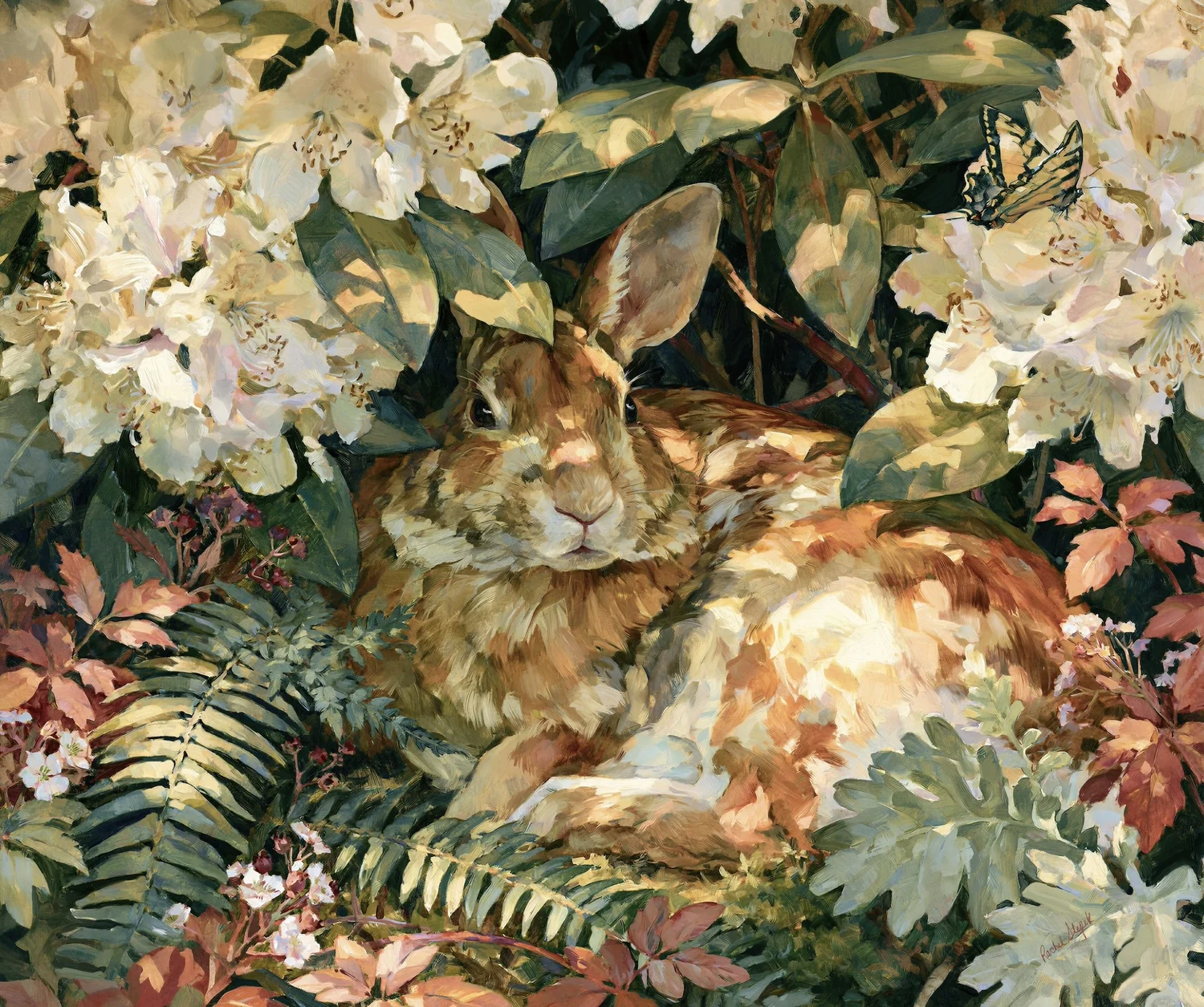
Rhododendron grows around the rabbit. Sassafras shades the chipmunk. Muscadine vines surround the fox. Beech roots rise behind the Carolina Wren. Rabbit in the Rhododendron, Chipmunk Under the Sassafras, Red Fox in the Muscadine Vines, and Carolina Wren in the Beech Roots are available as archival matte Art Prints, wall tapestries, and Art Puzzles.
What stayed with me
Native plants, remembered in place.
These four stayed with me after I got home: orange azalea on sandstone, white rhododendron over a creek, magnolia leaves broad enough to wait beneath in rain, and milkweed where fritillaries gathered. That is what I wanted to keep in this collection: each plant together with the water, stone, shade, and surrounding growth that made me stop.