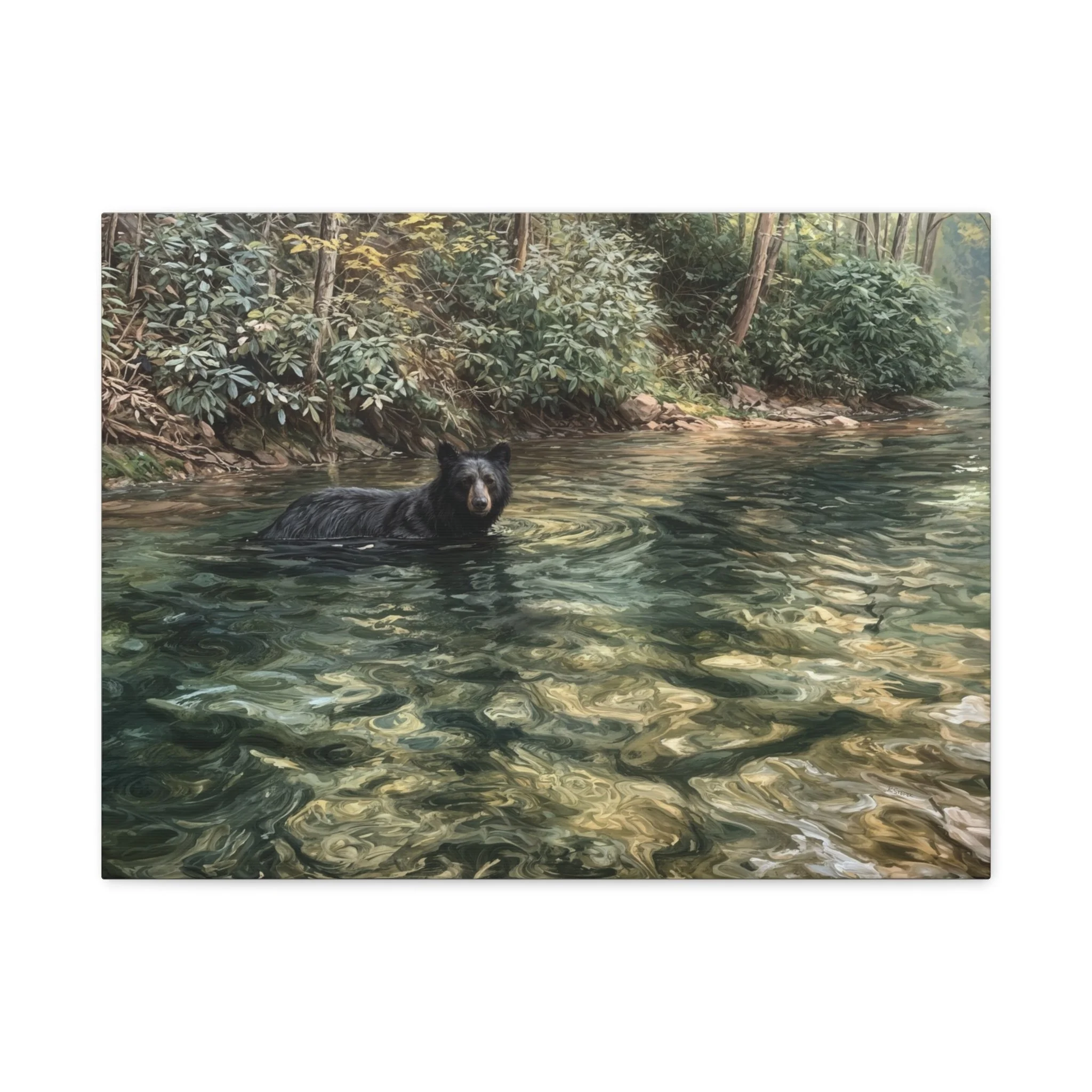
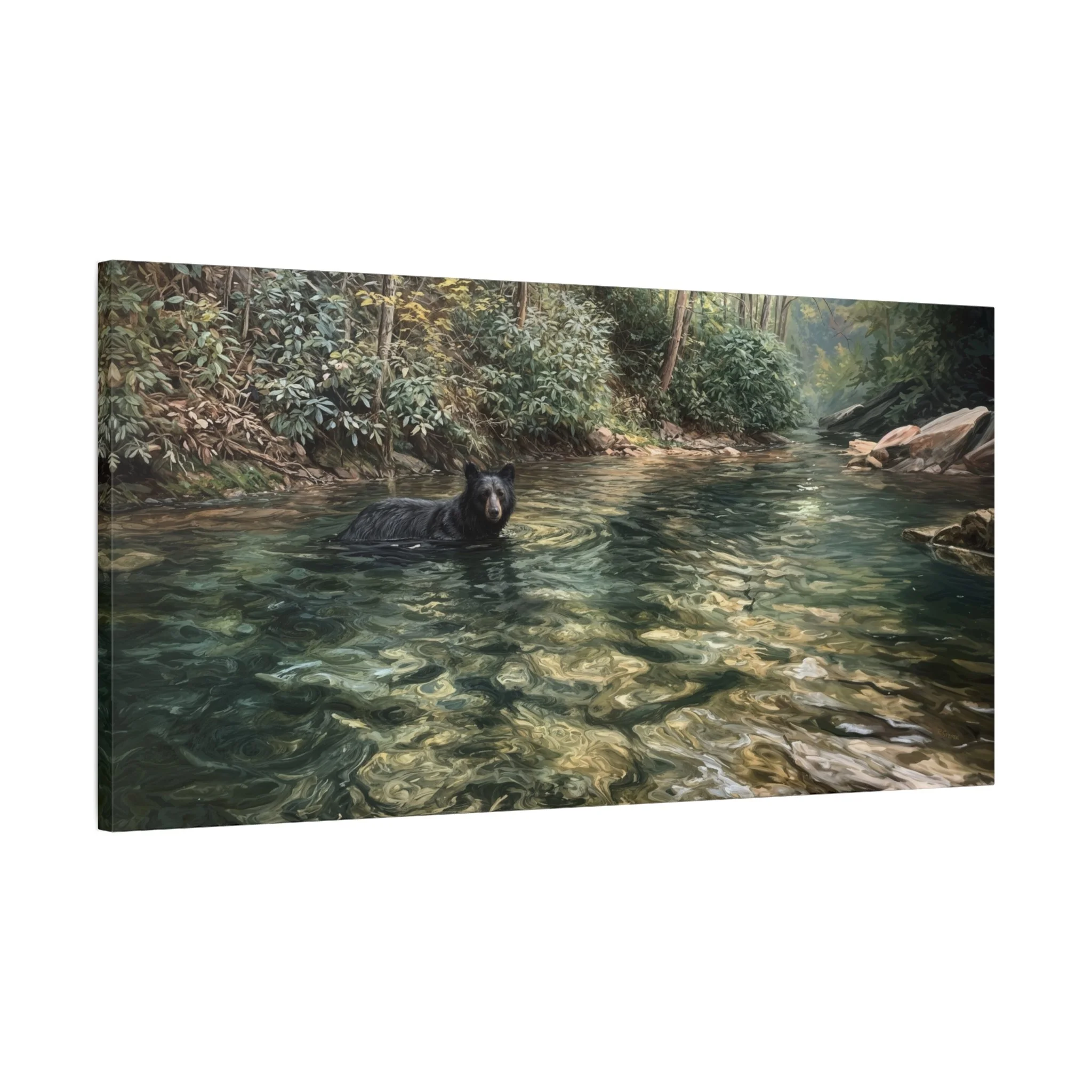
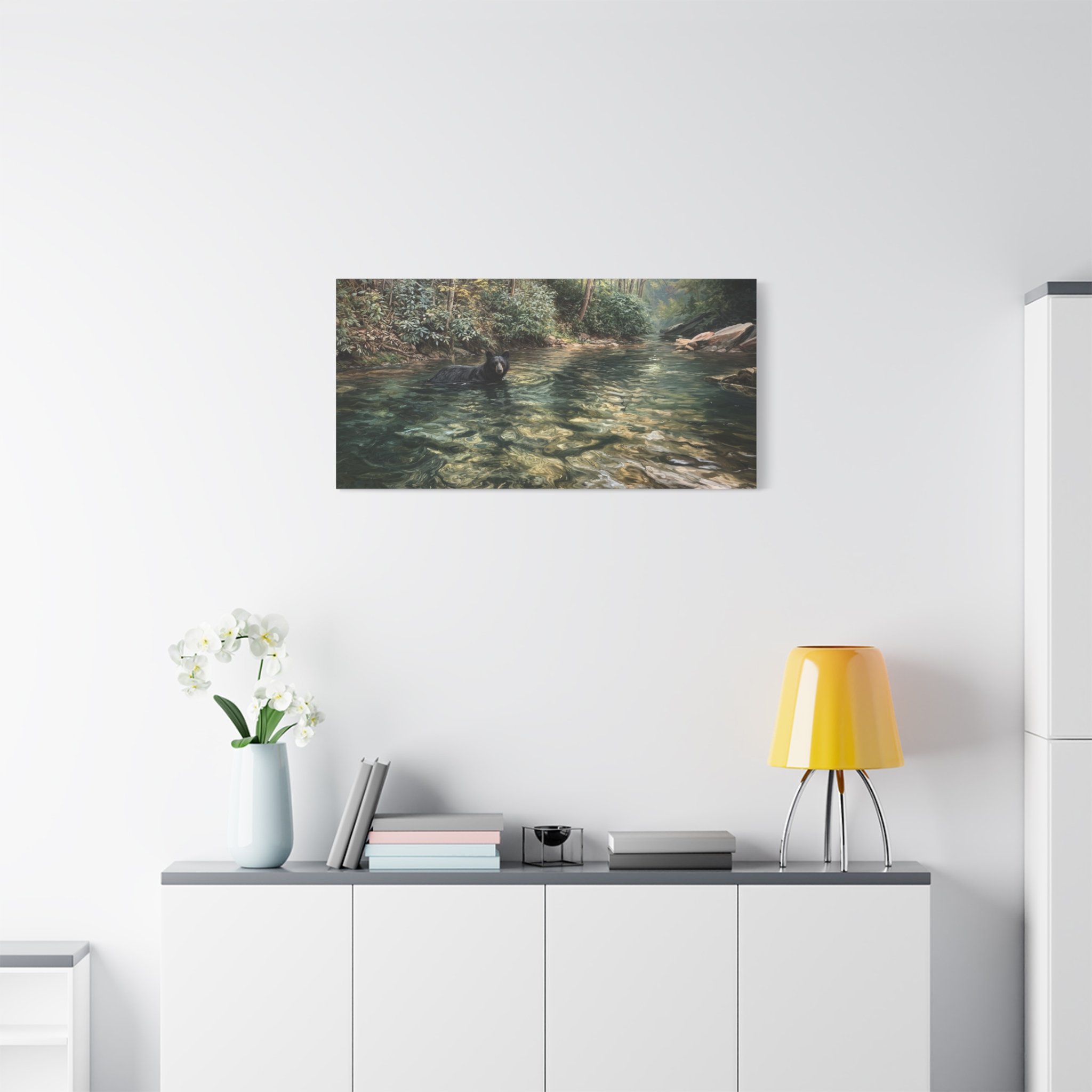
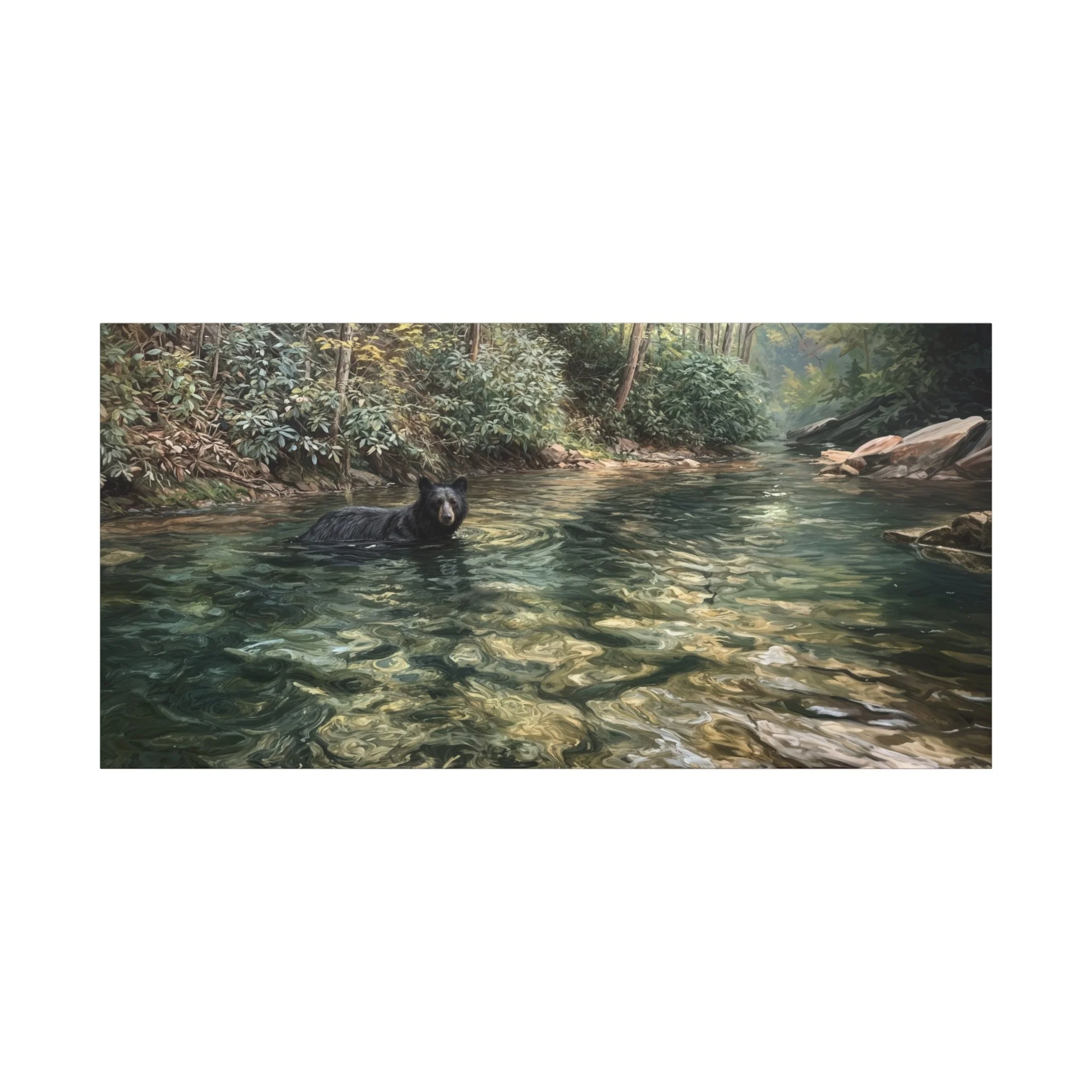
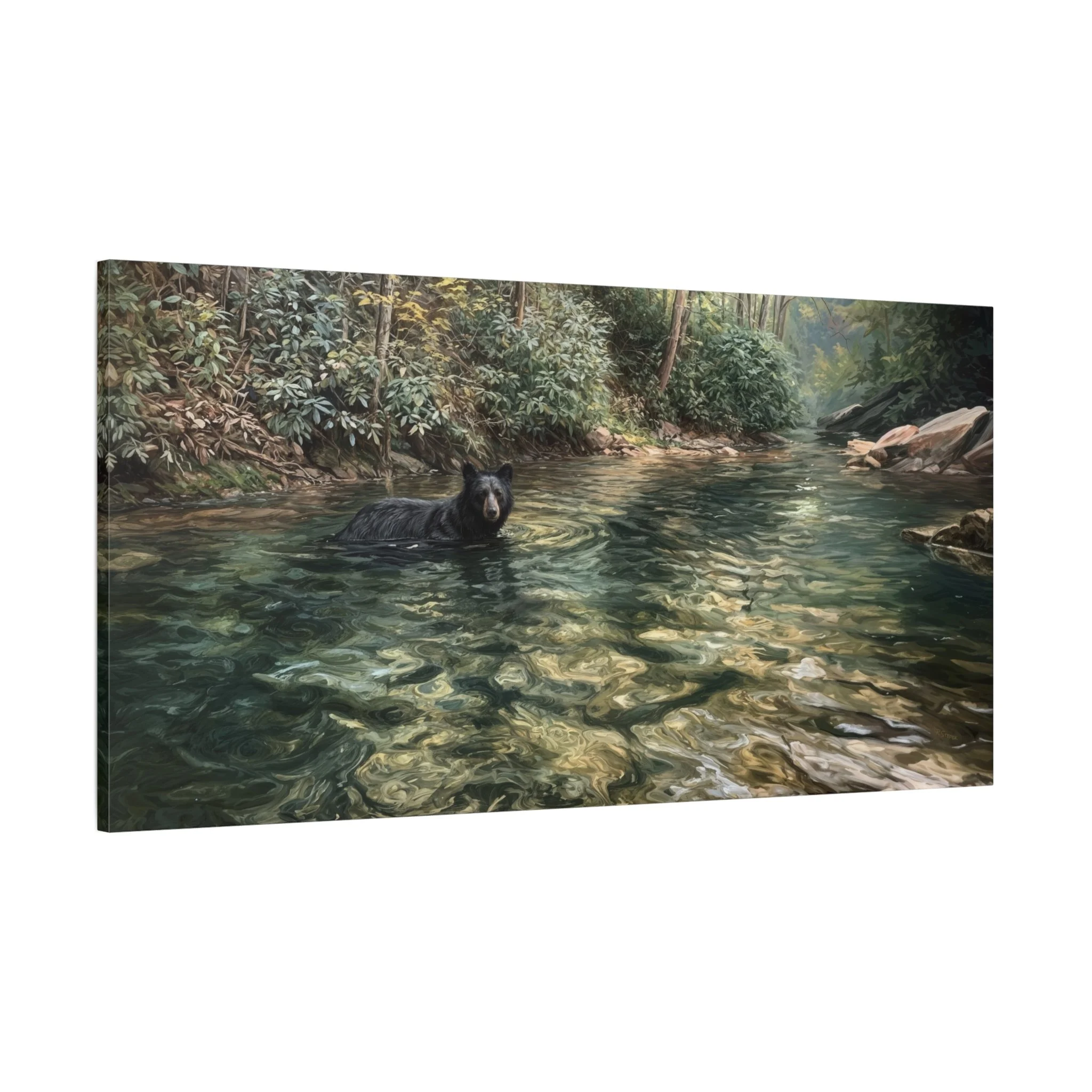
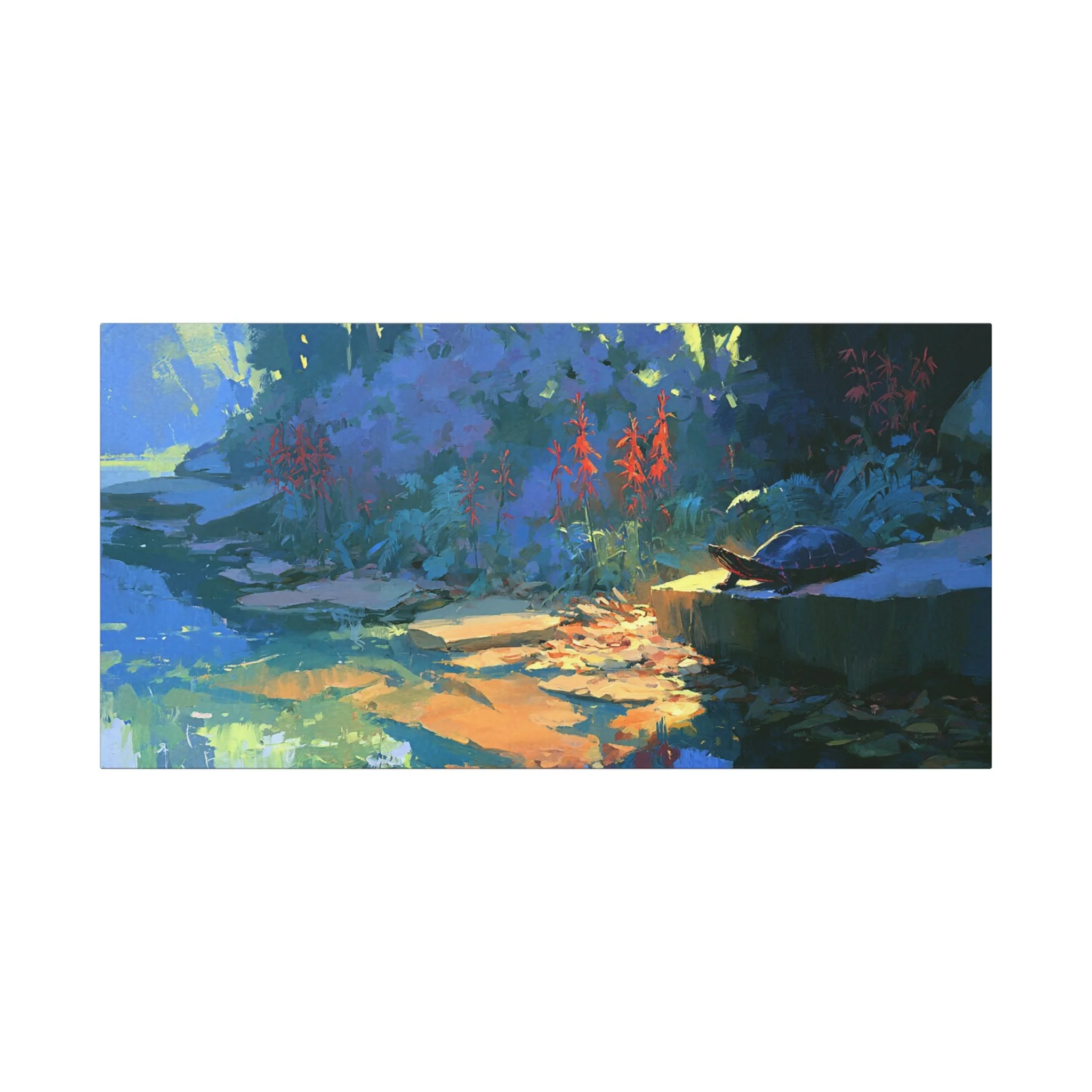
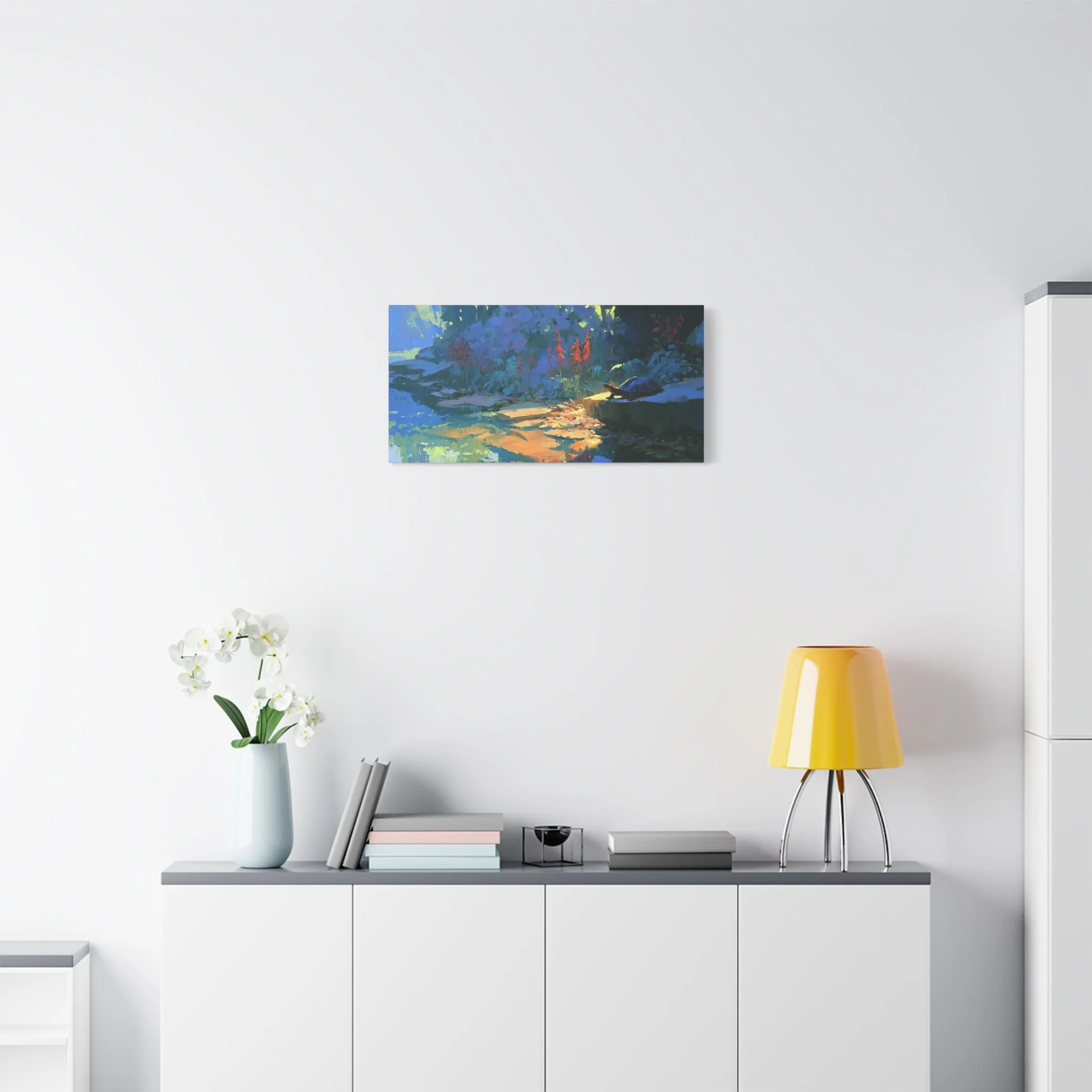
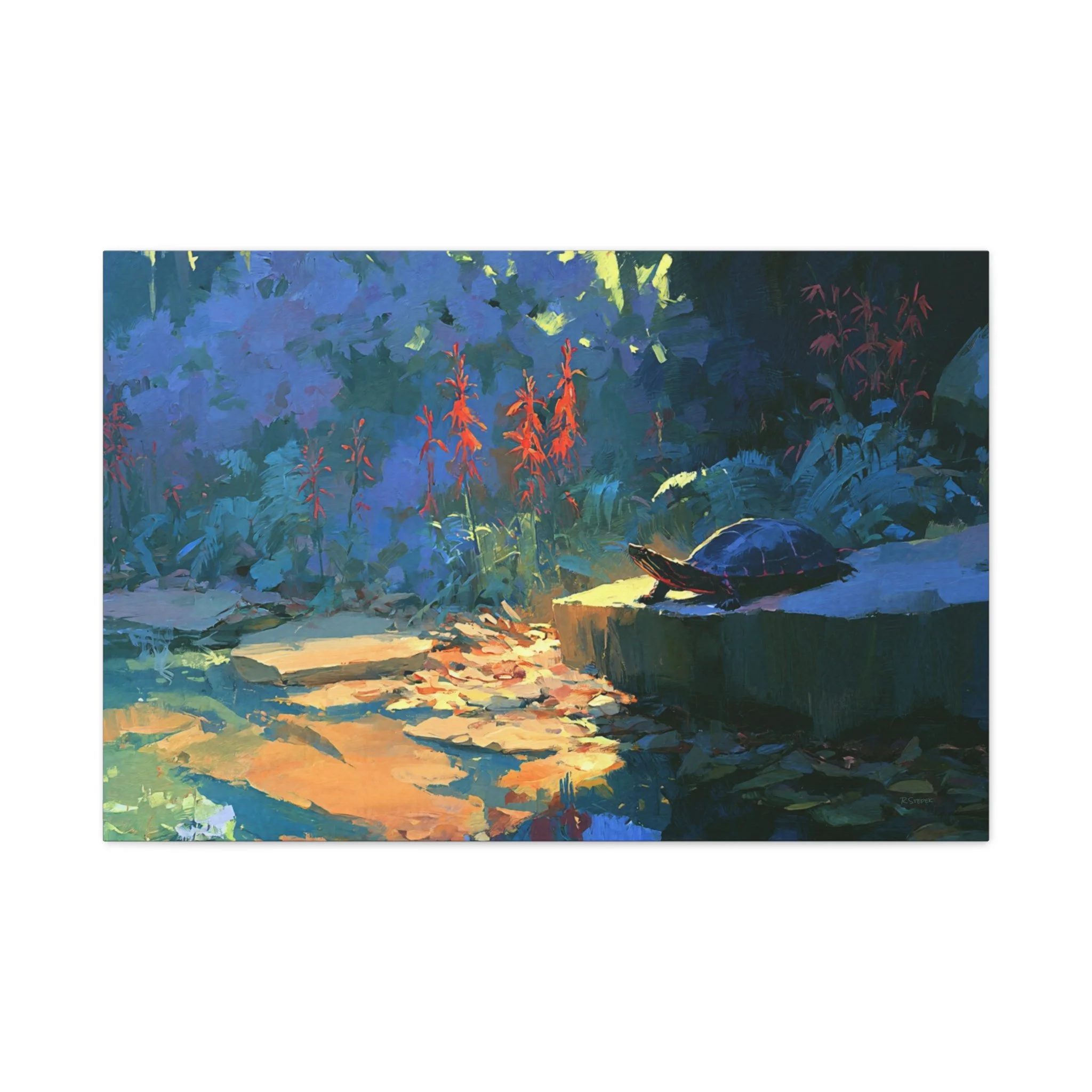
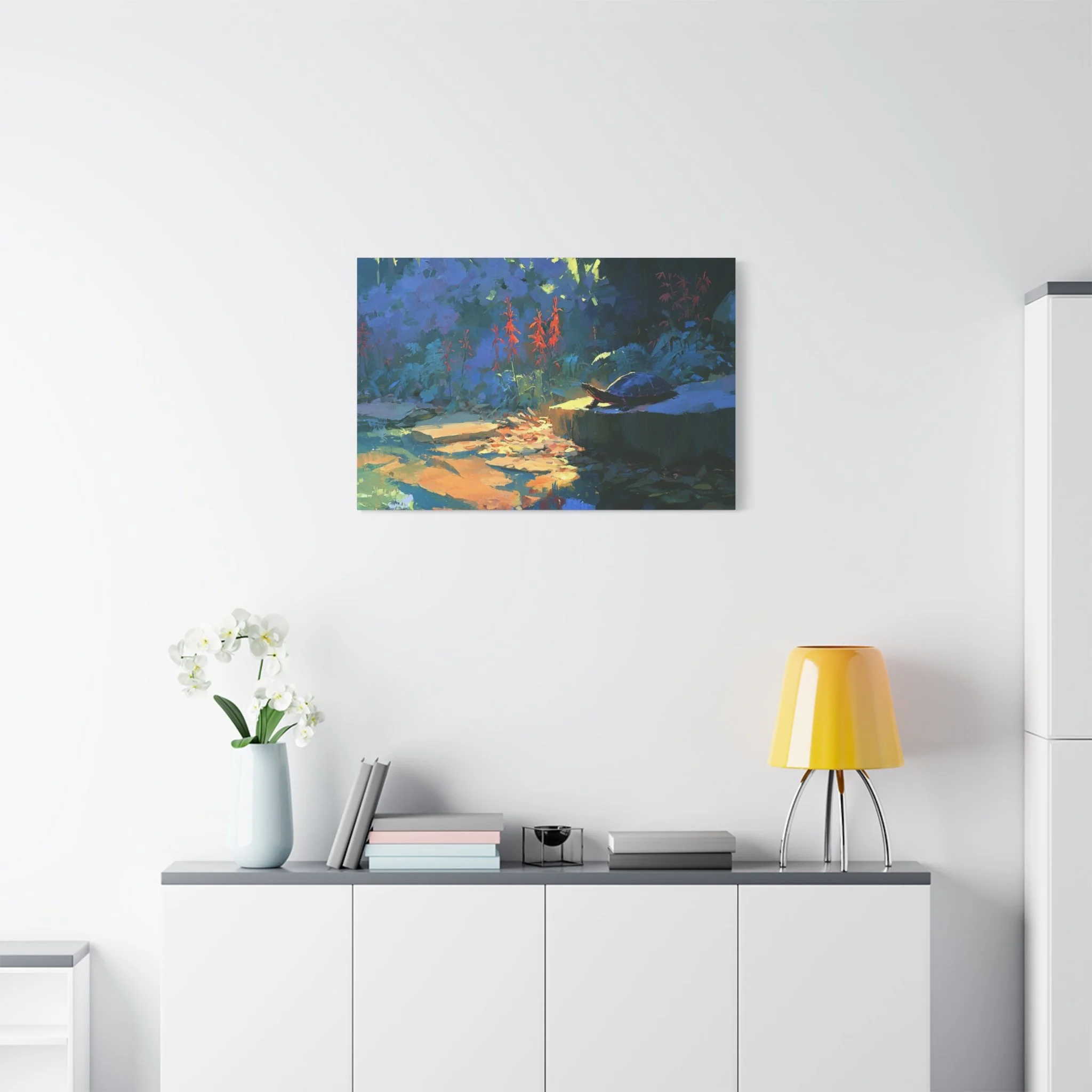
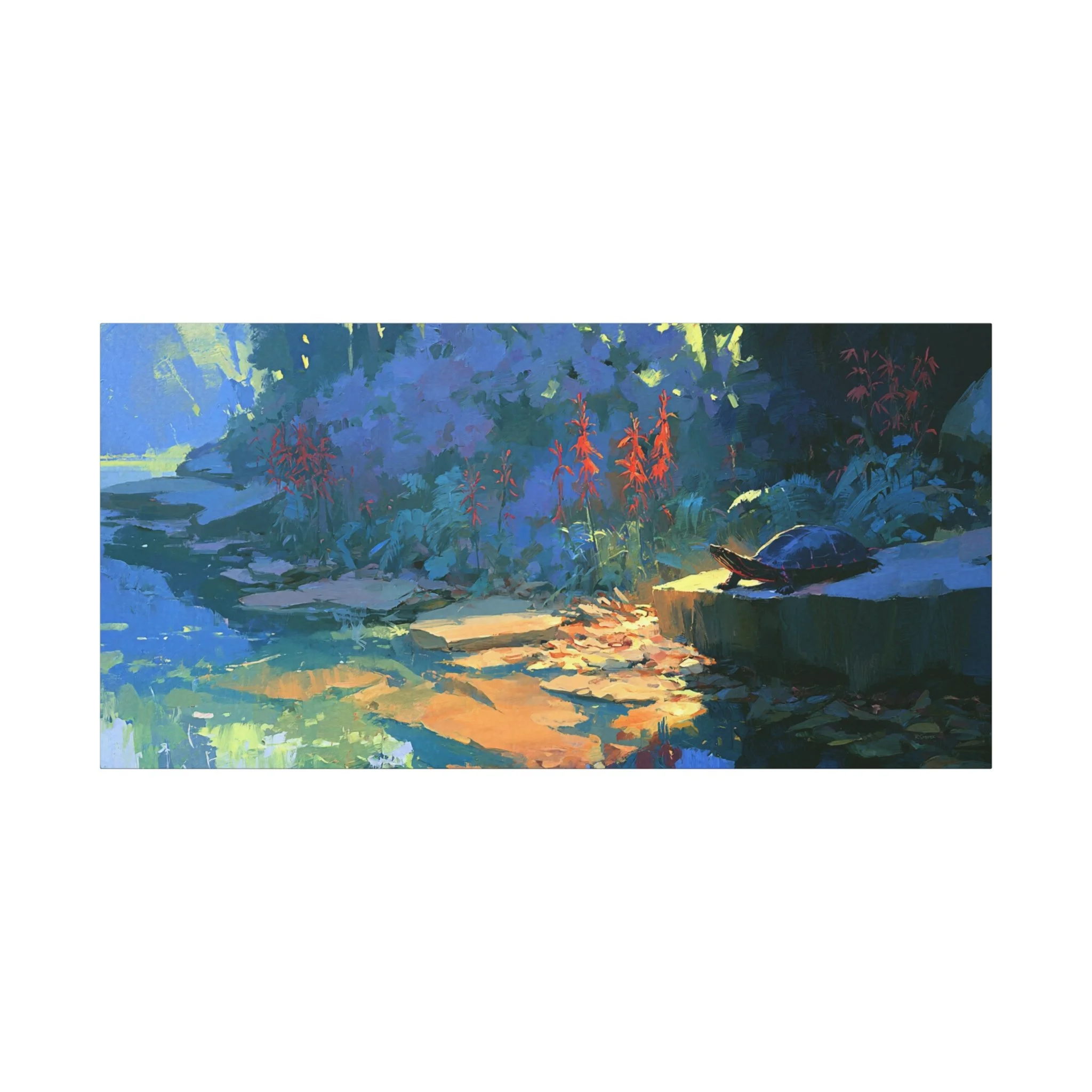
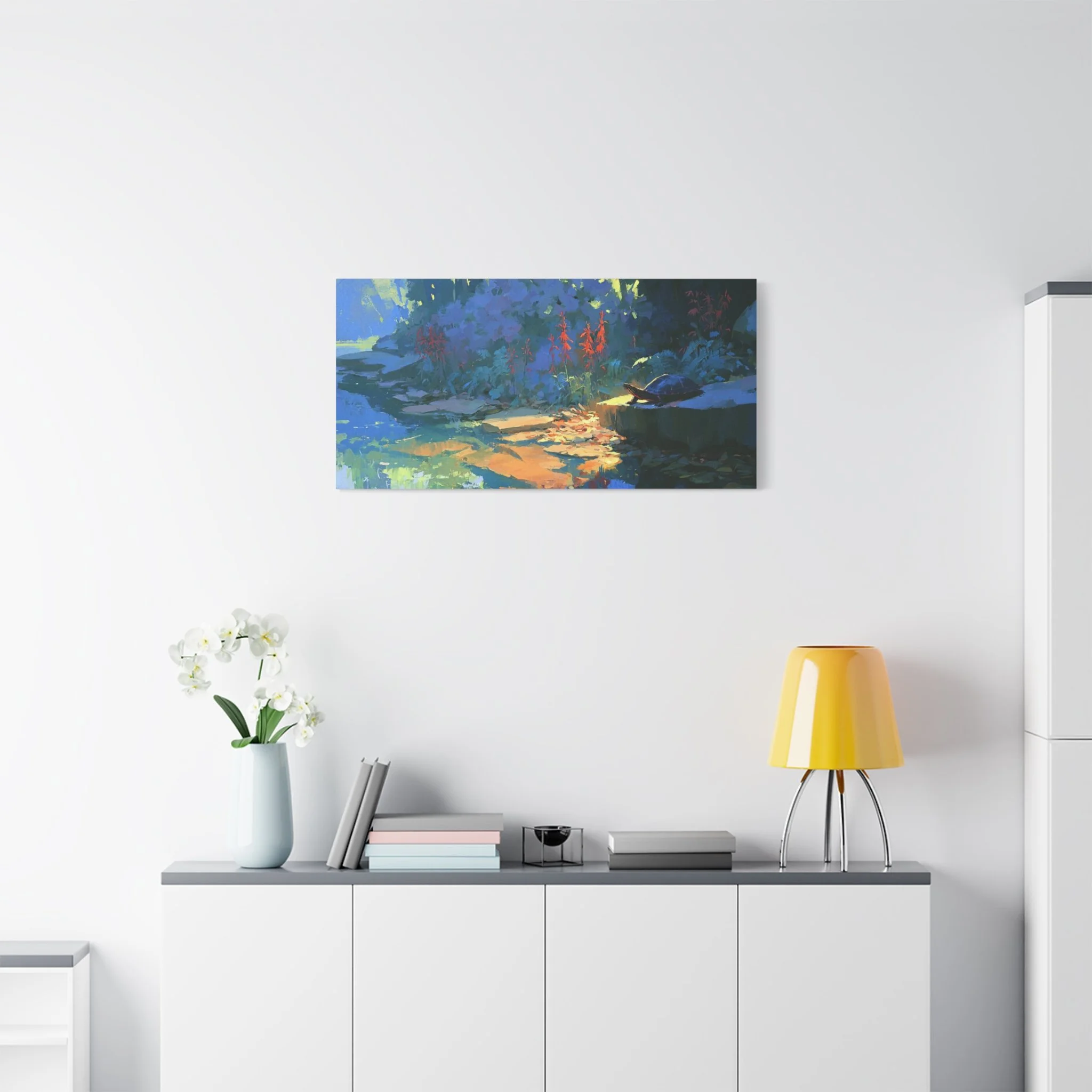
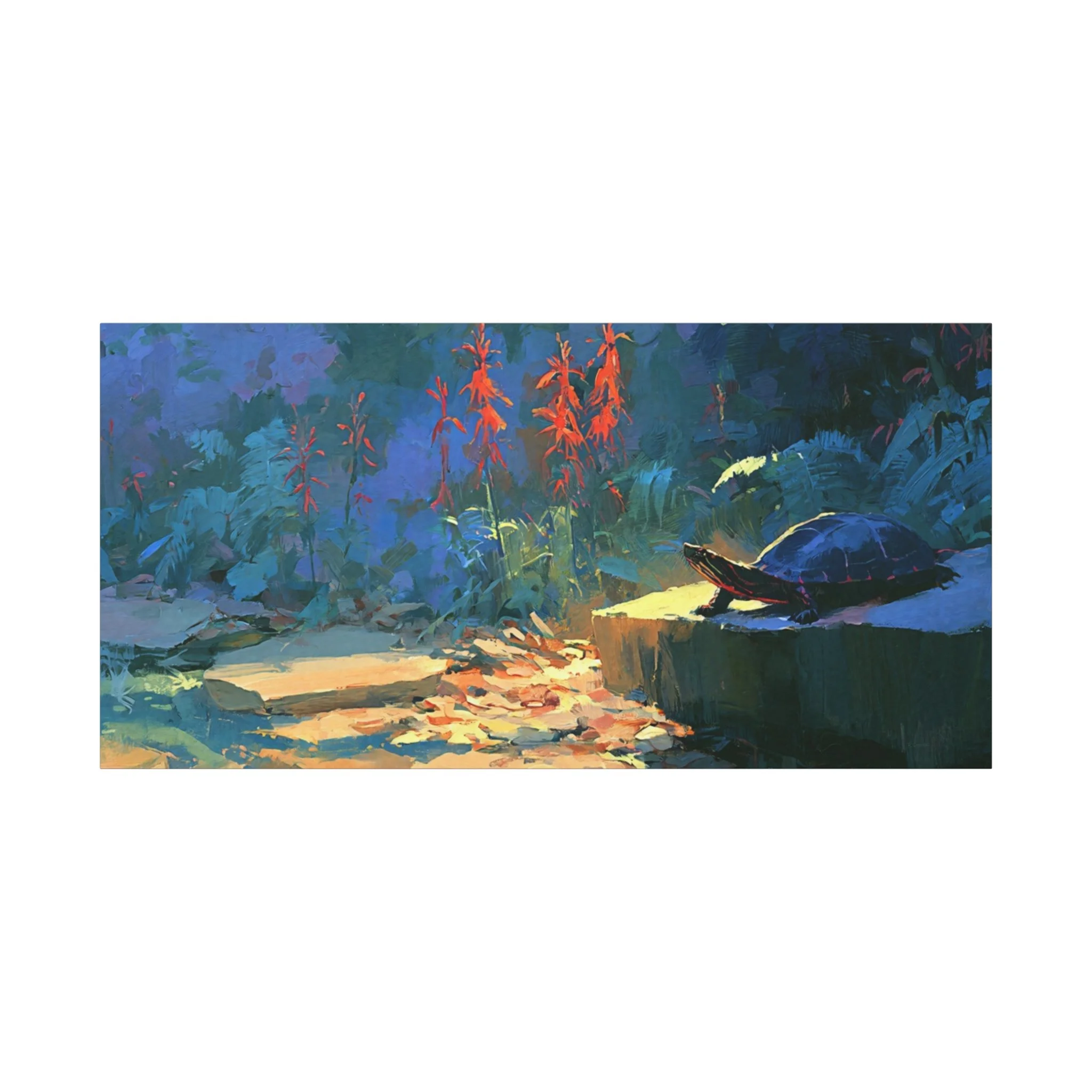
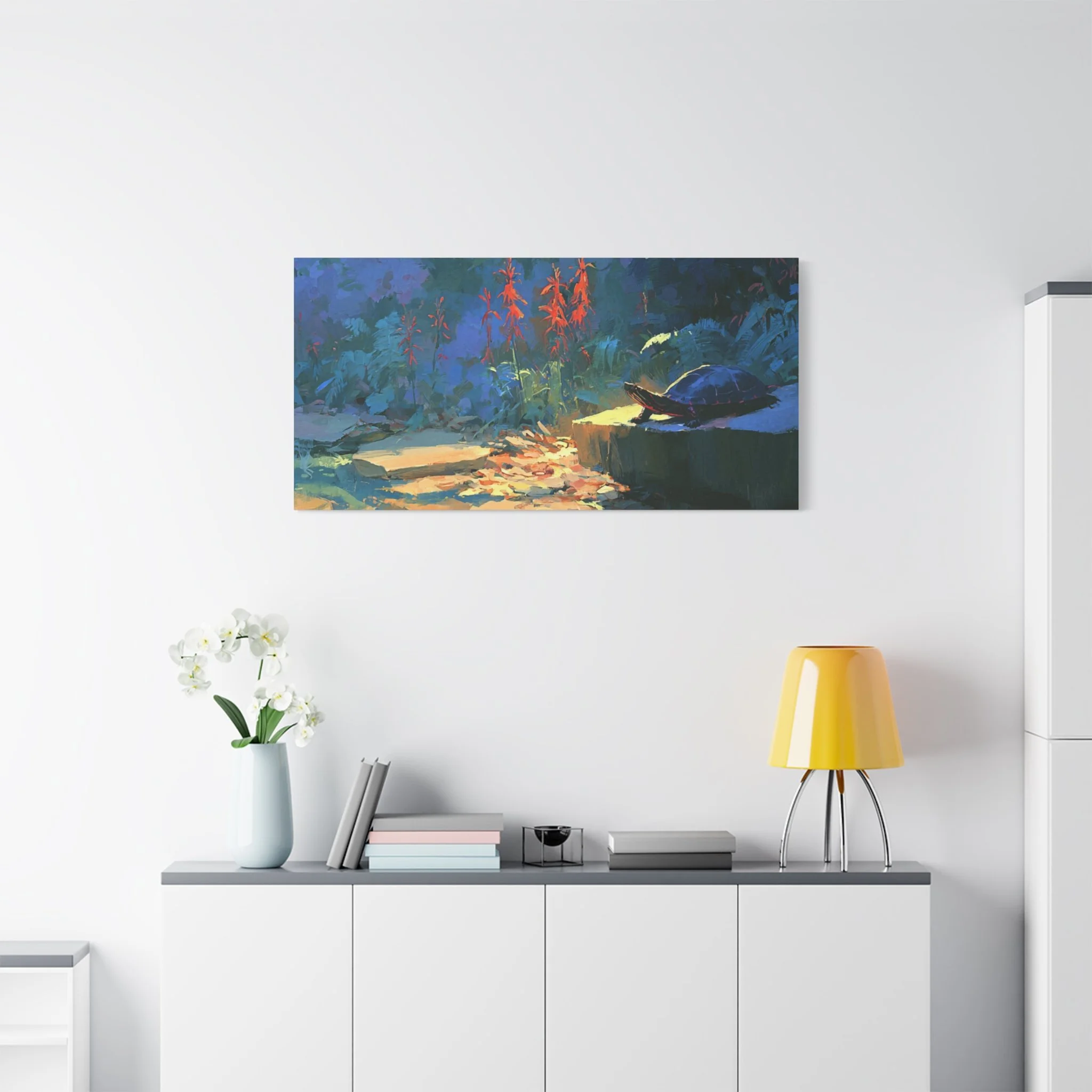
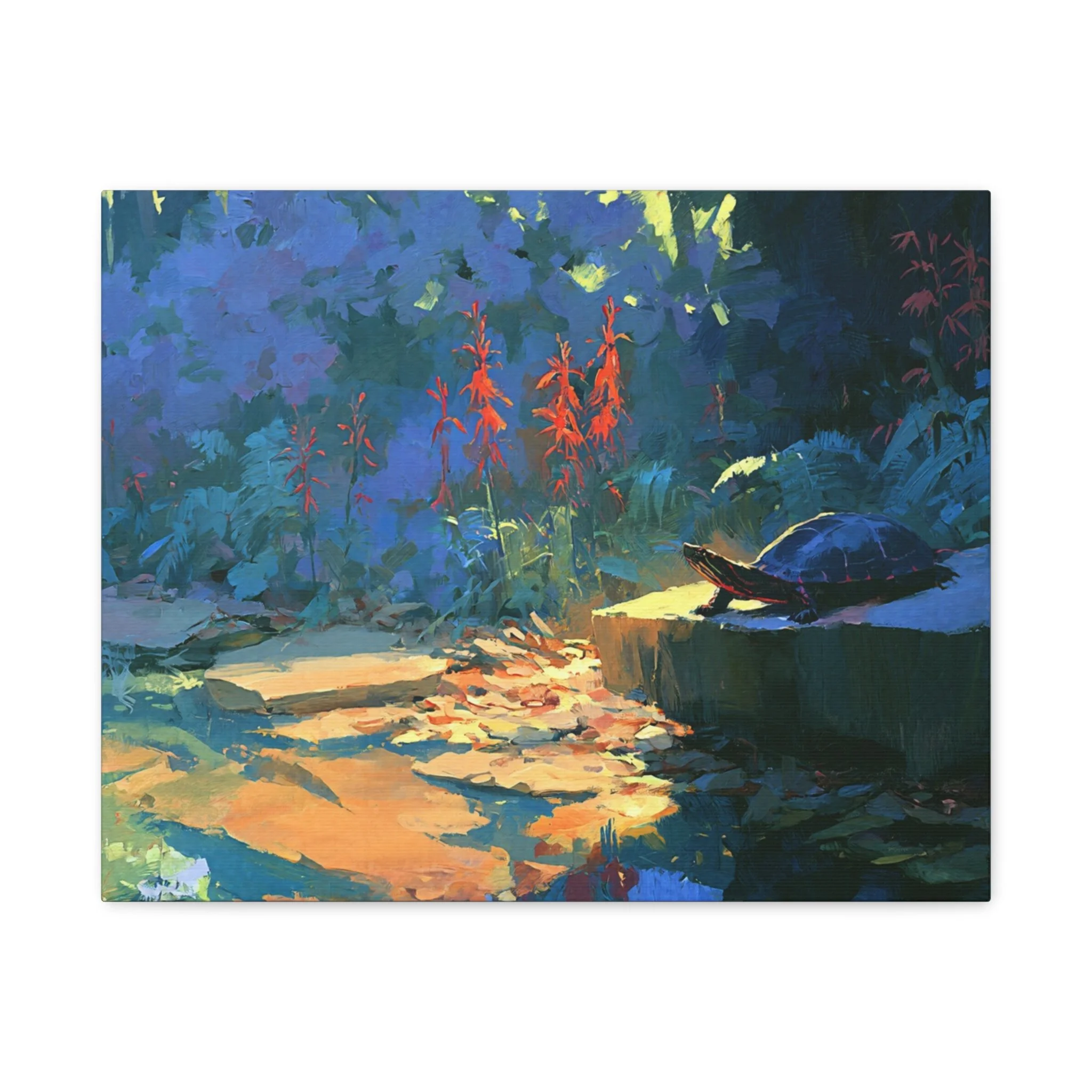
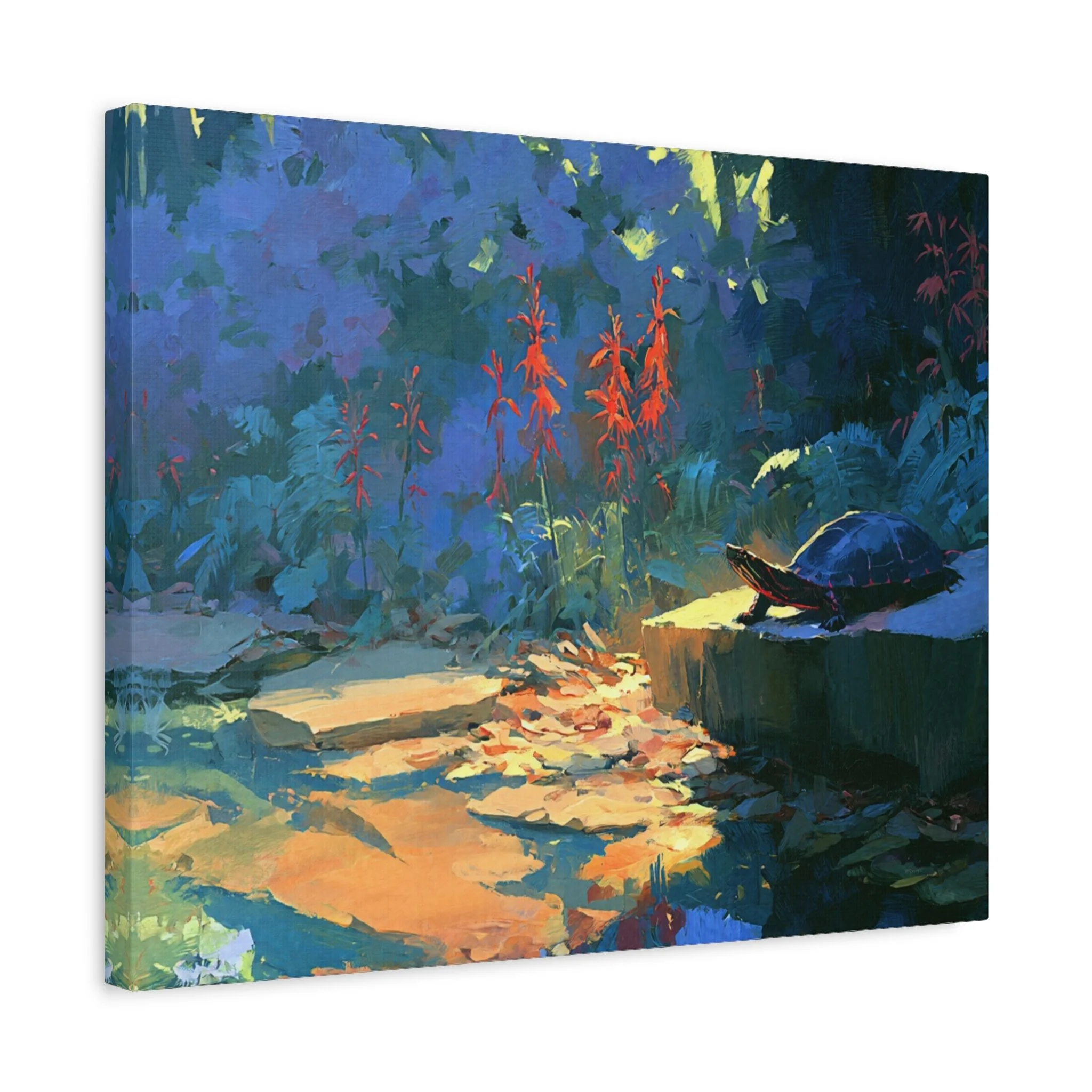
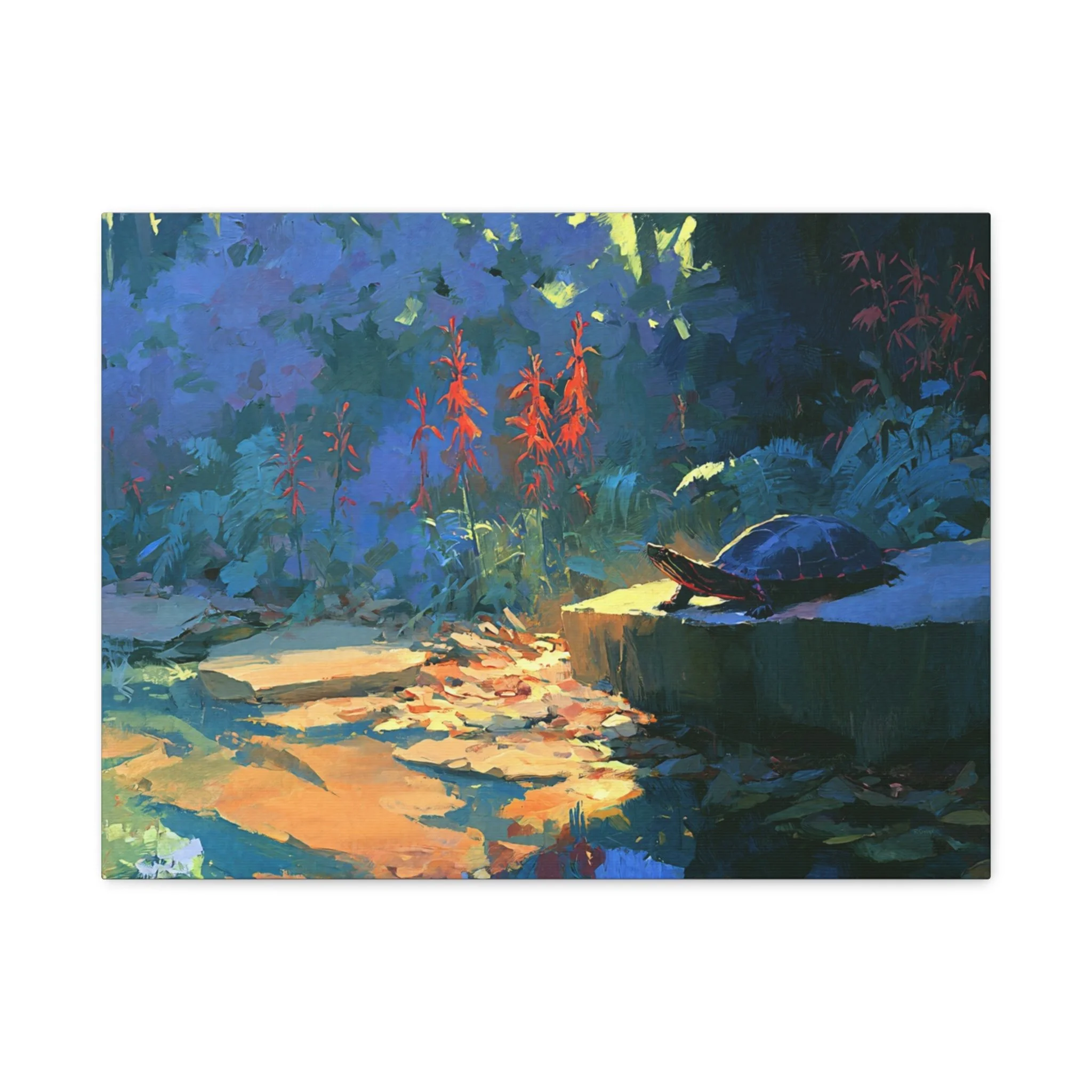
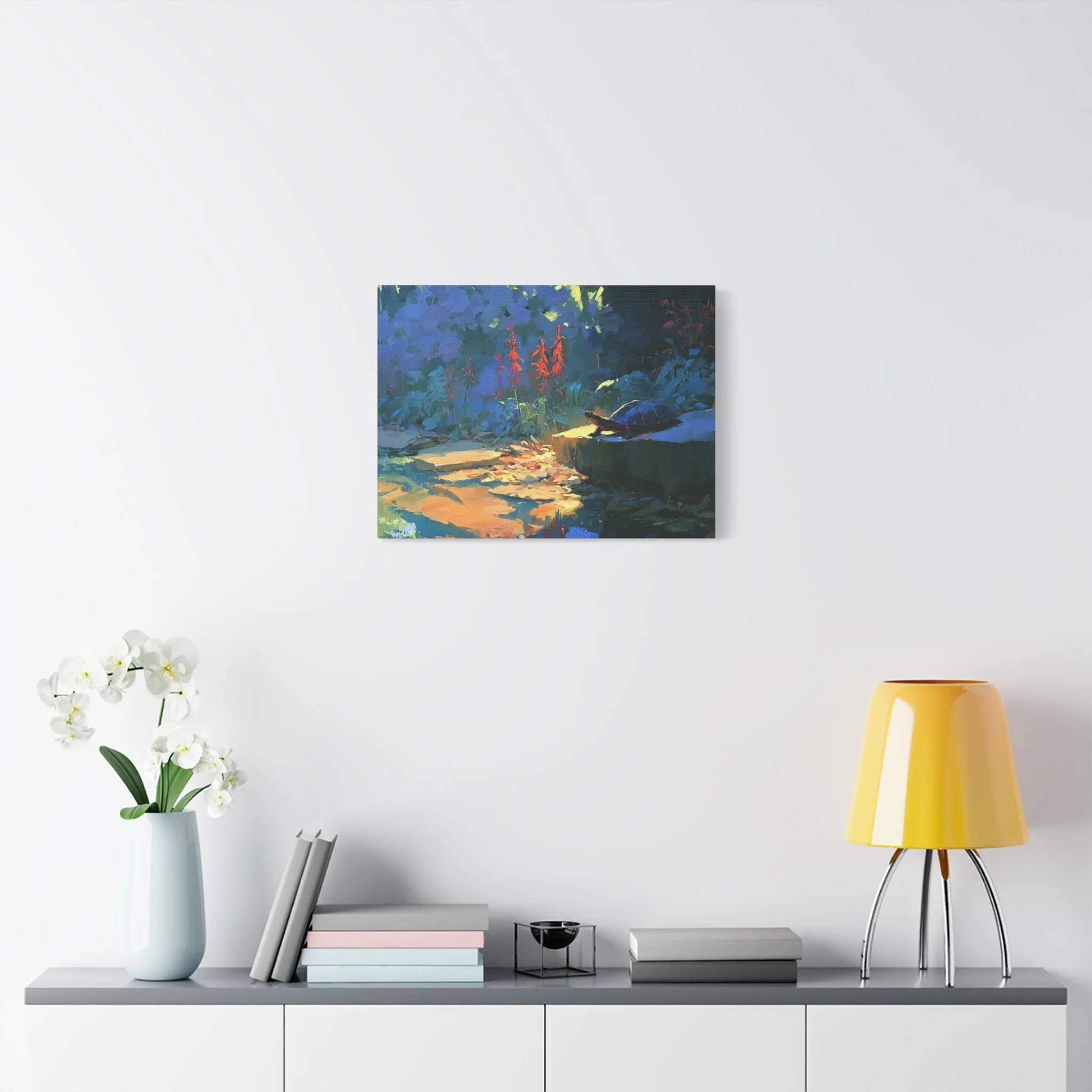
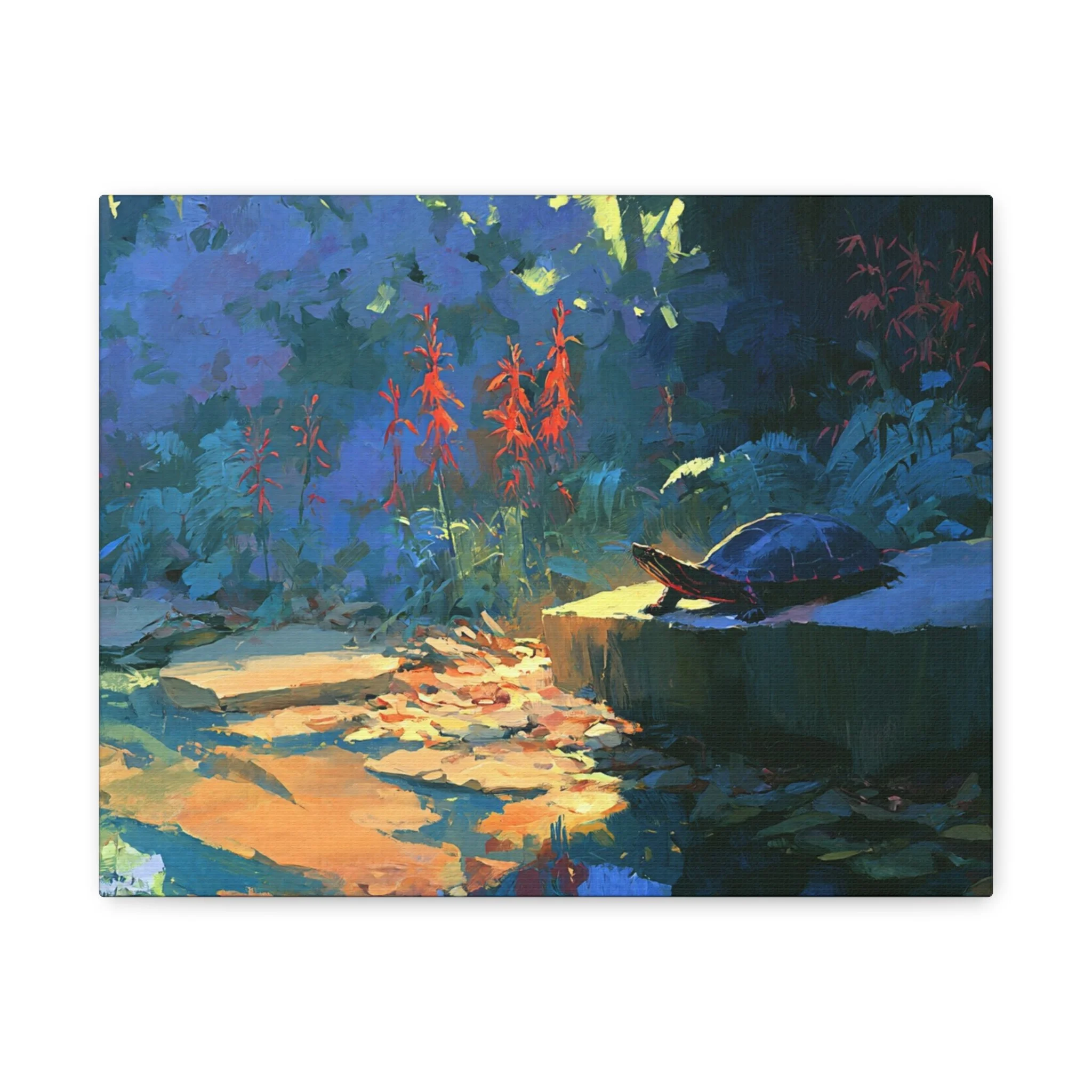
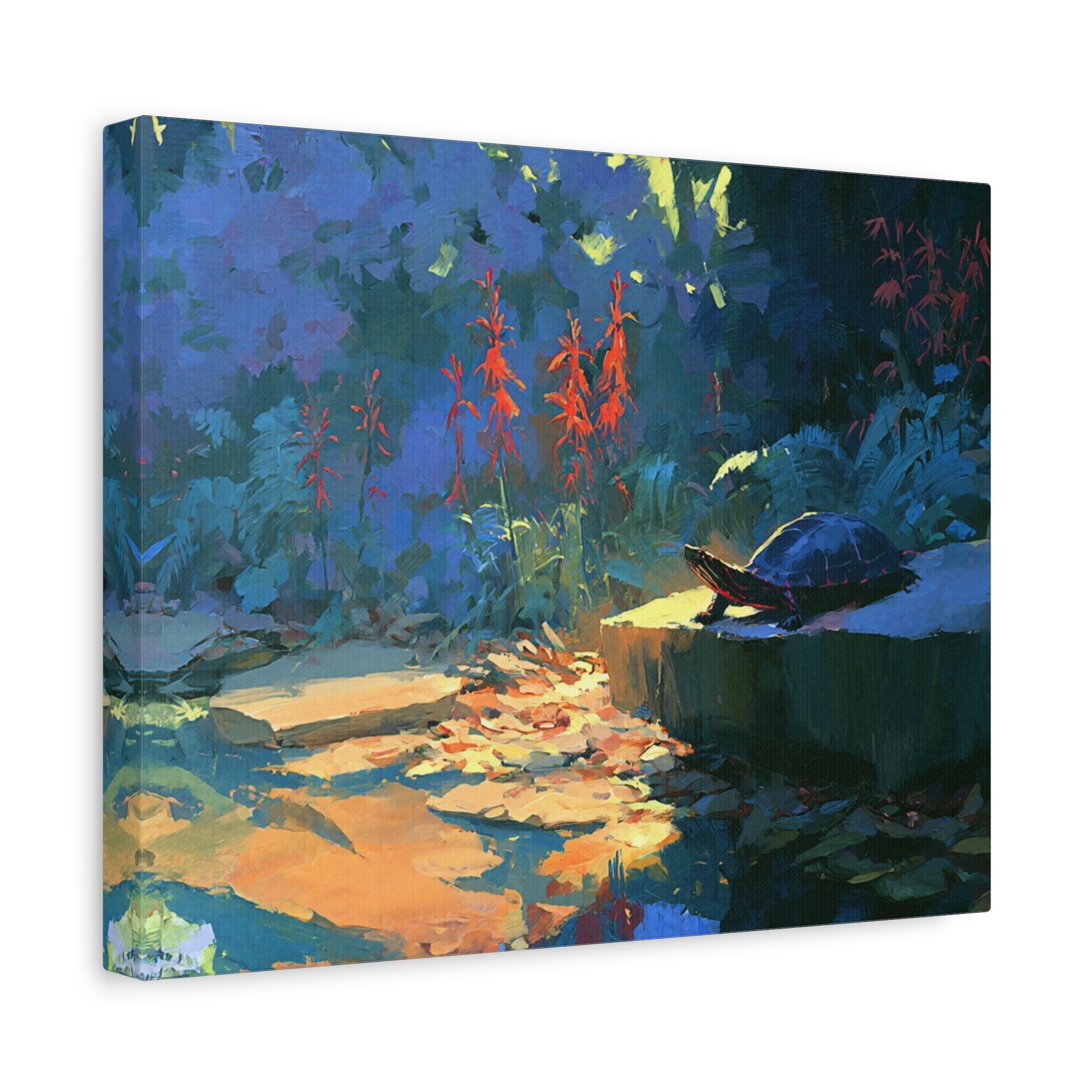
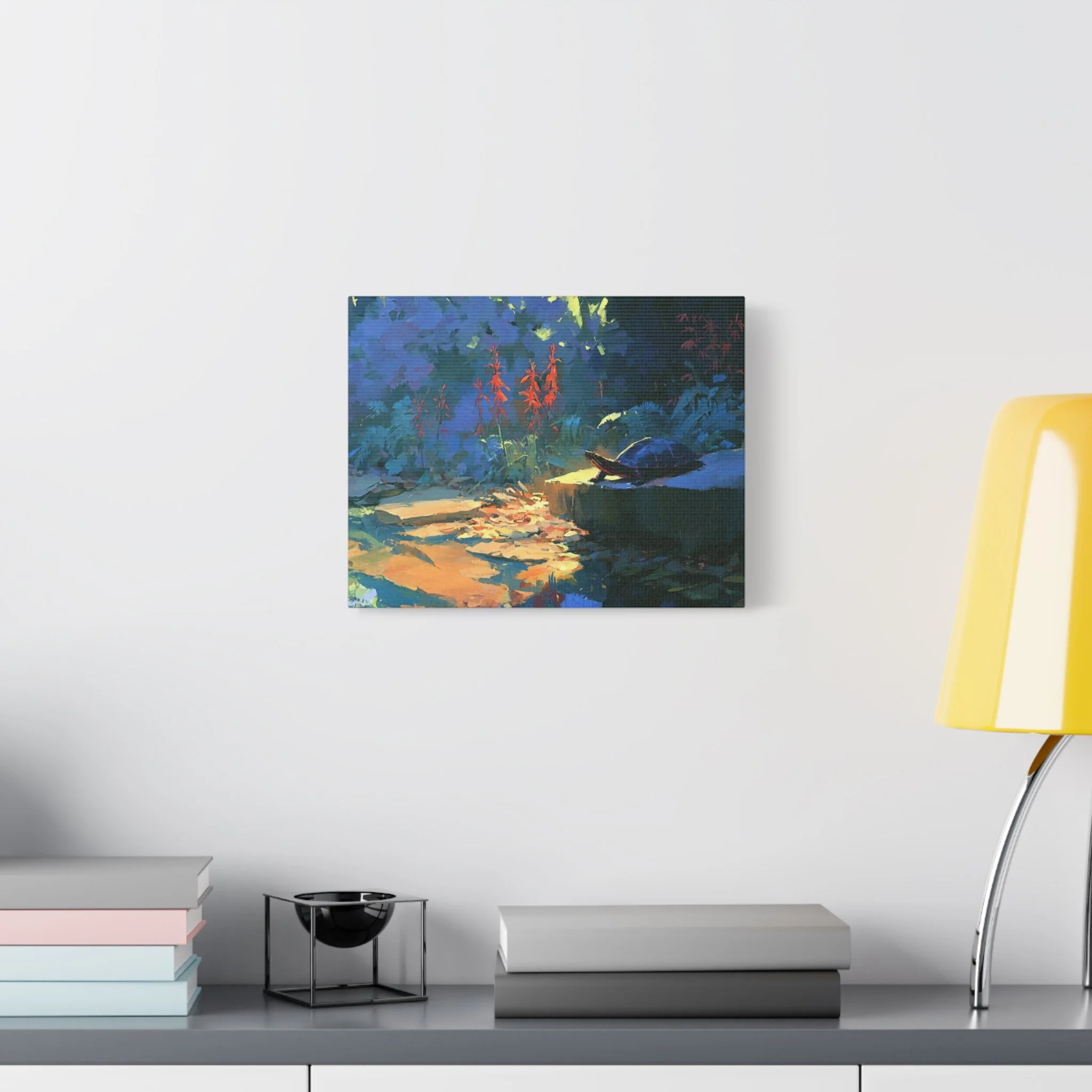
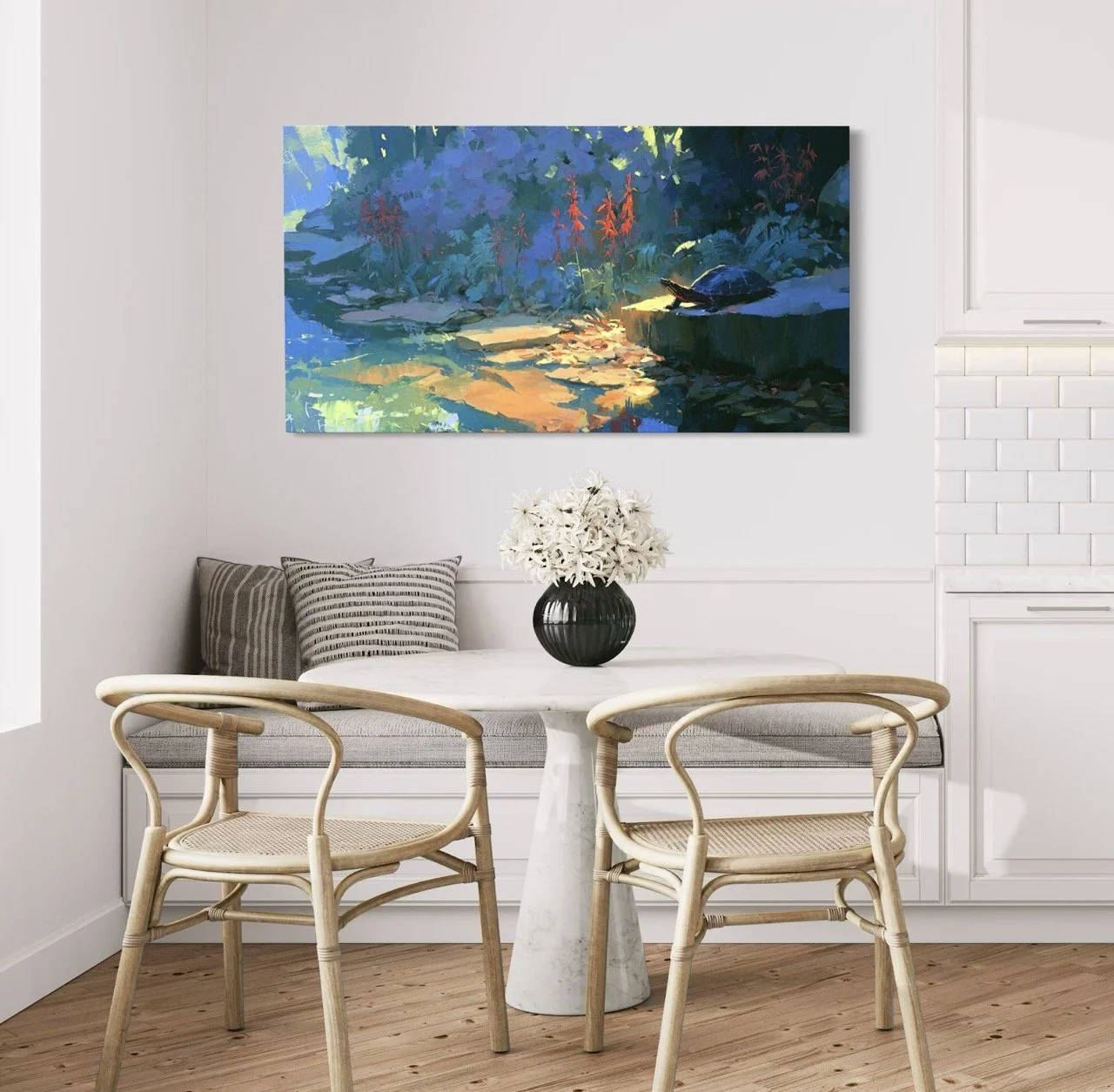
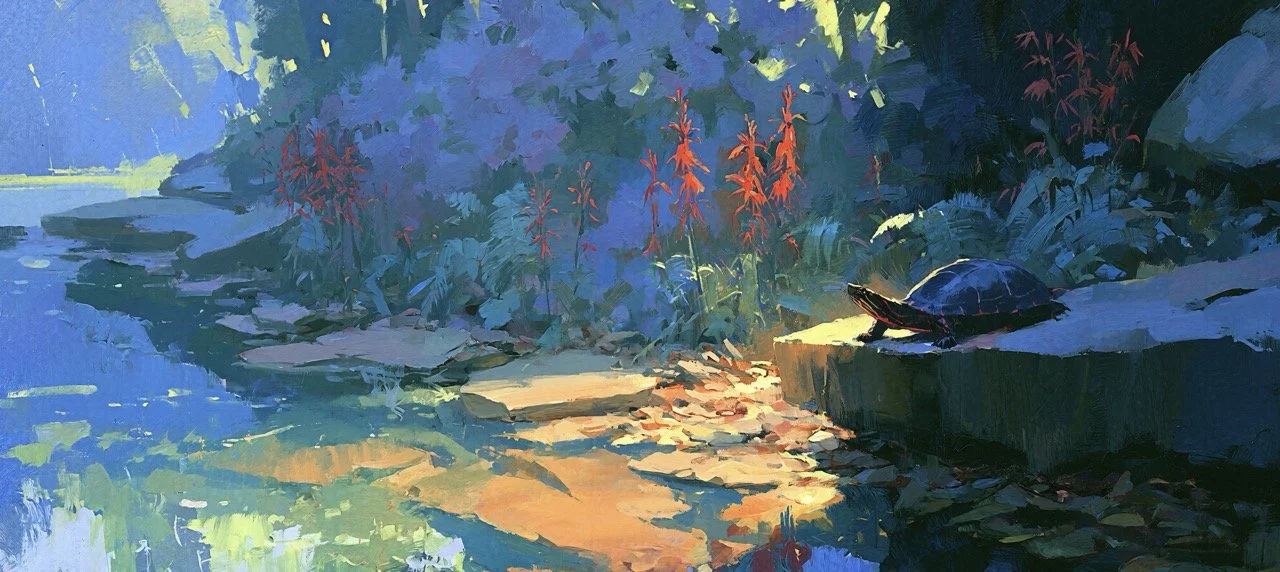
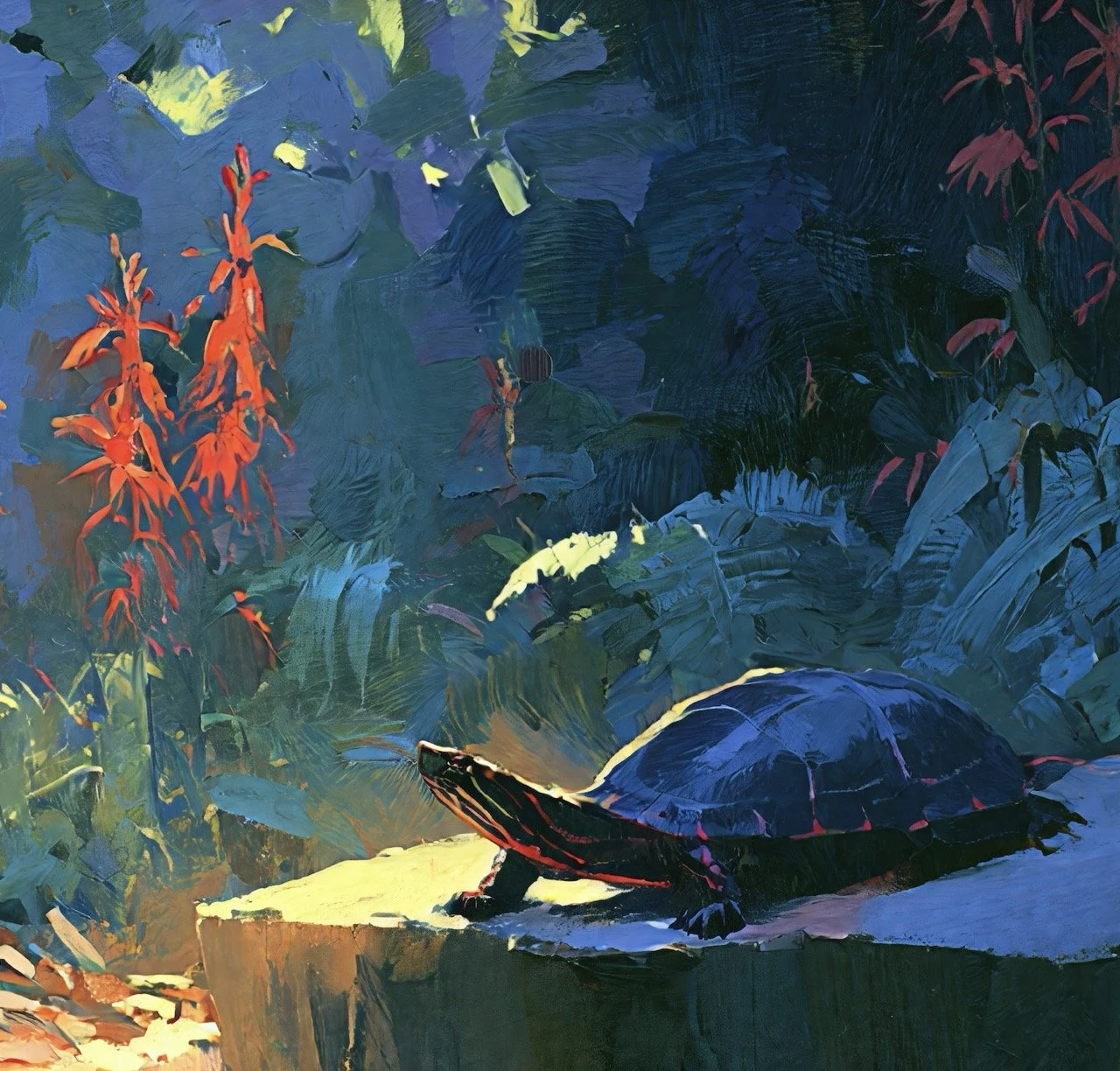
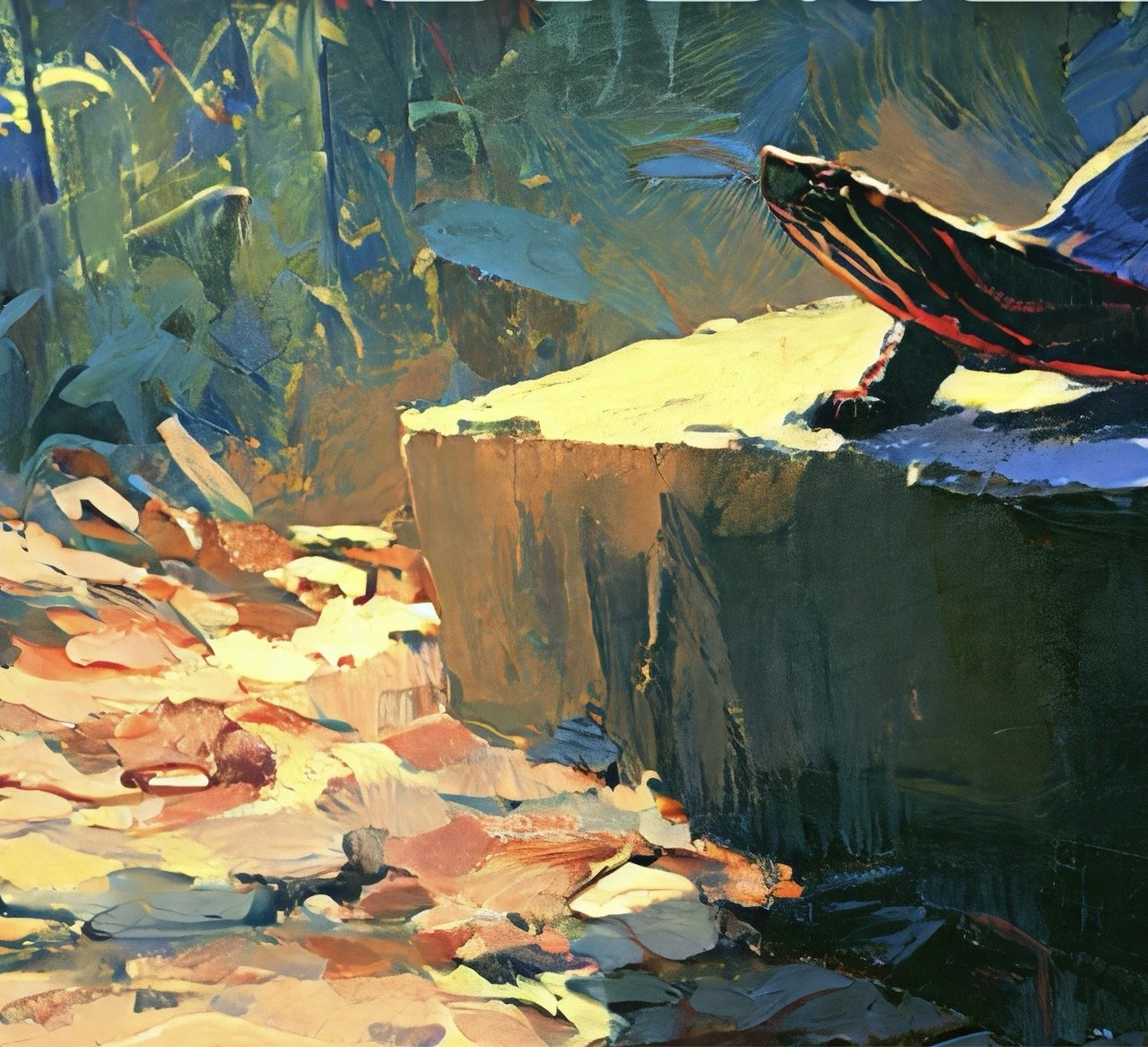
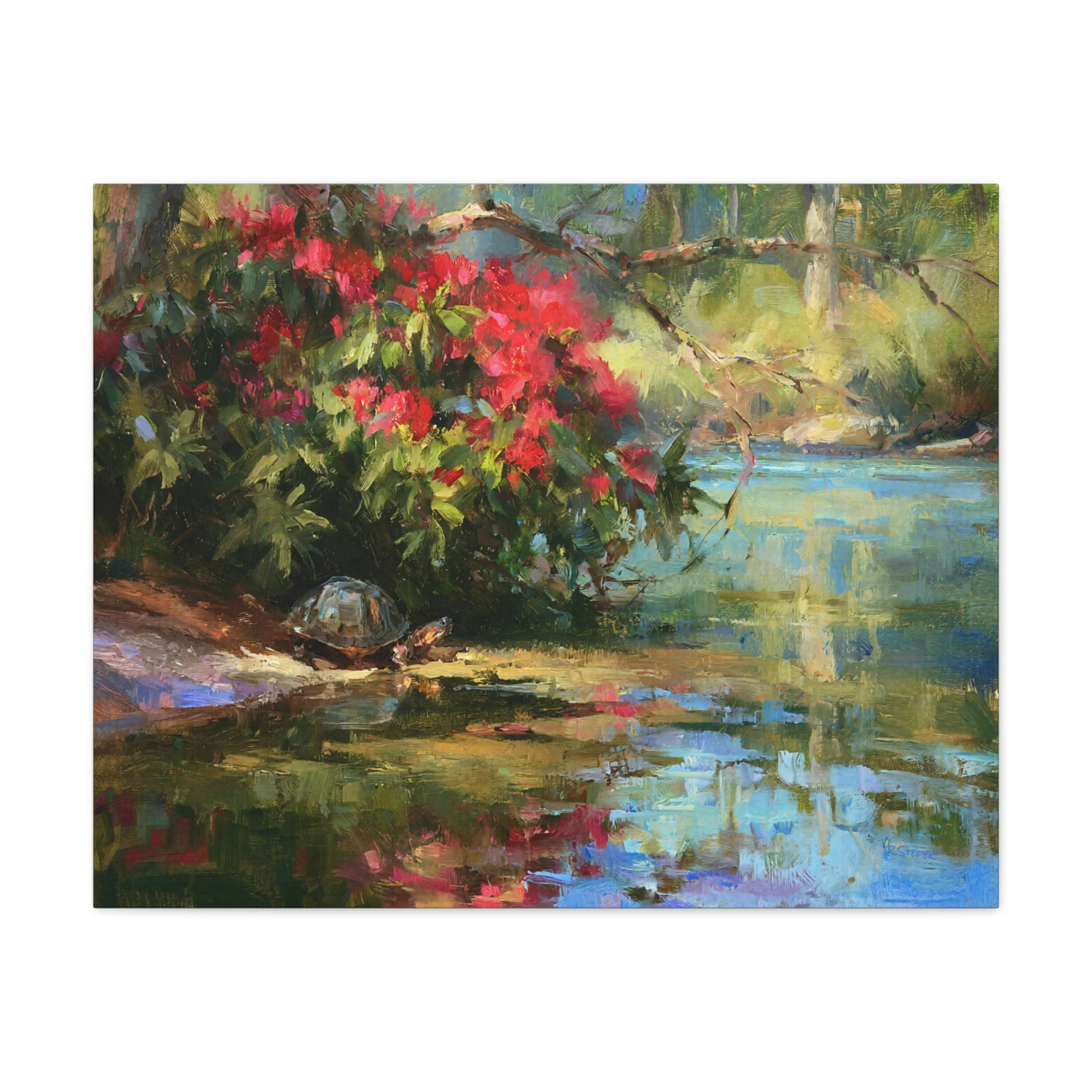
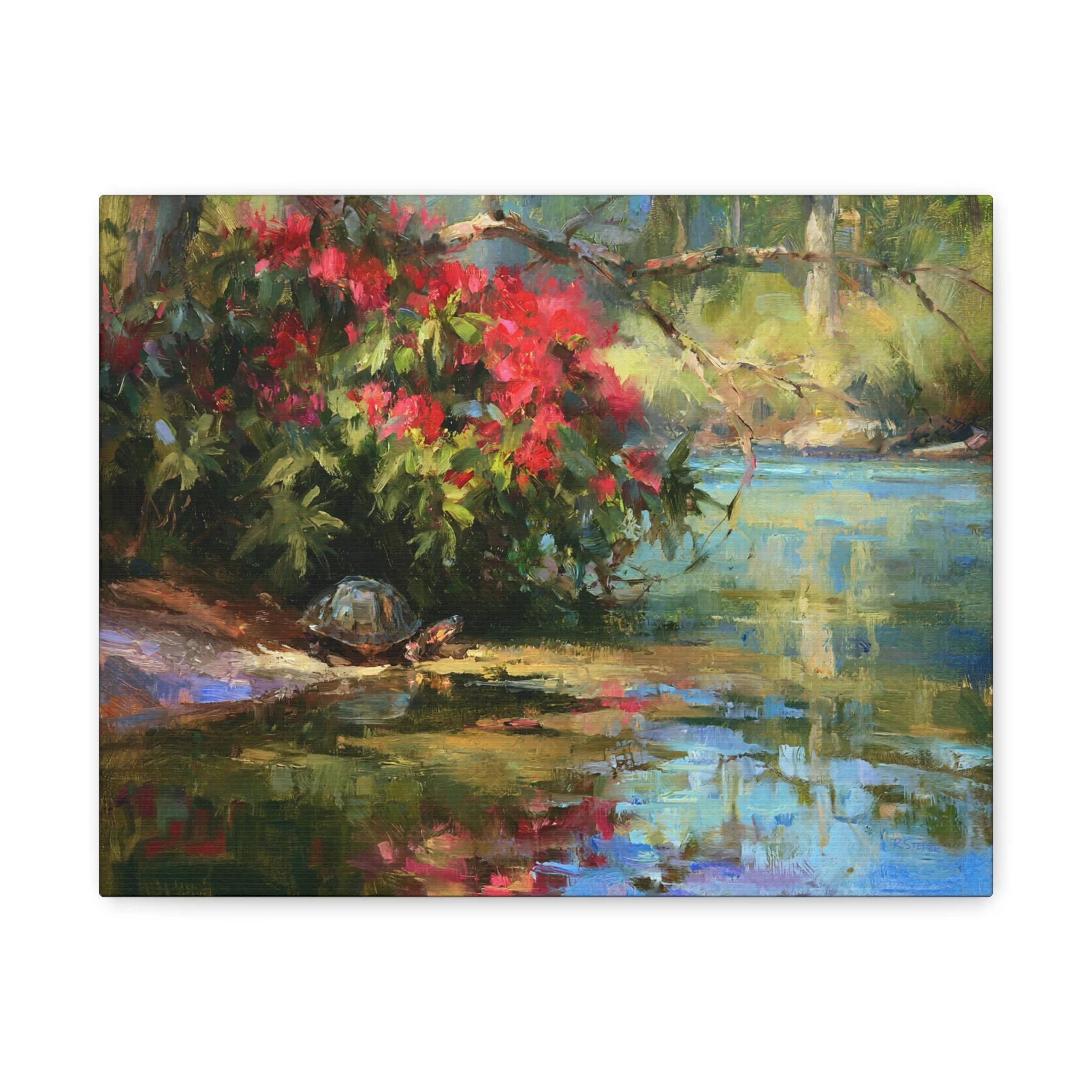
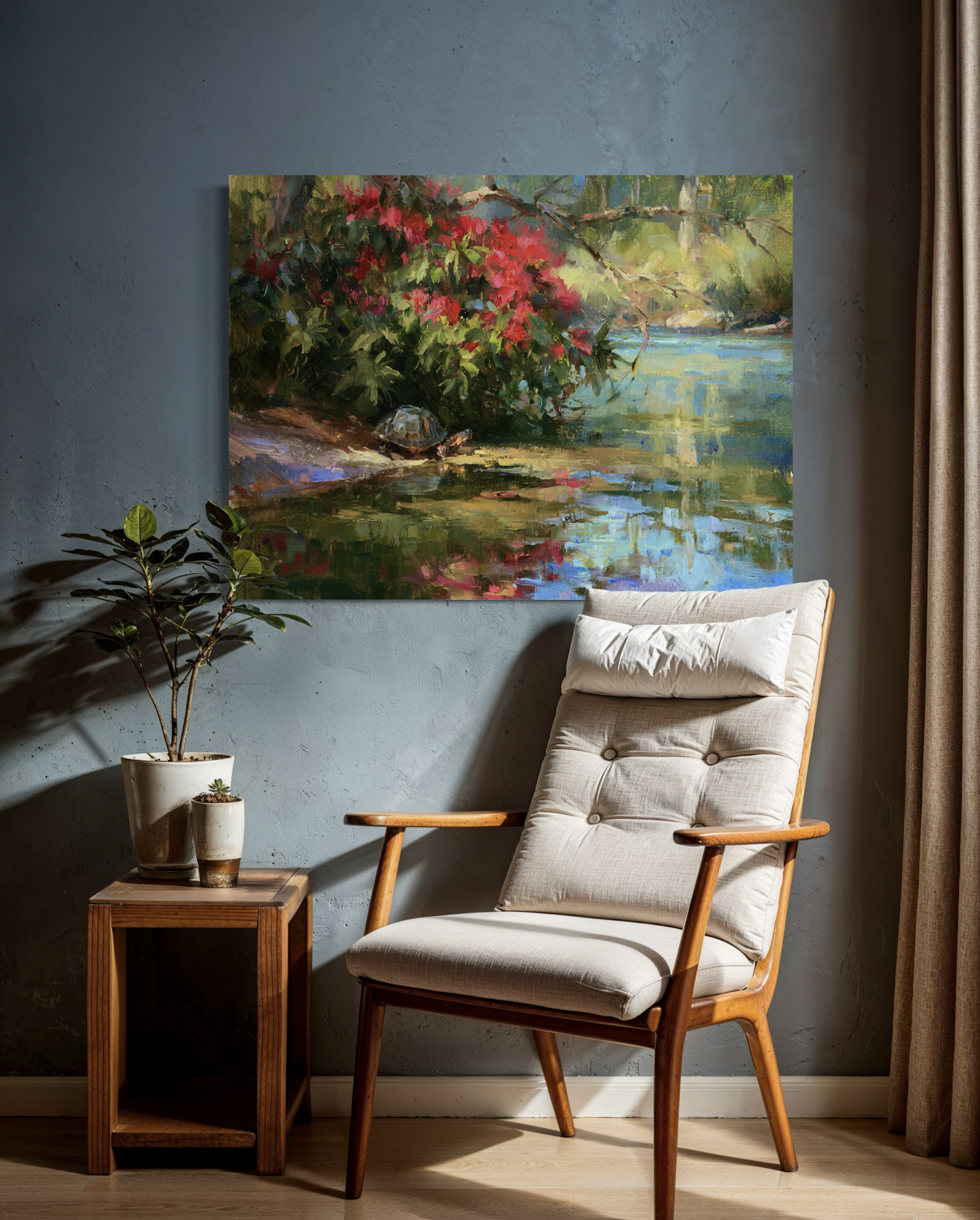
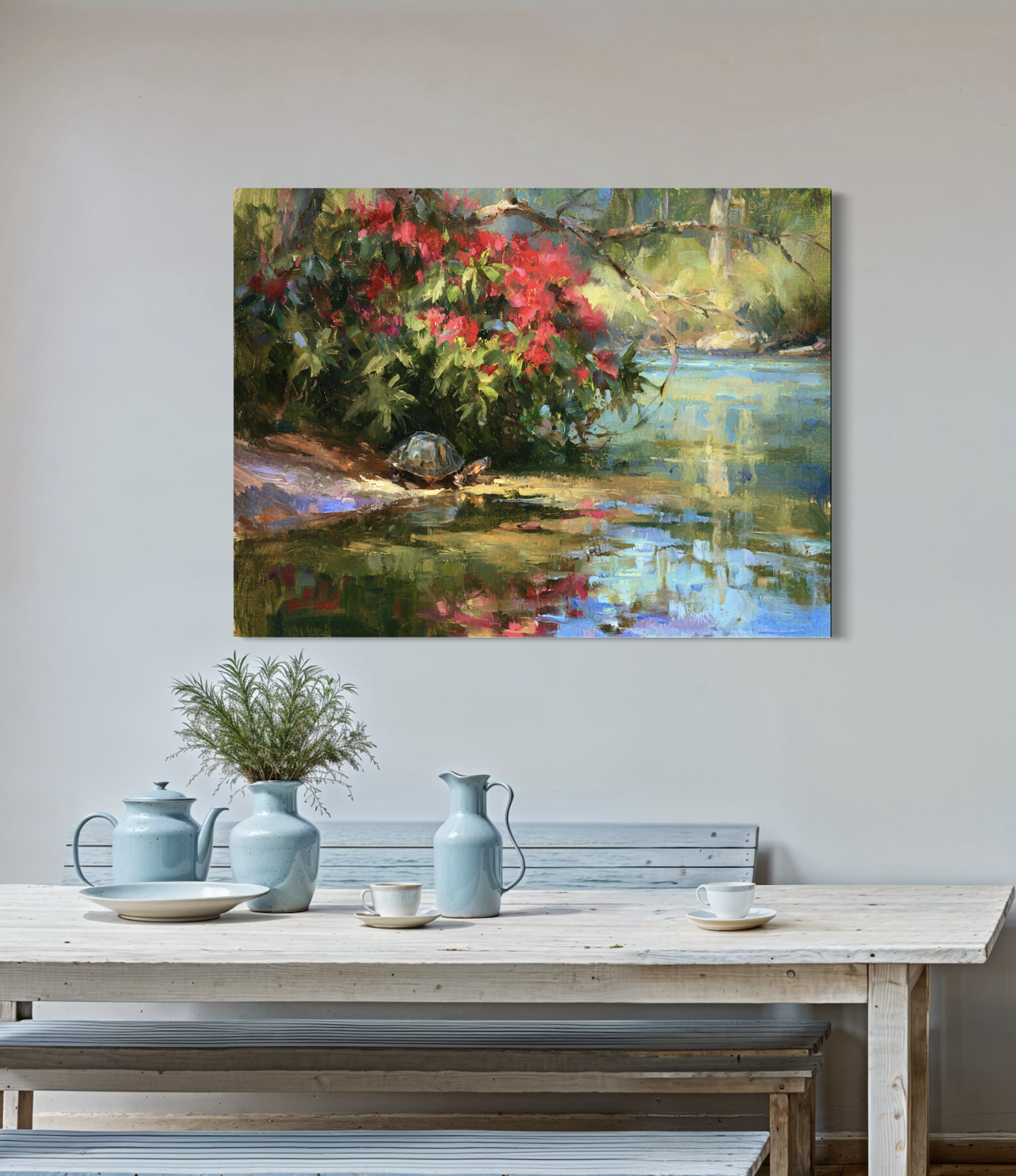
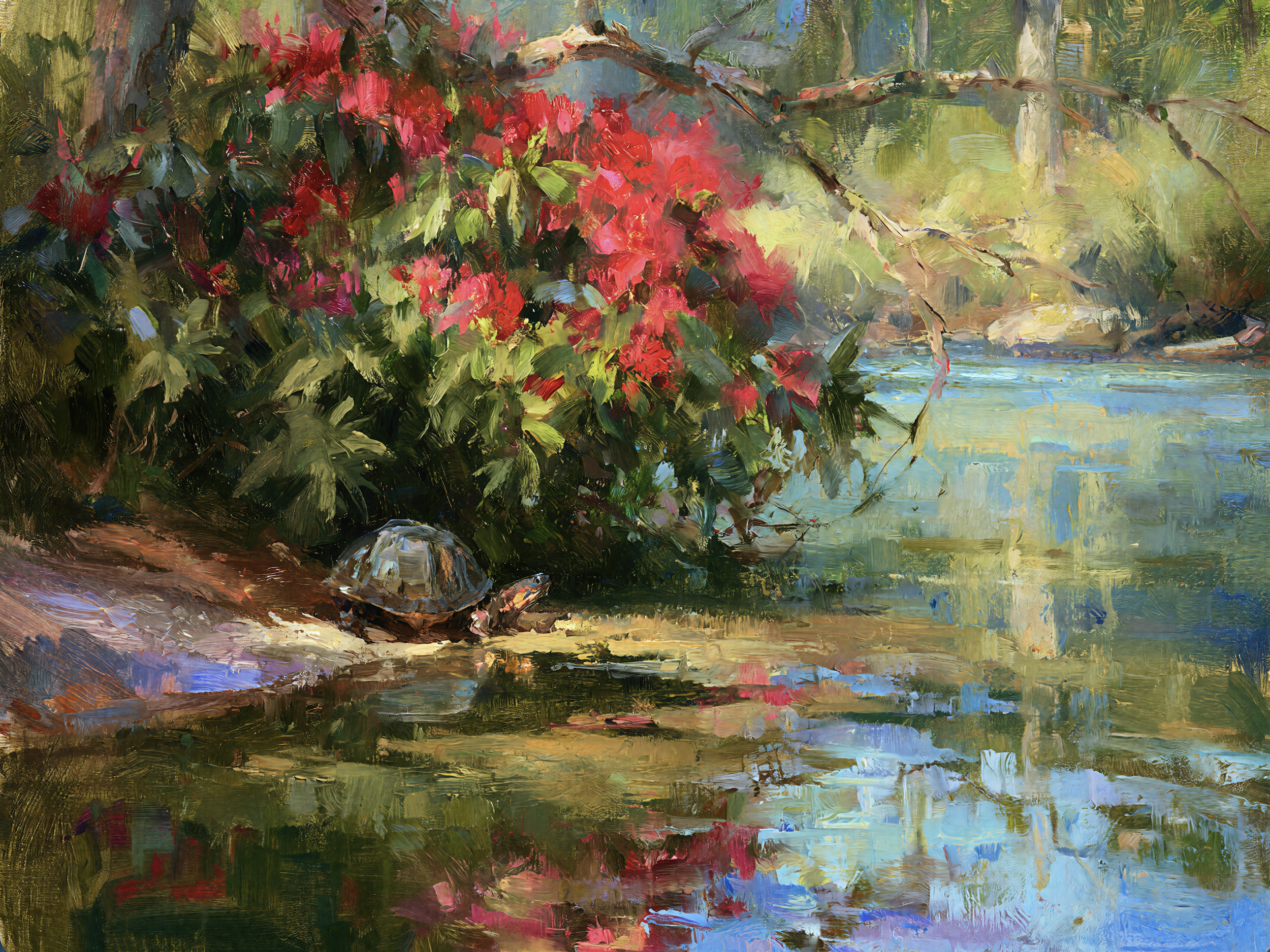
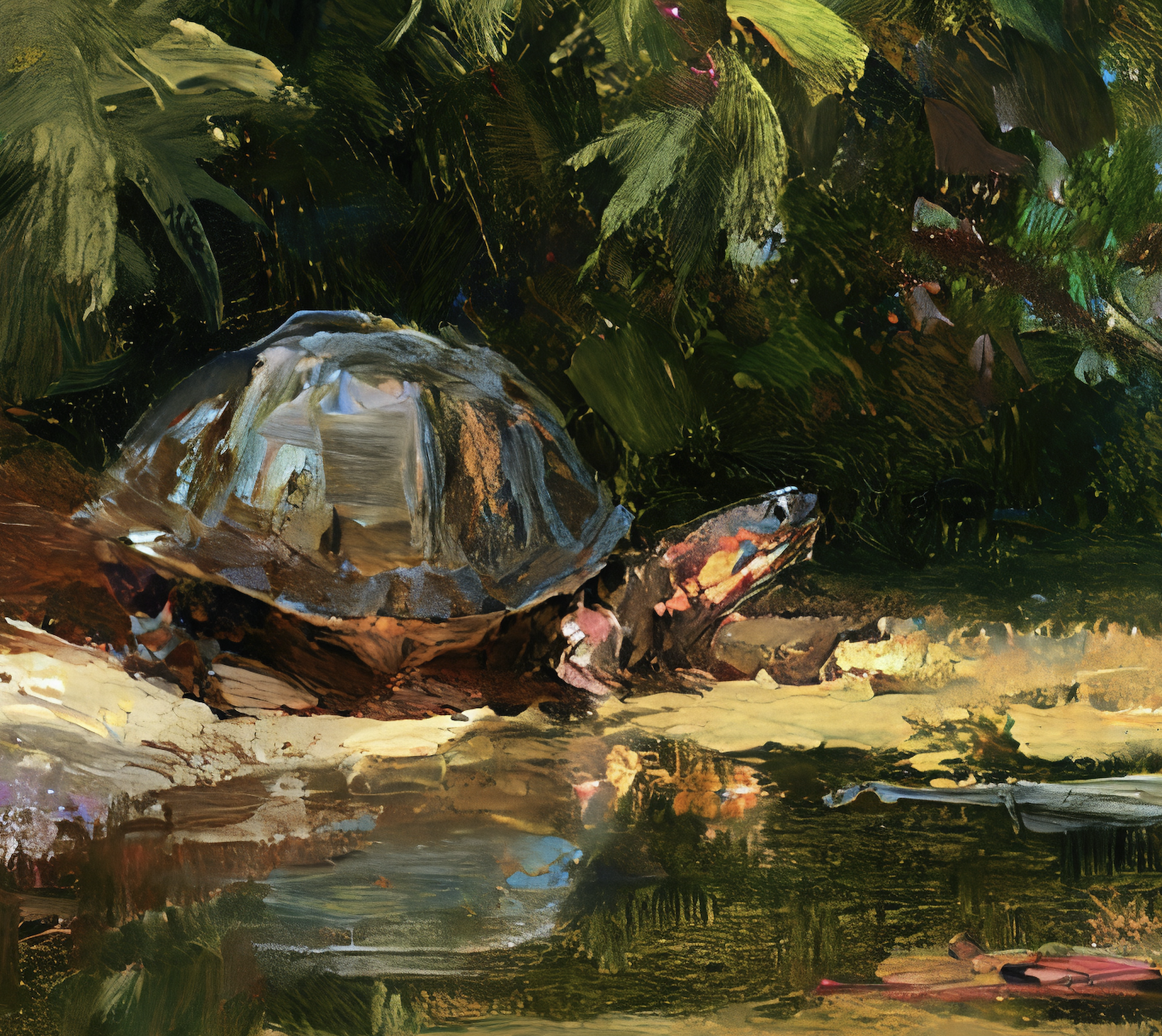
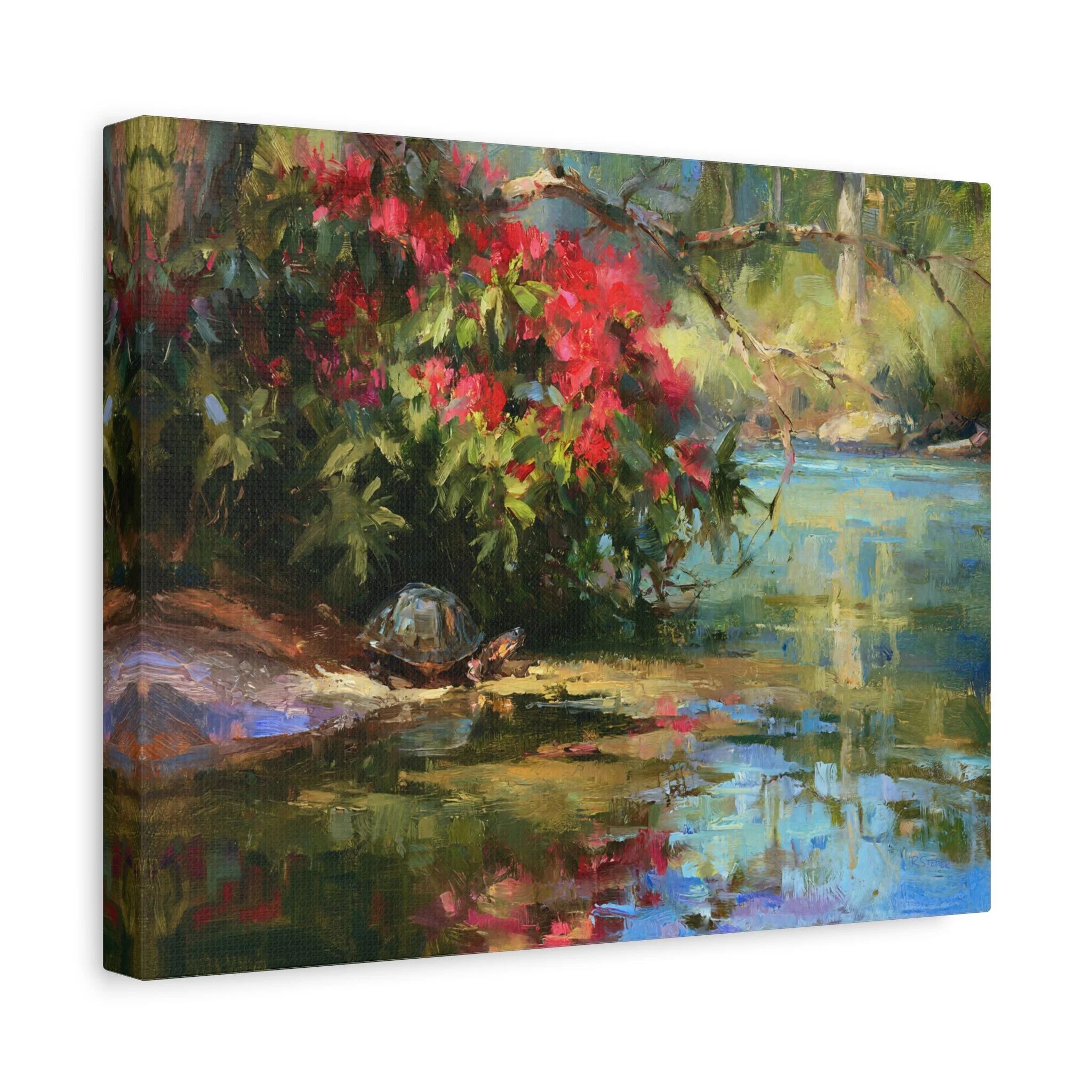
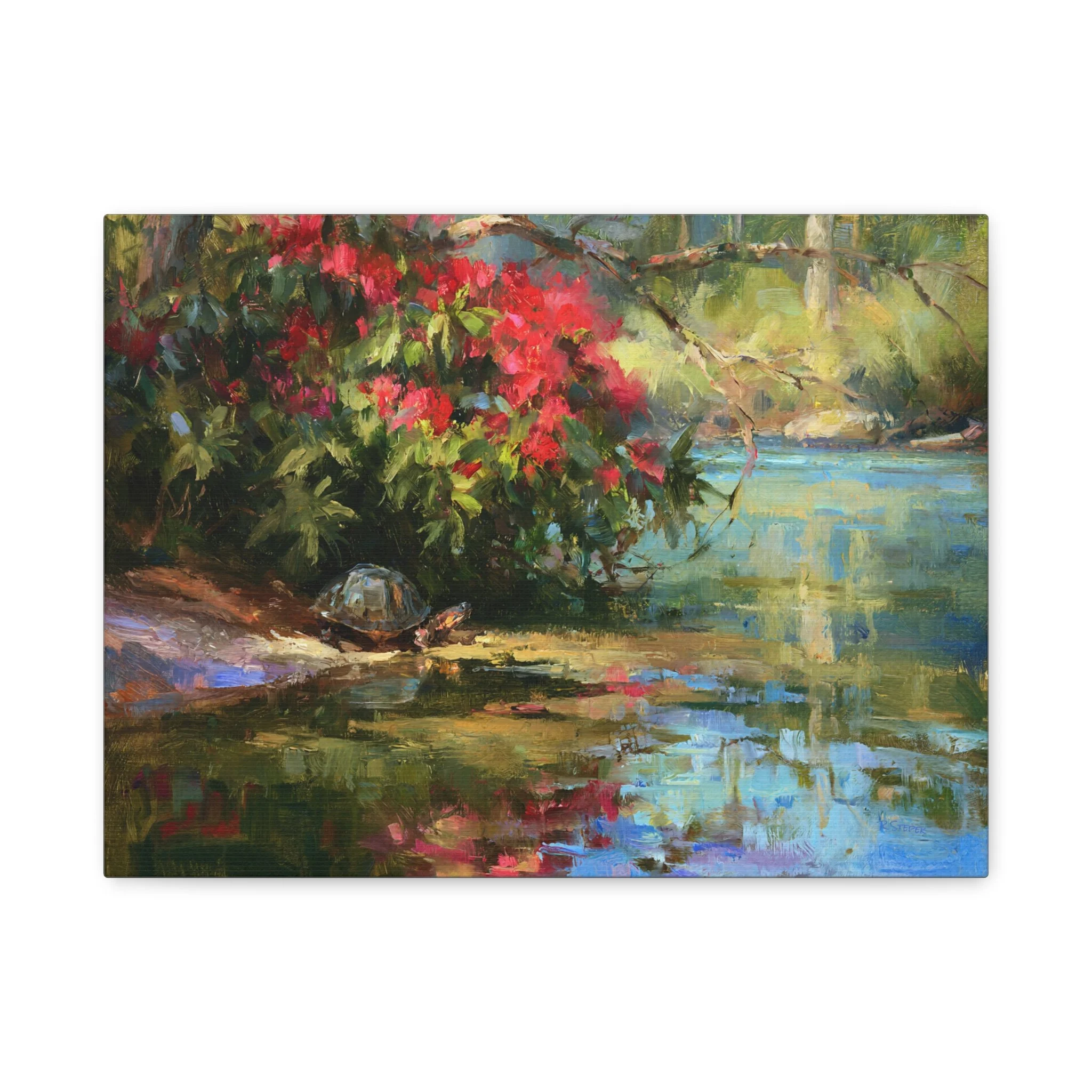
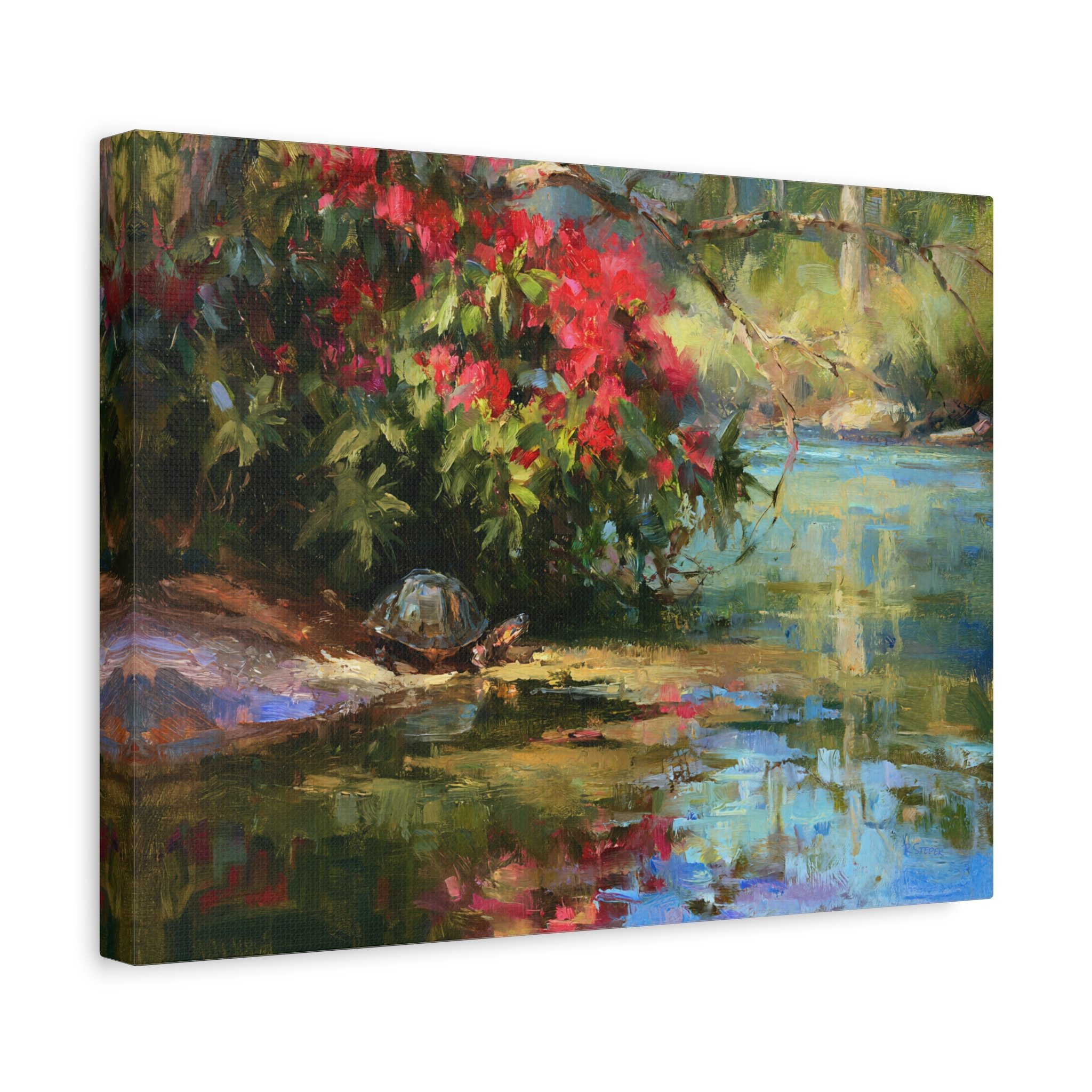
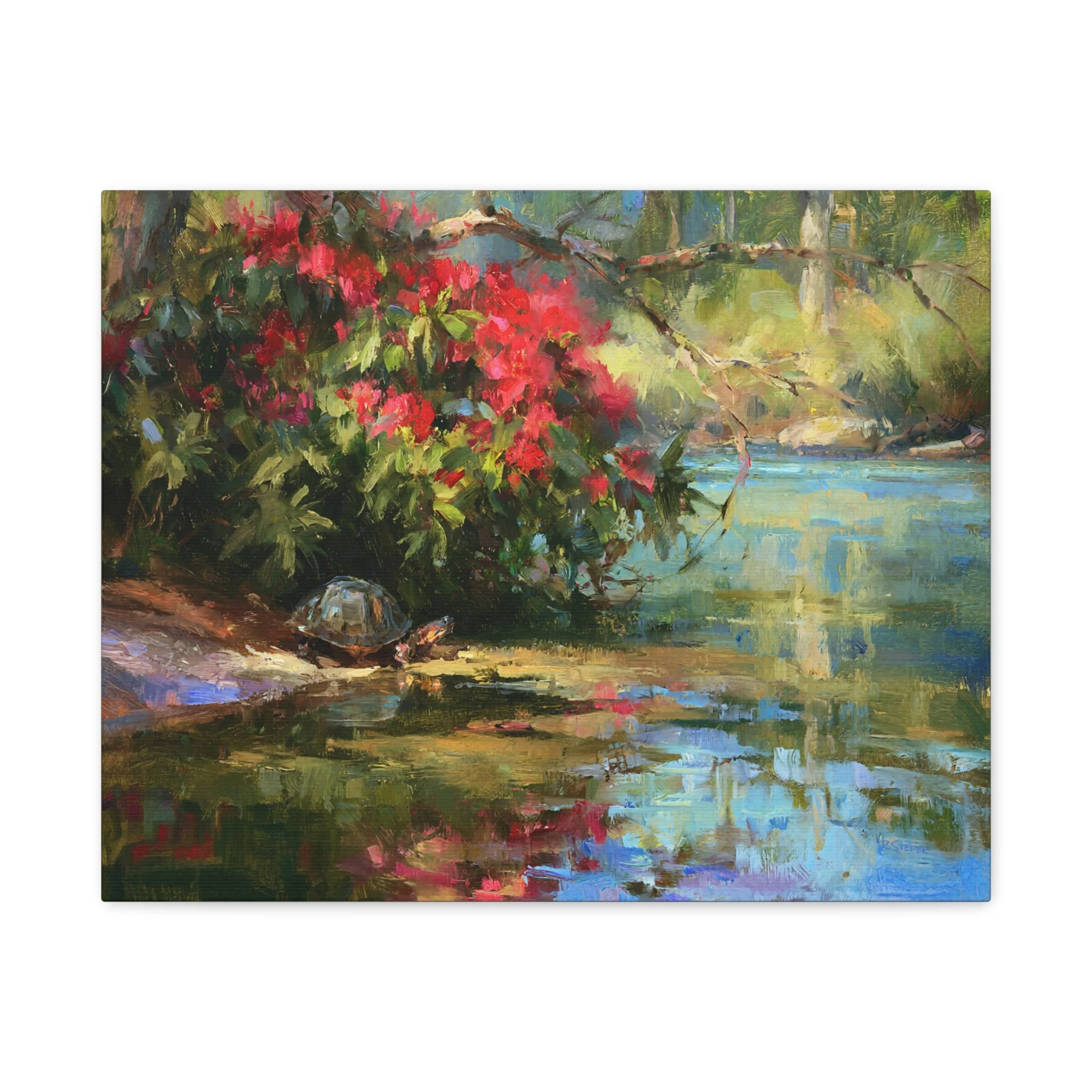
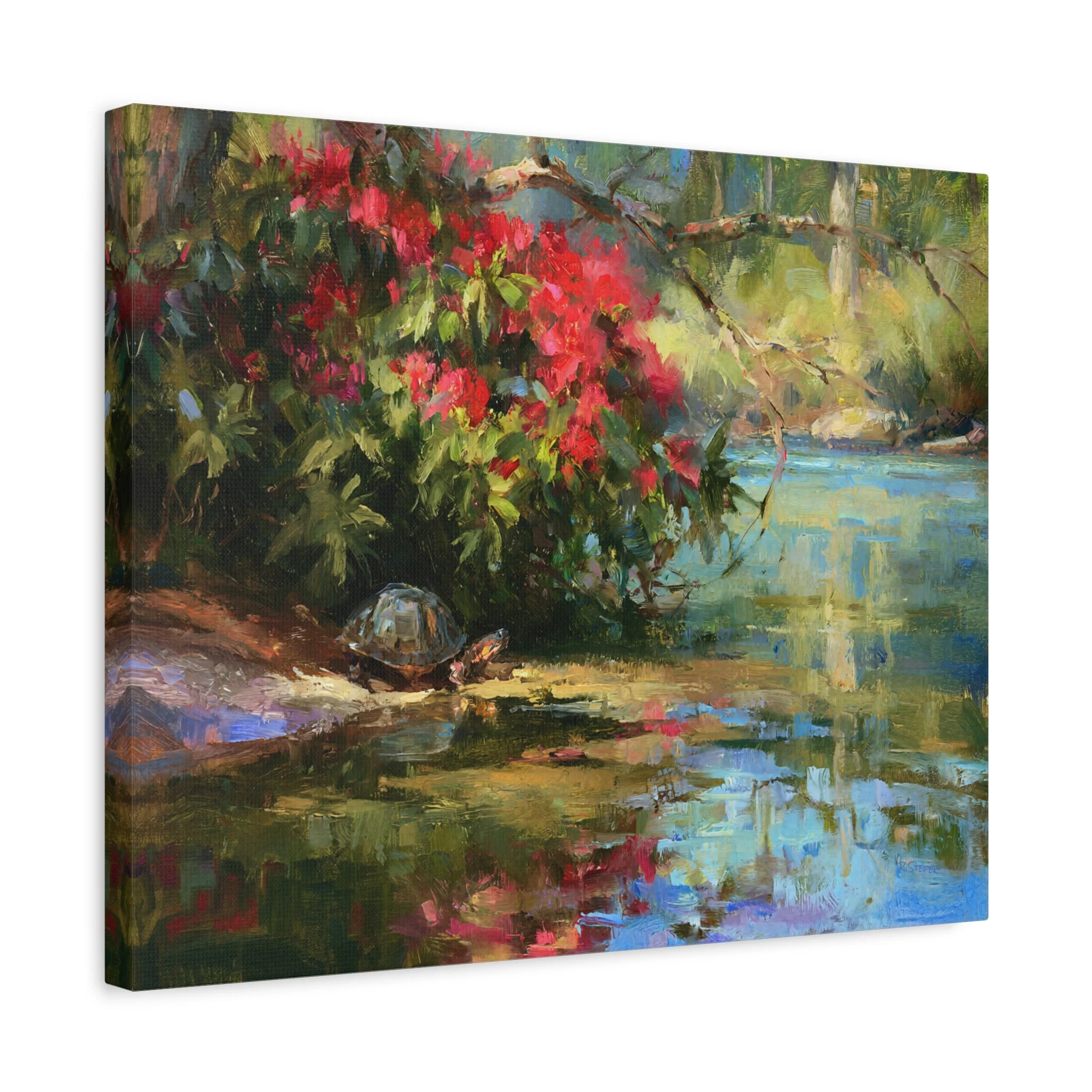
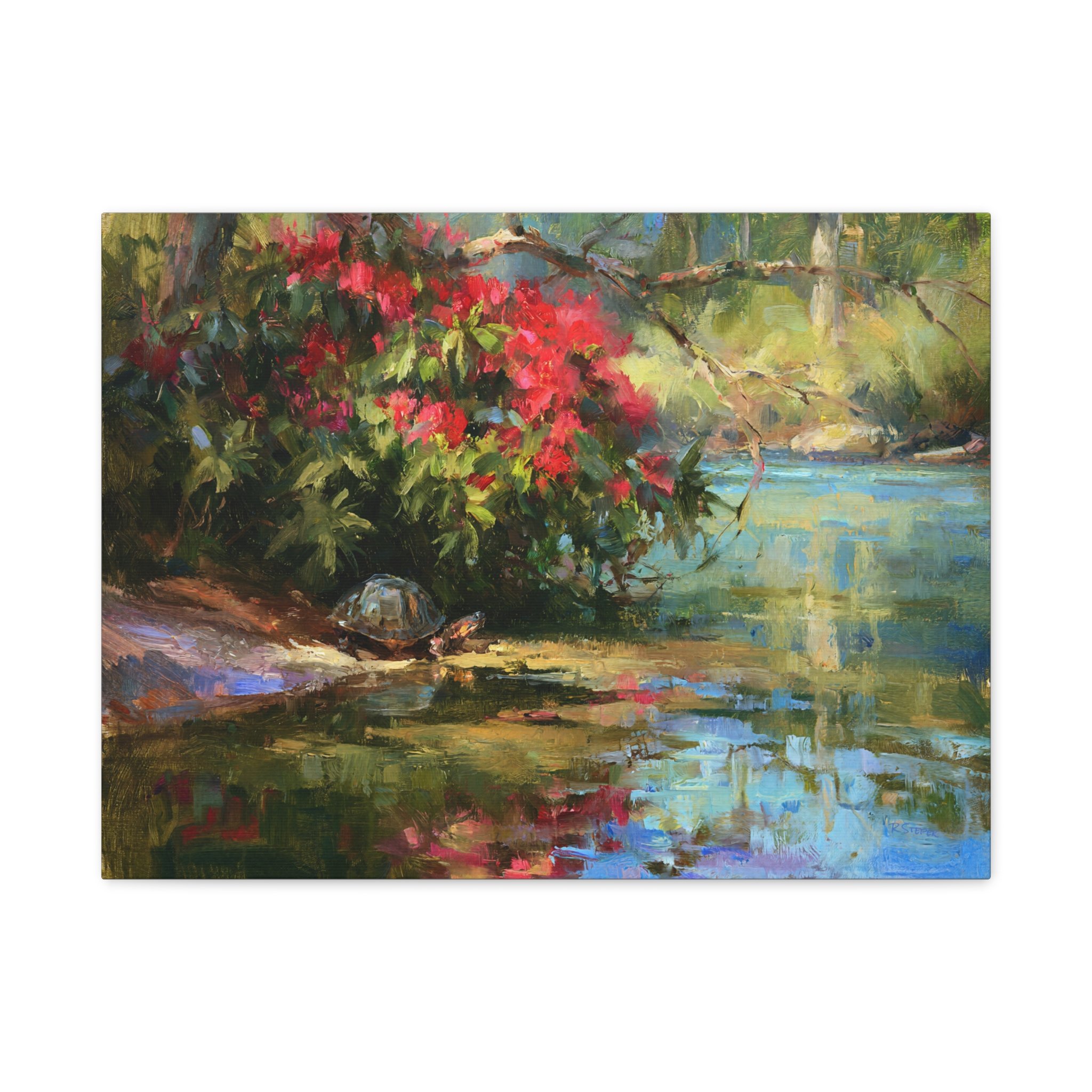
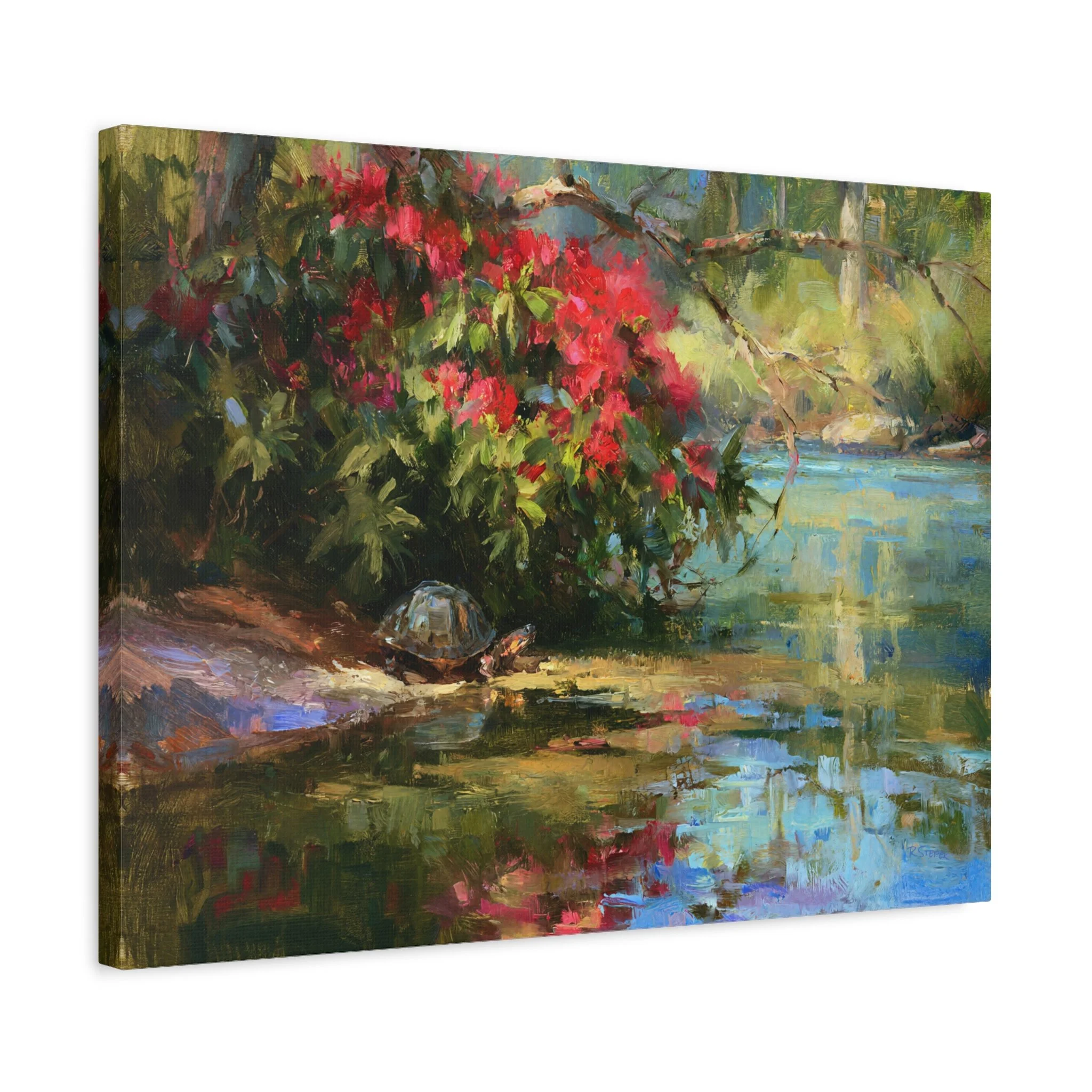
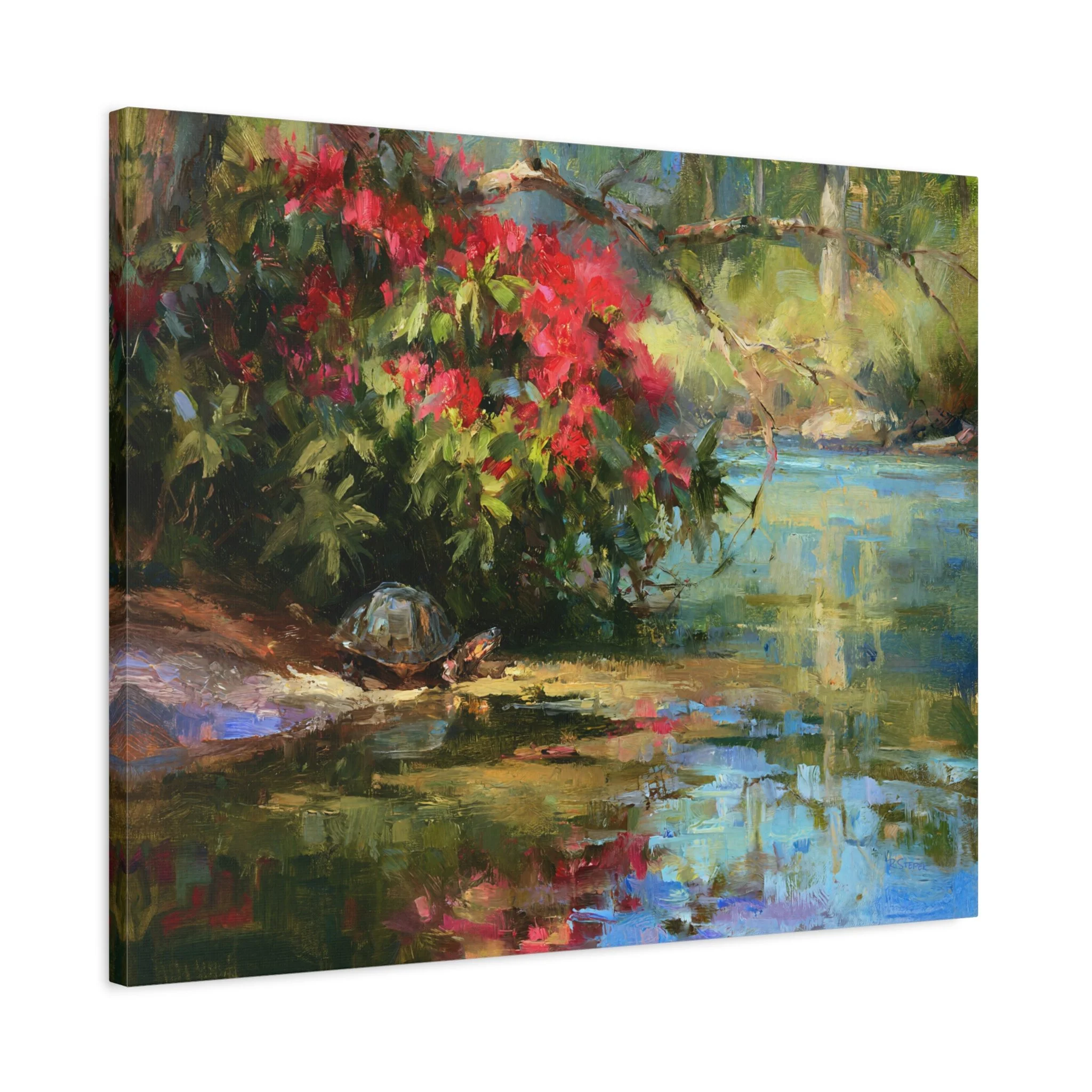
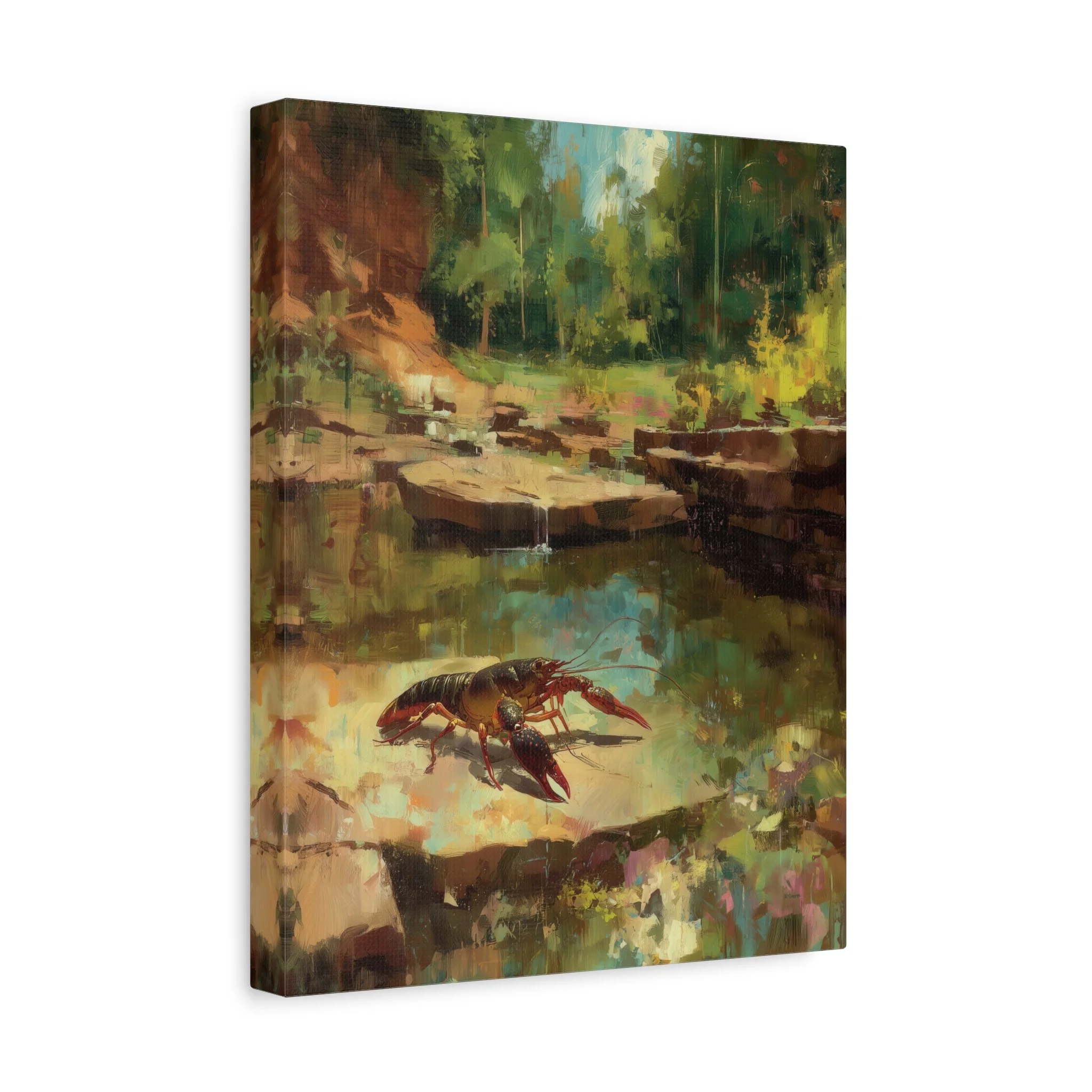
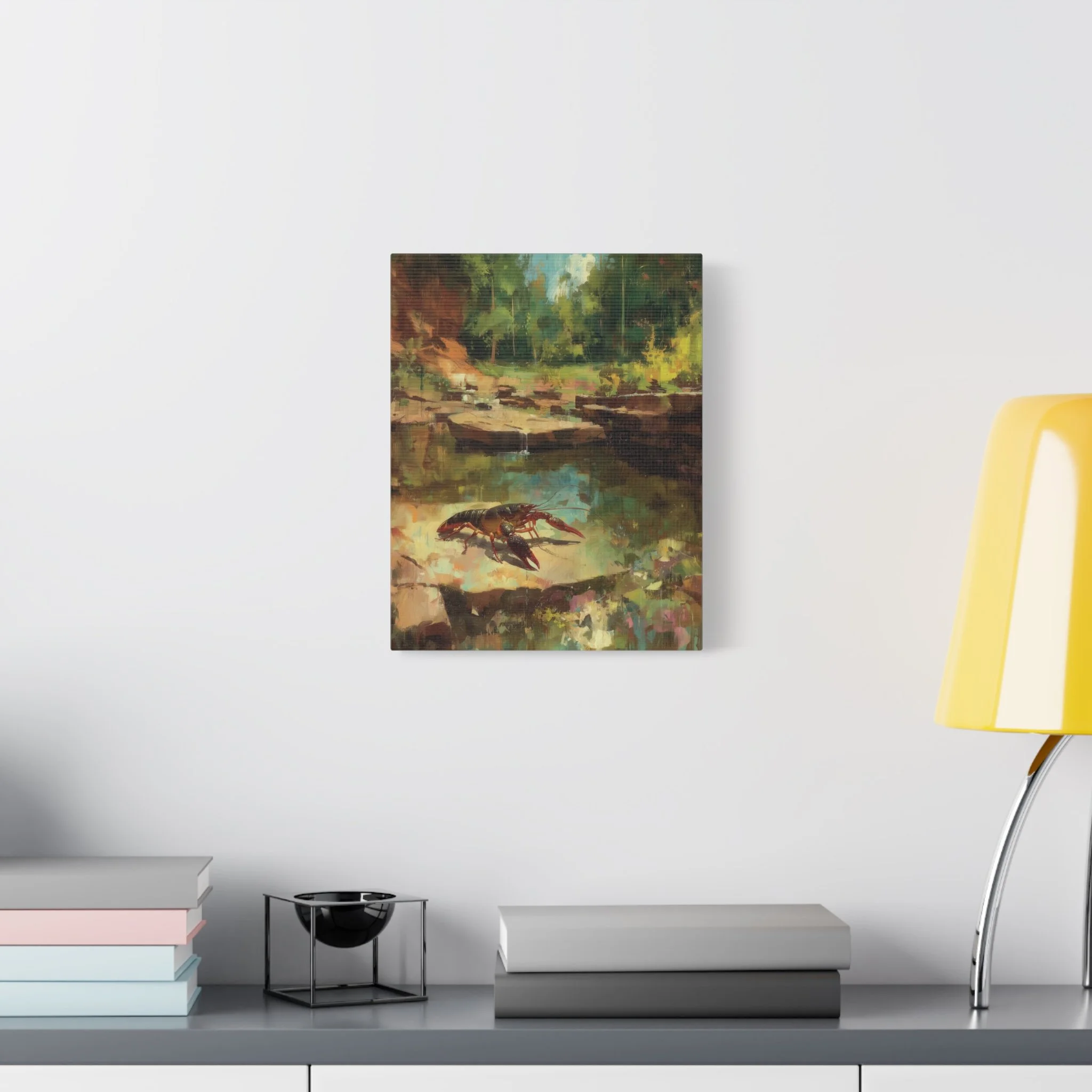
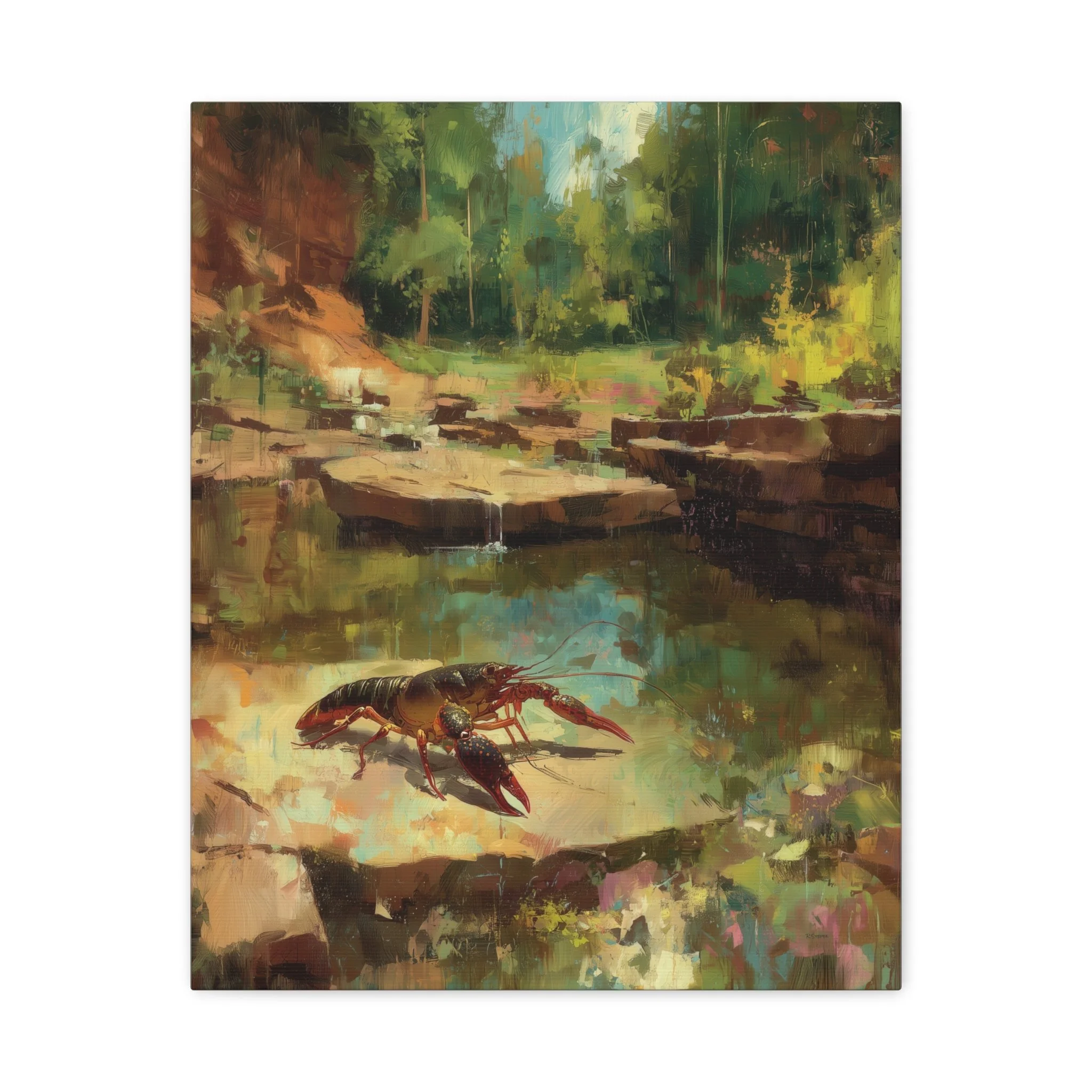
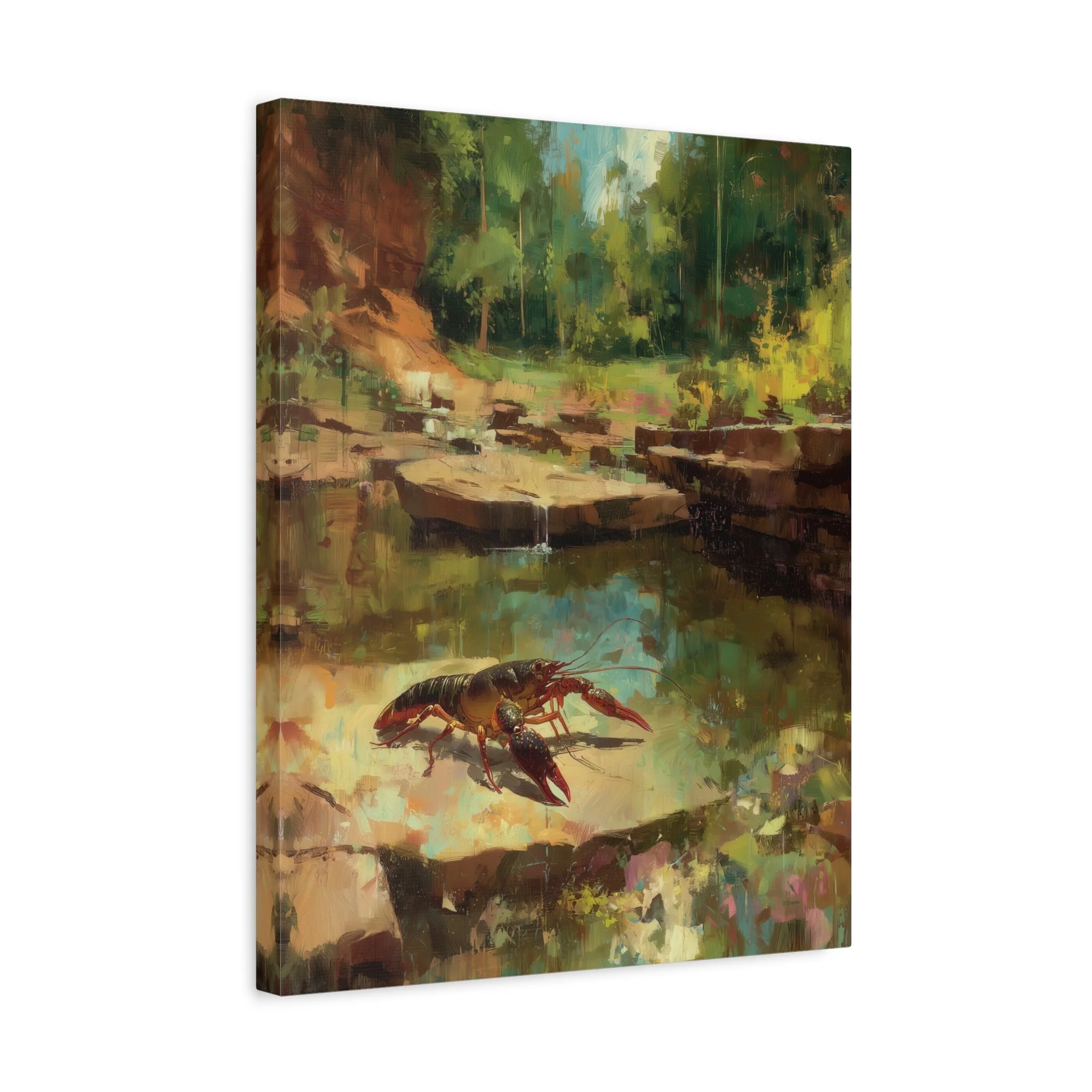
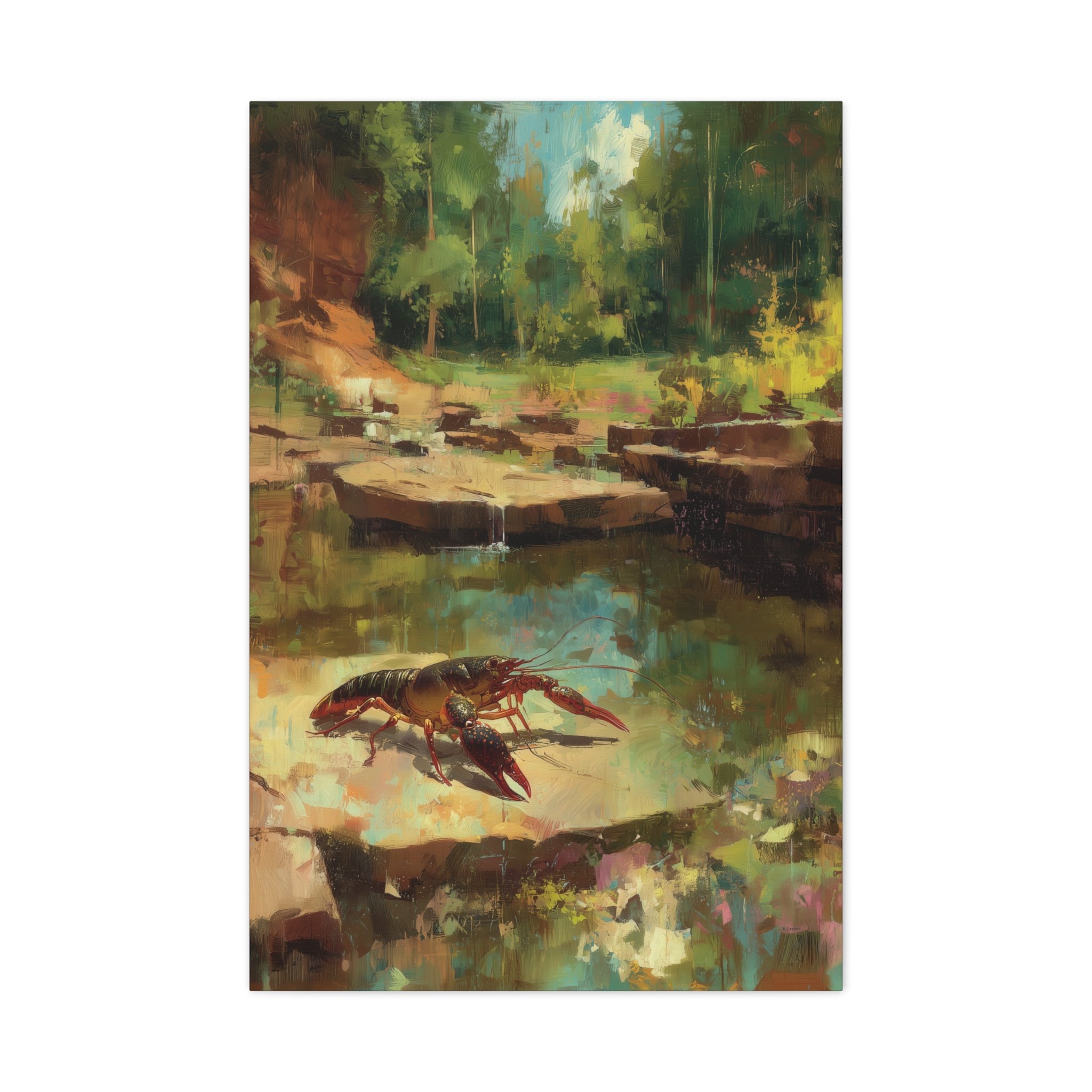
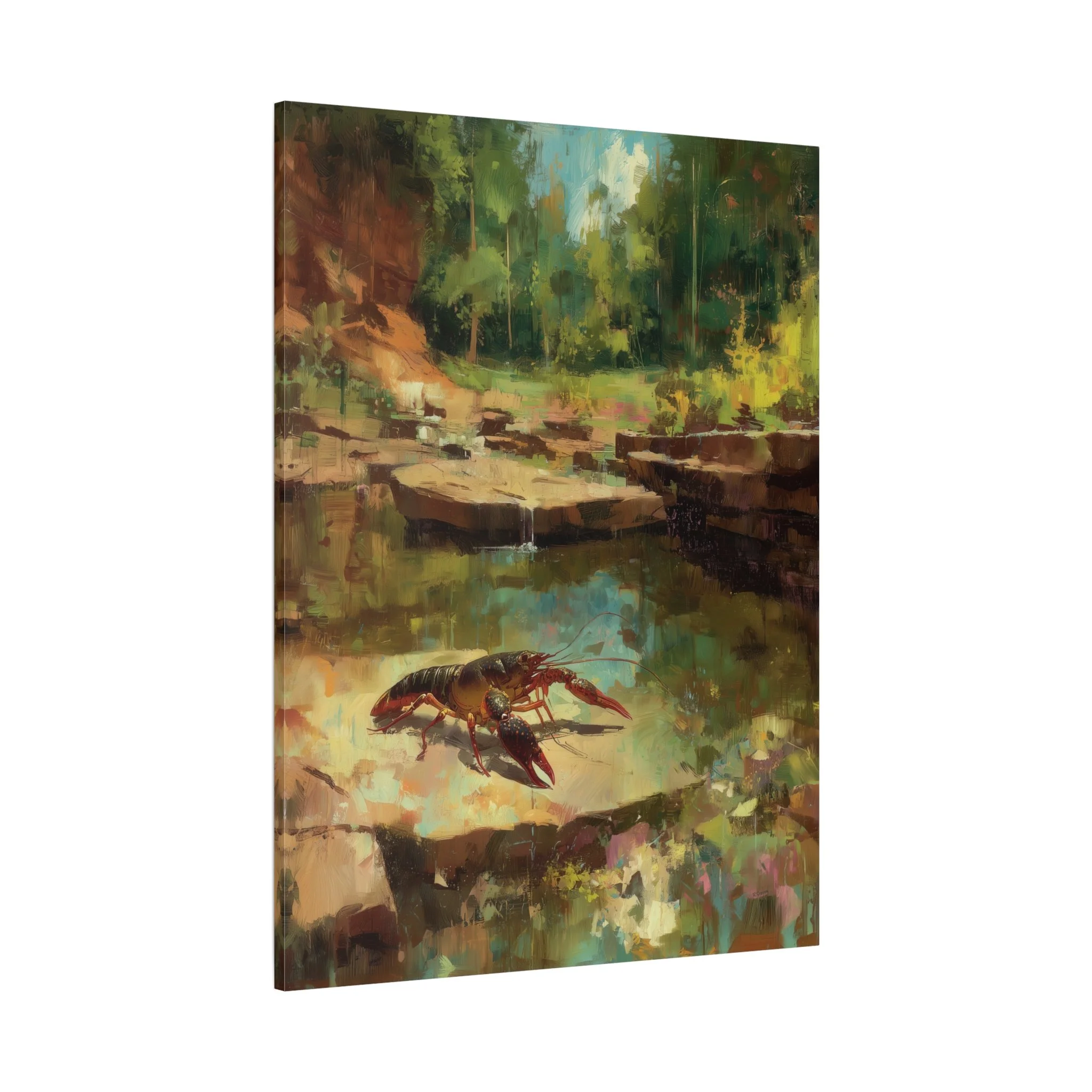
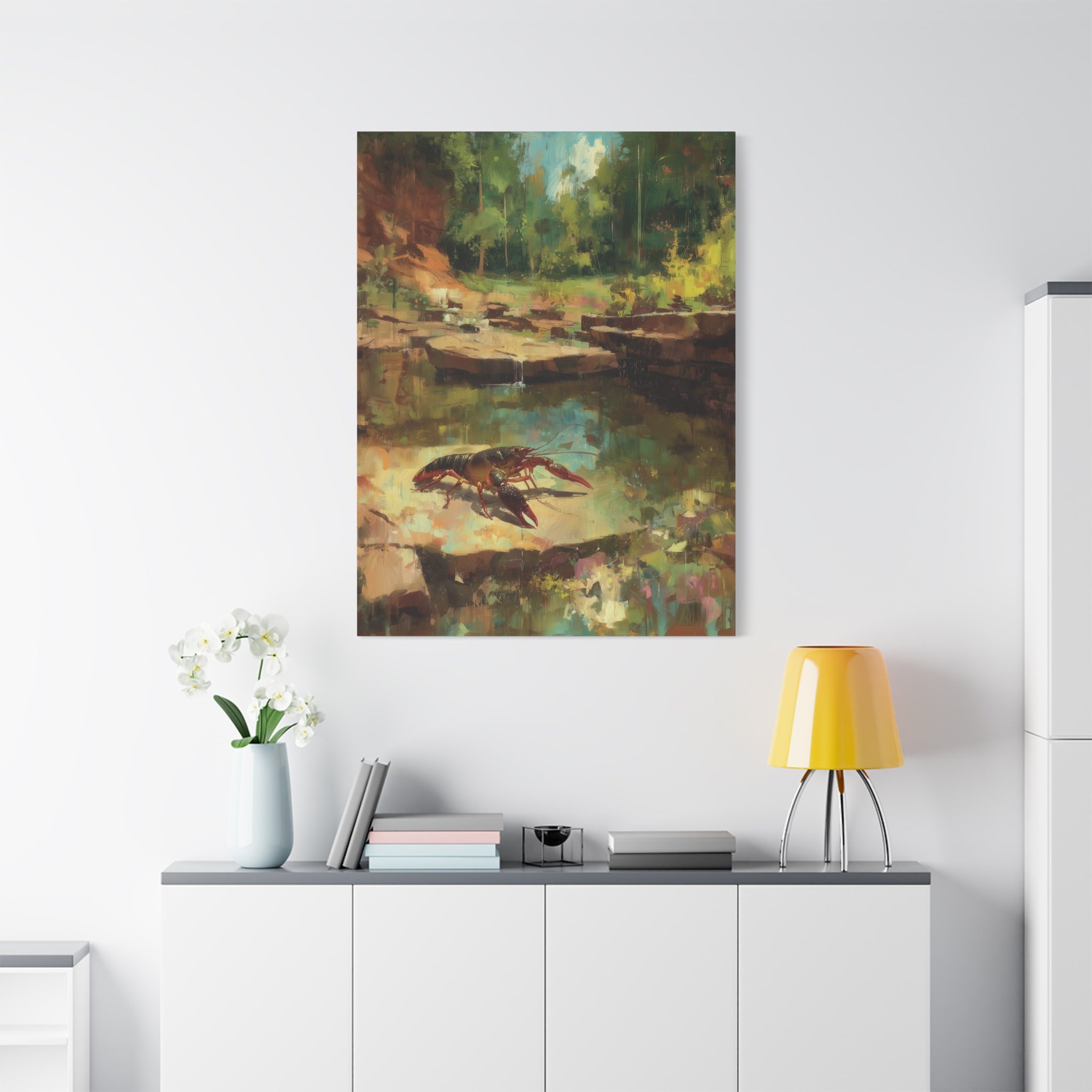
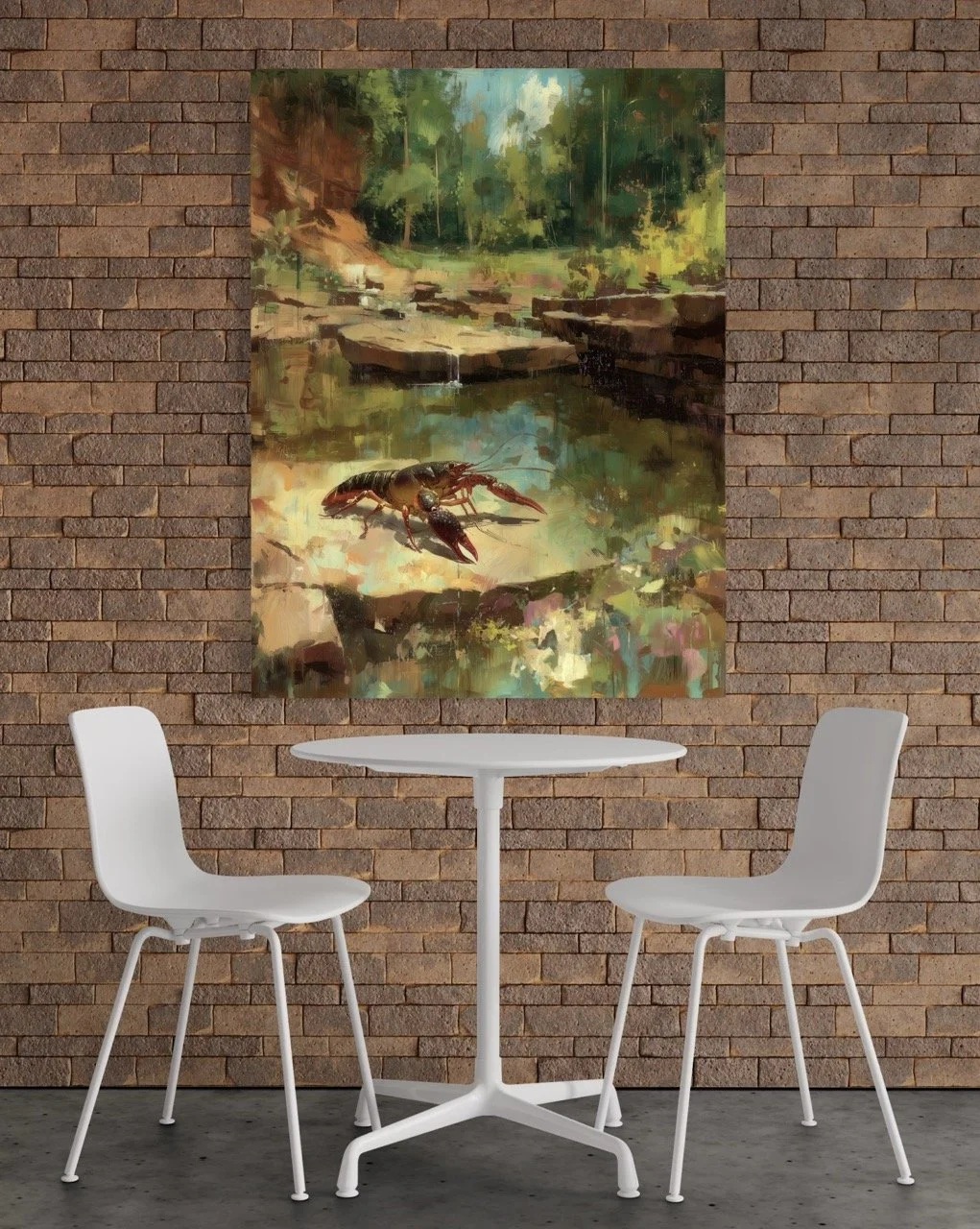
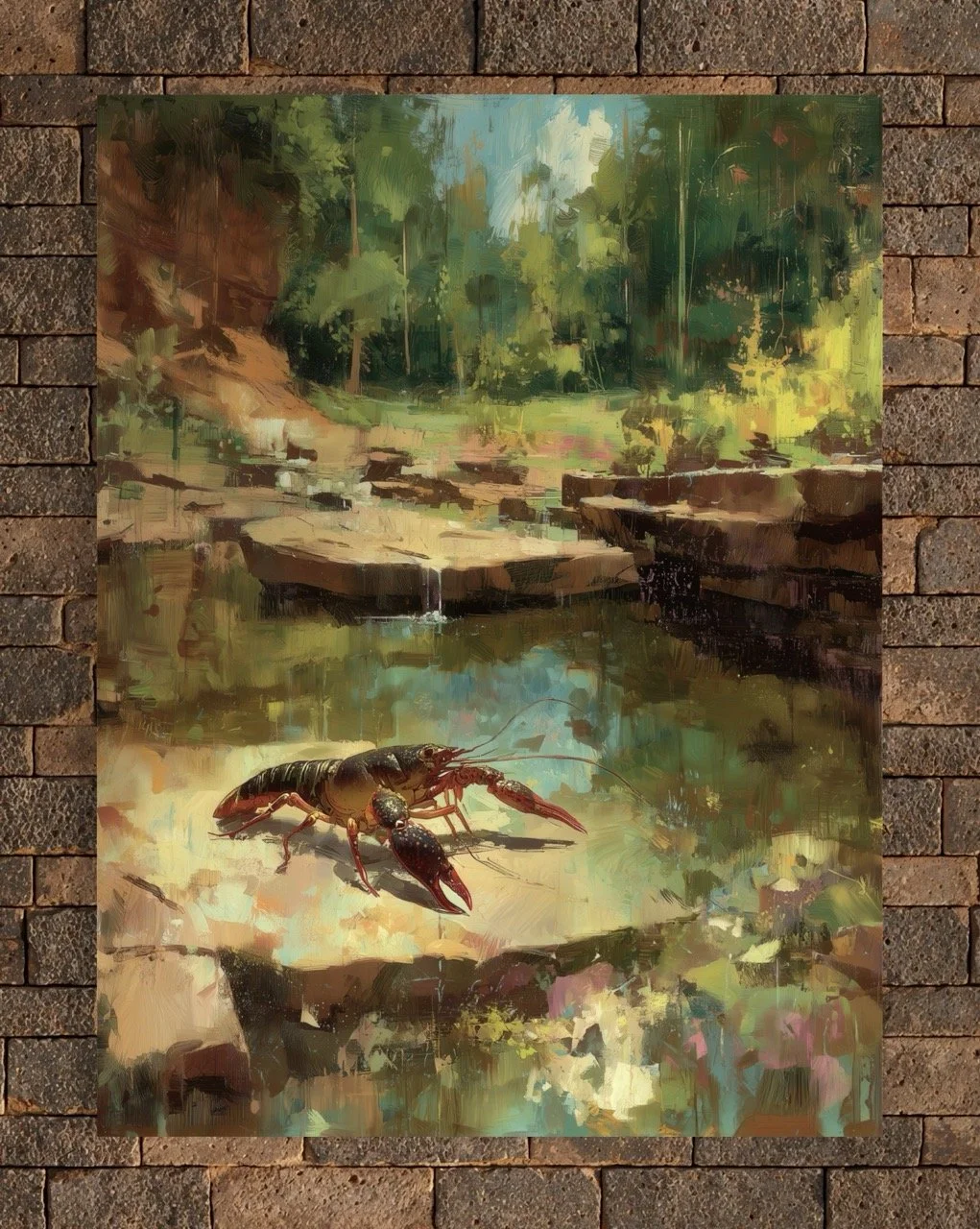
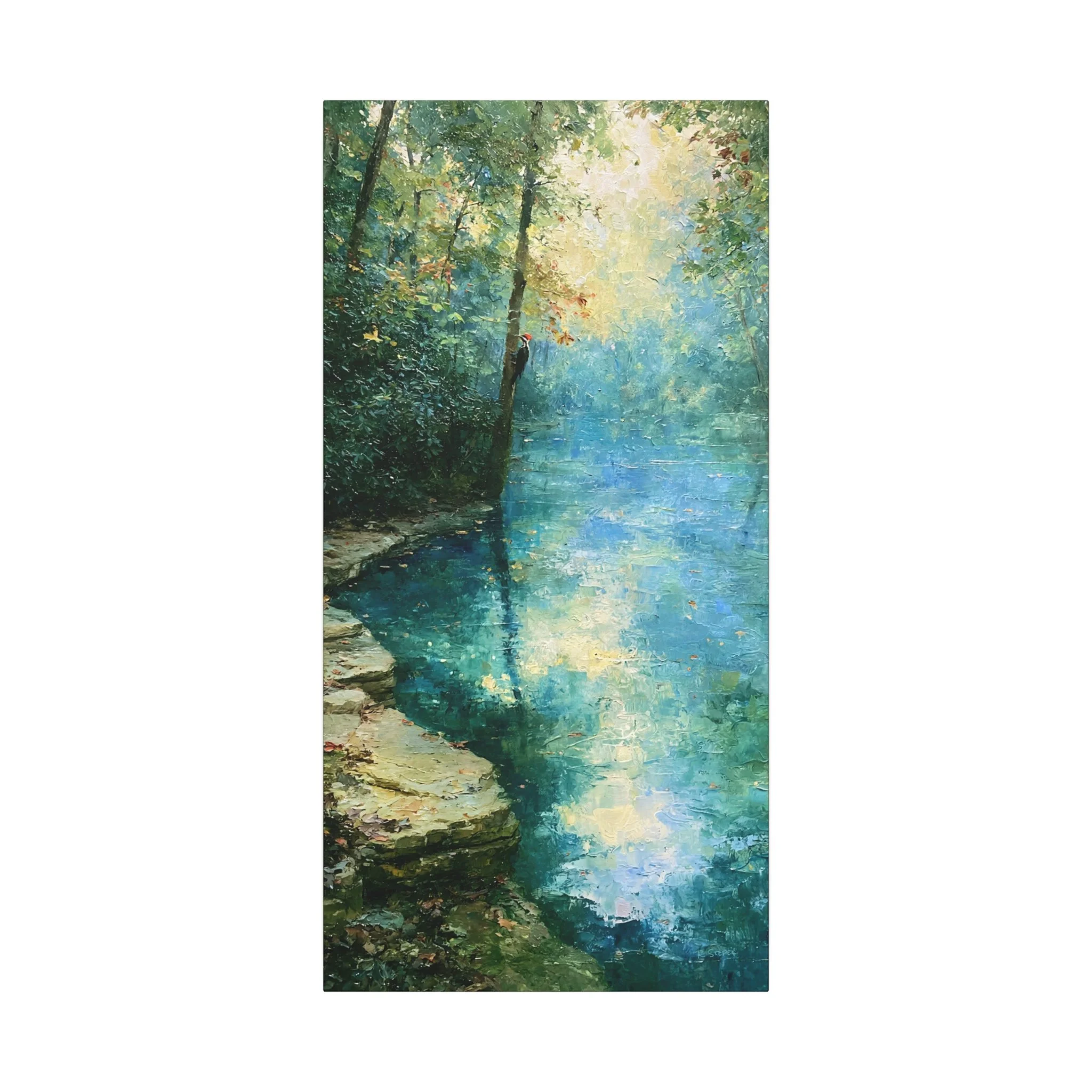
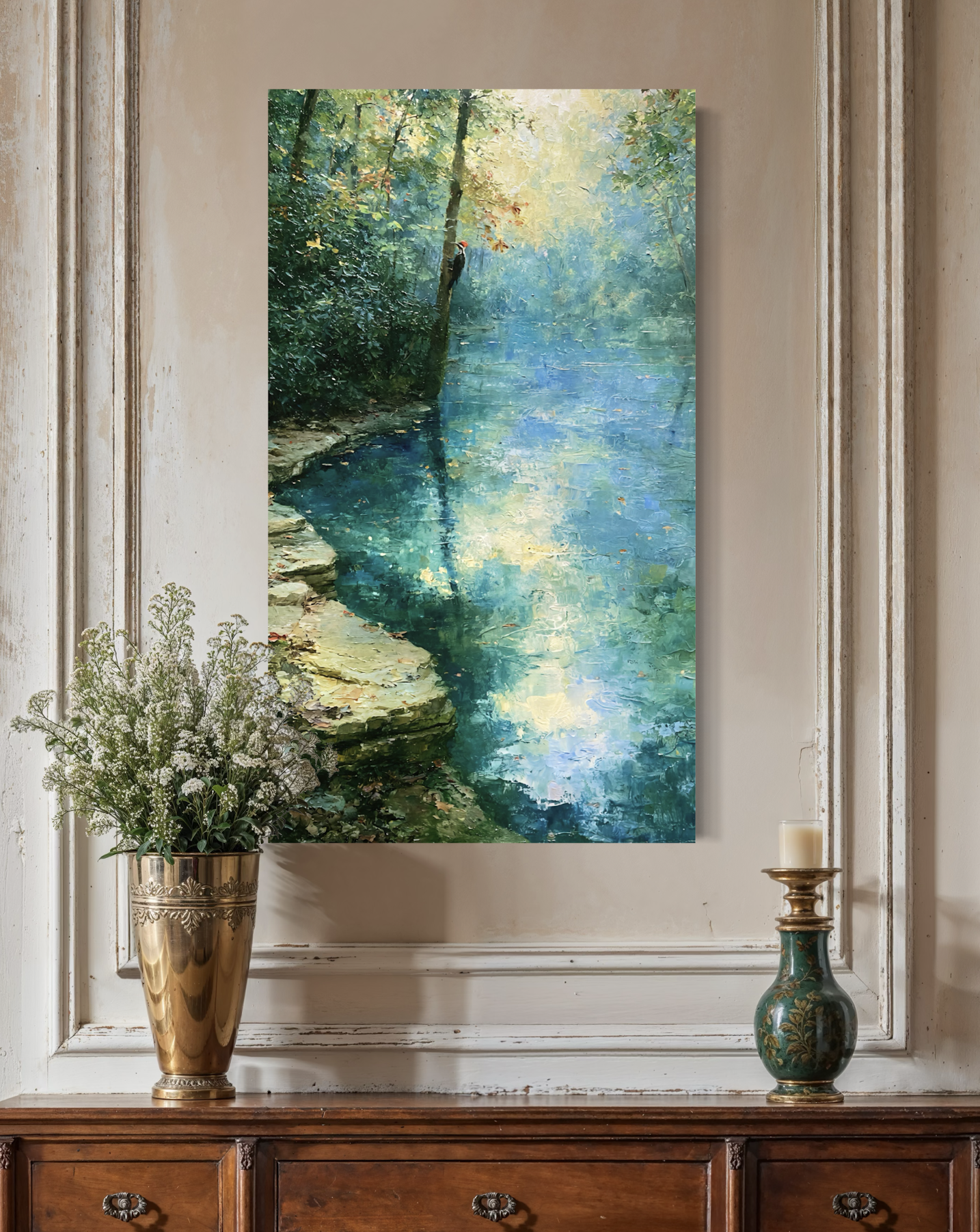
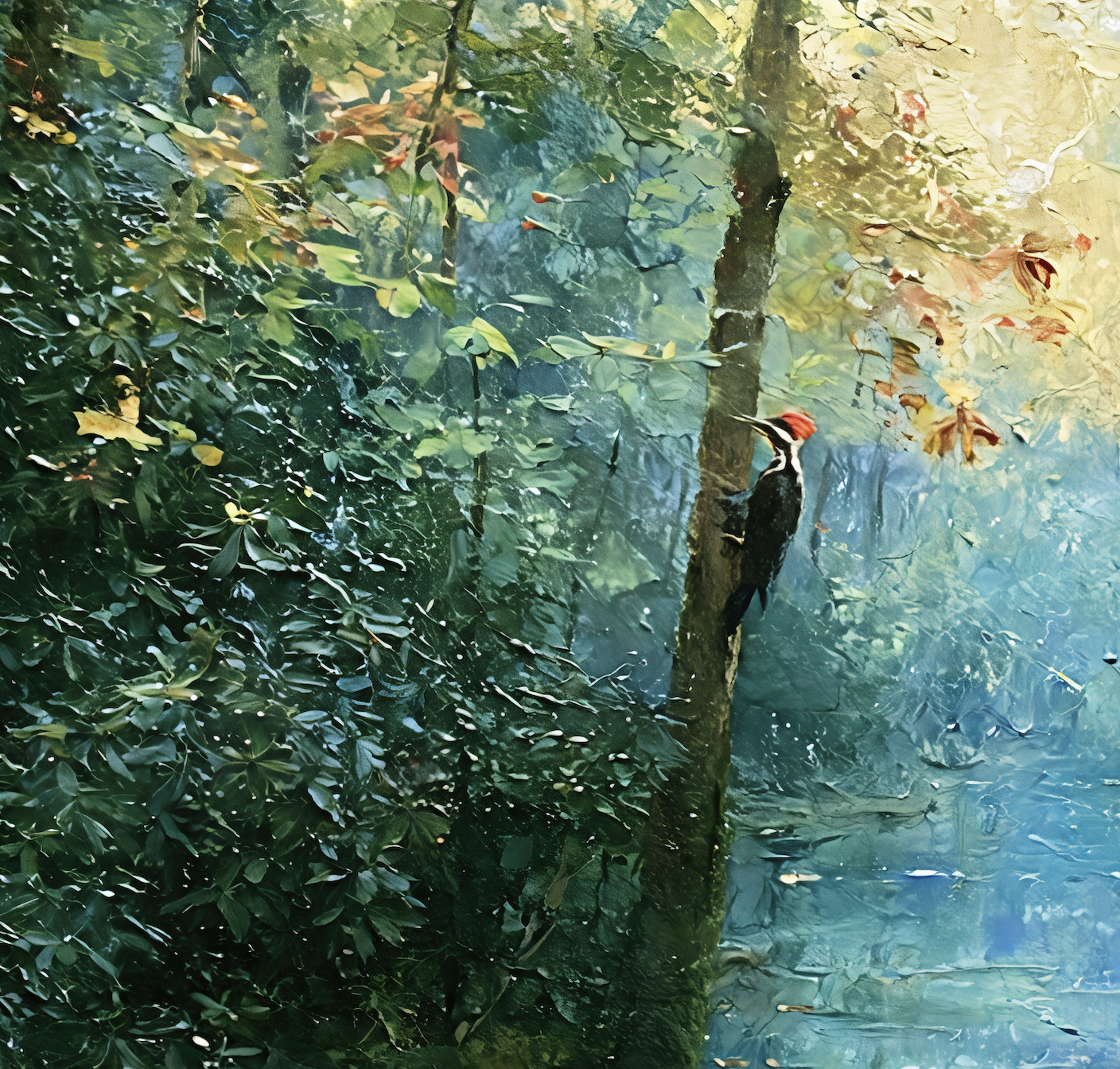
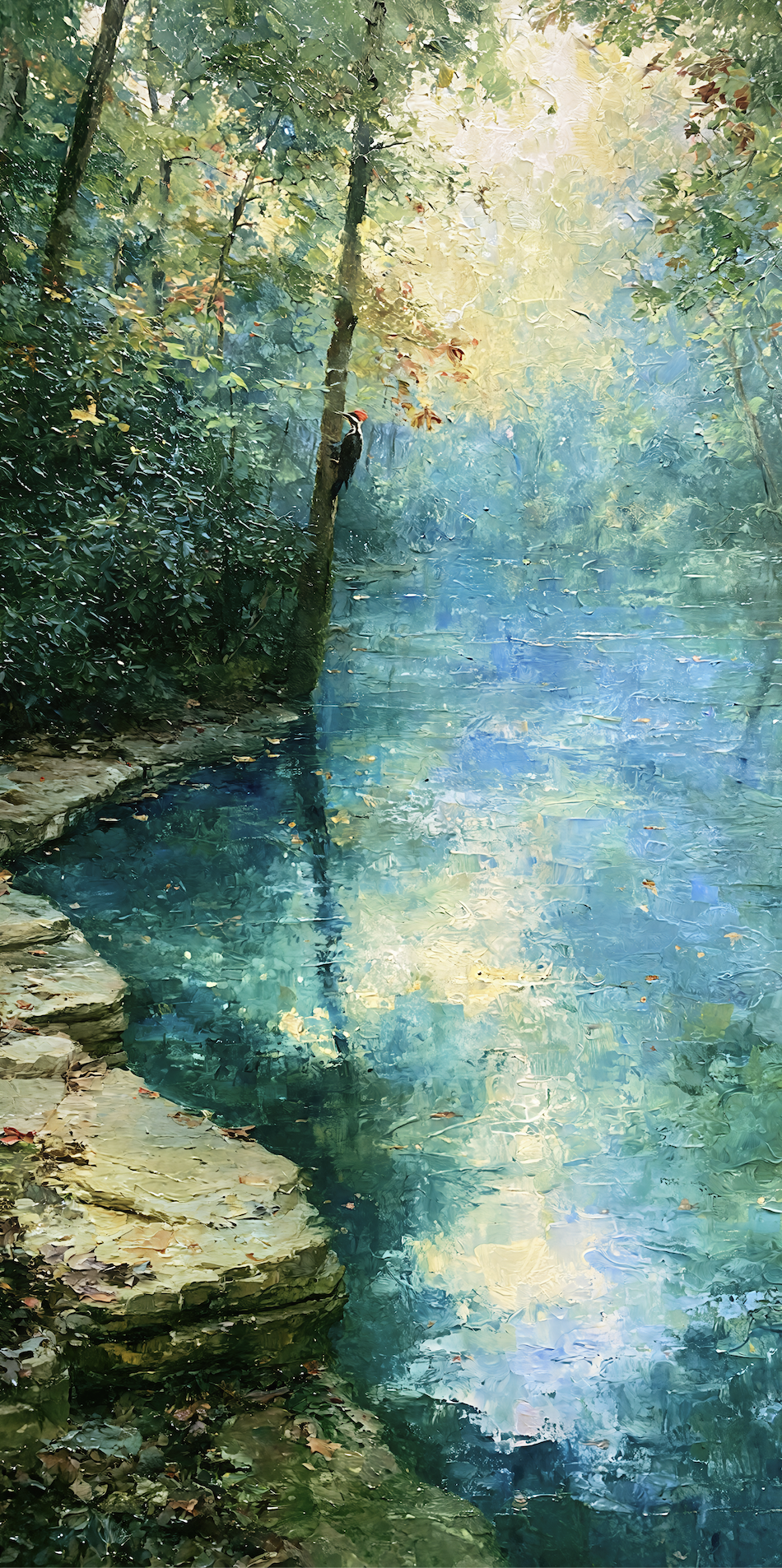
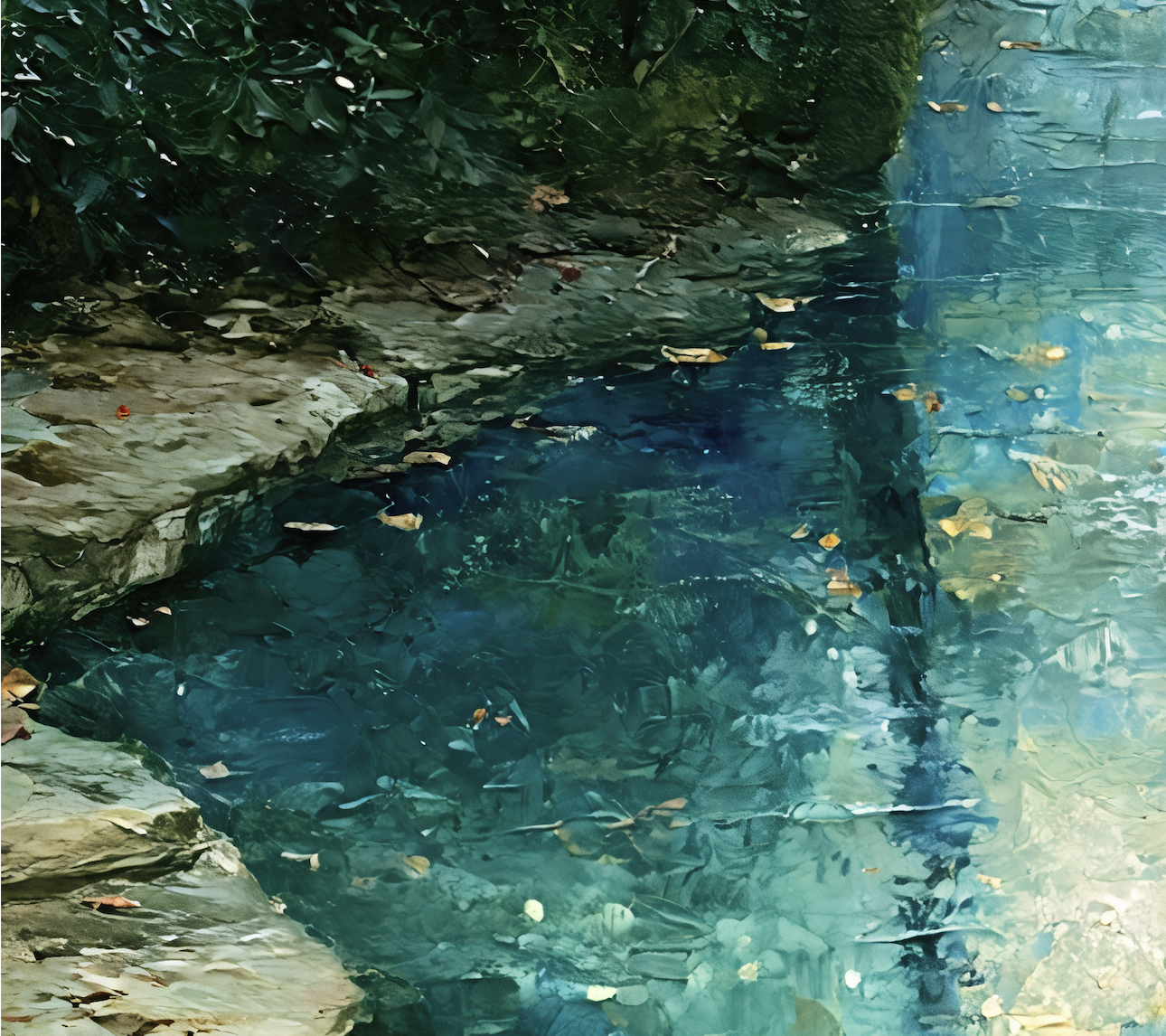
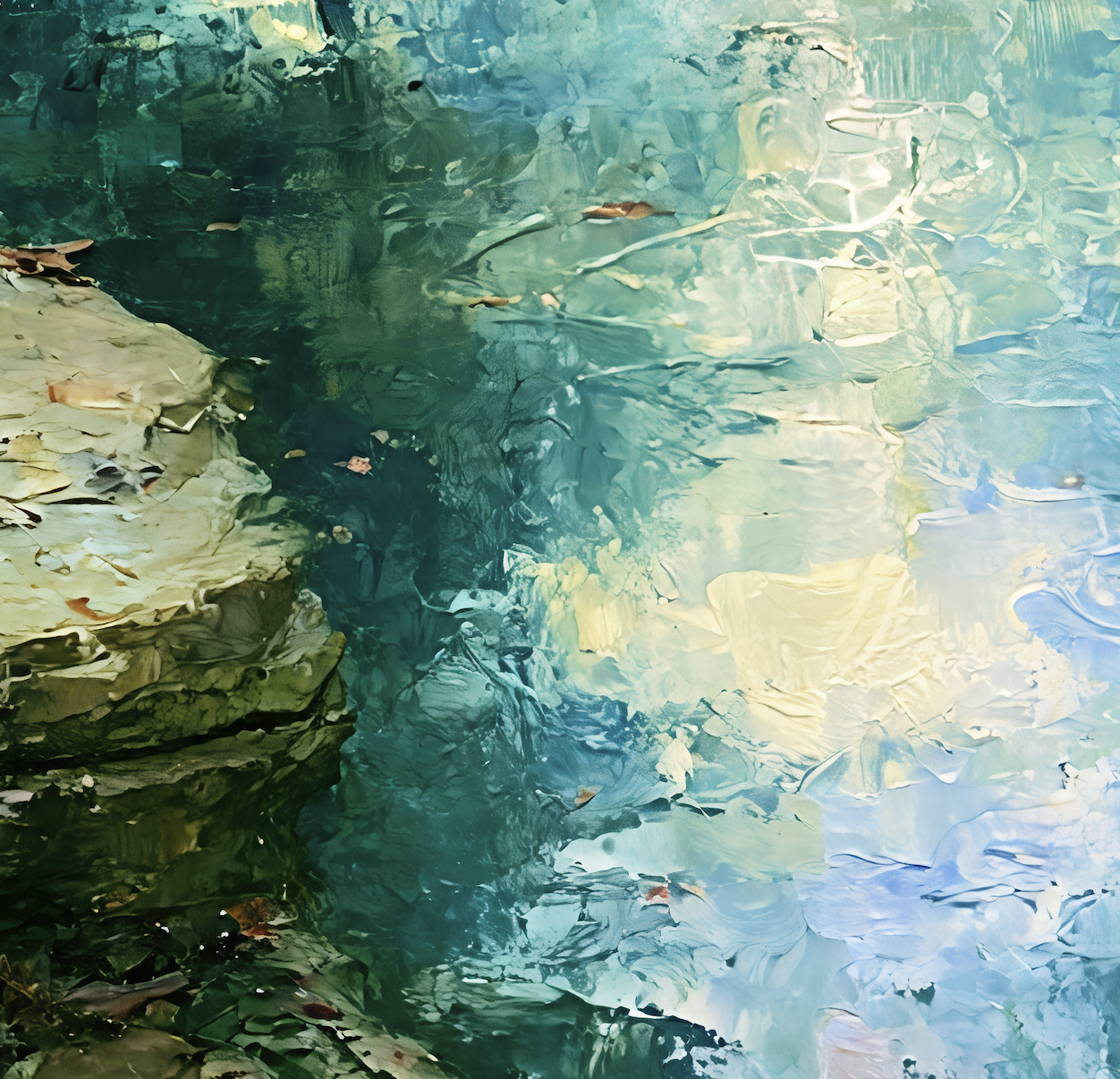
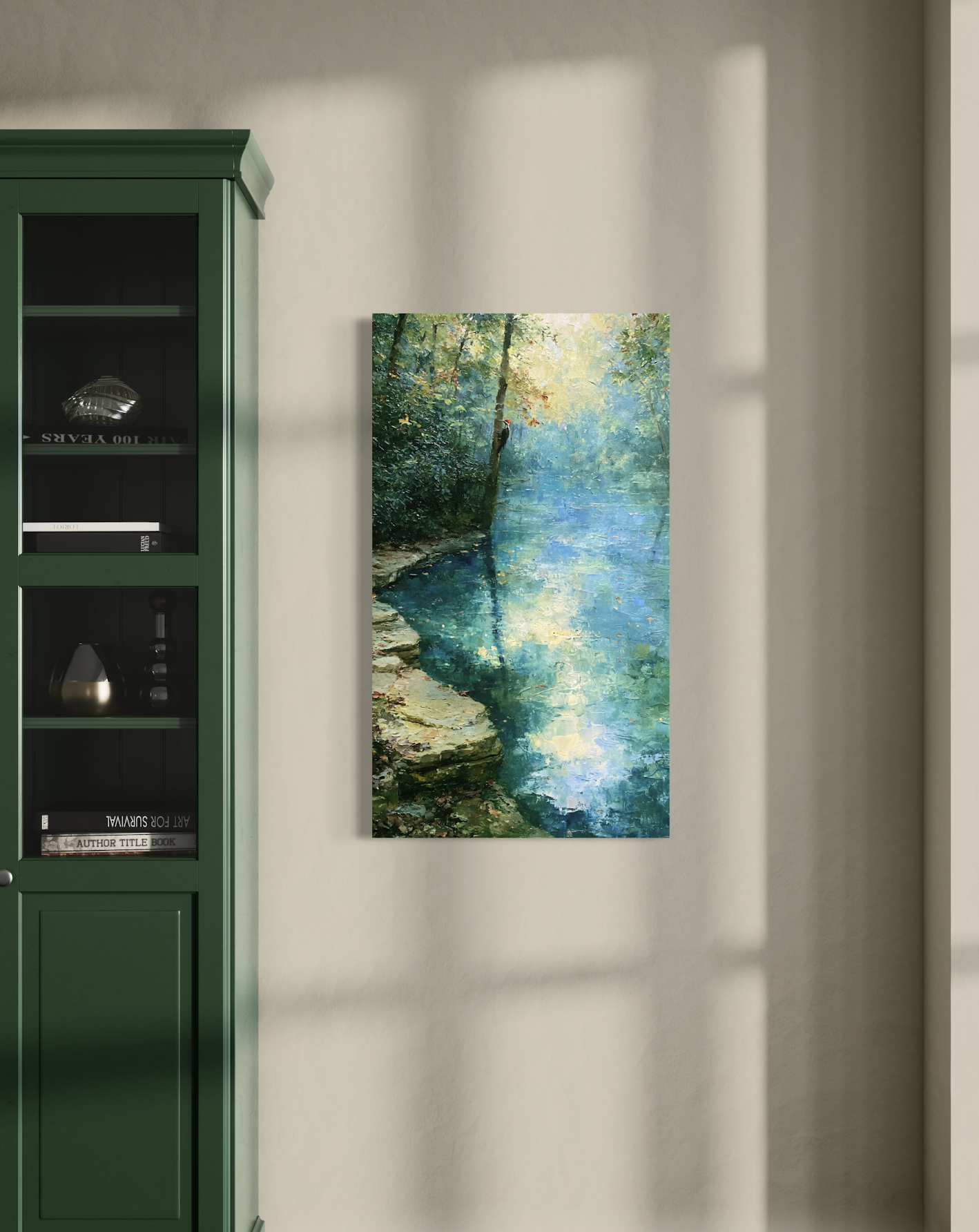
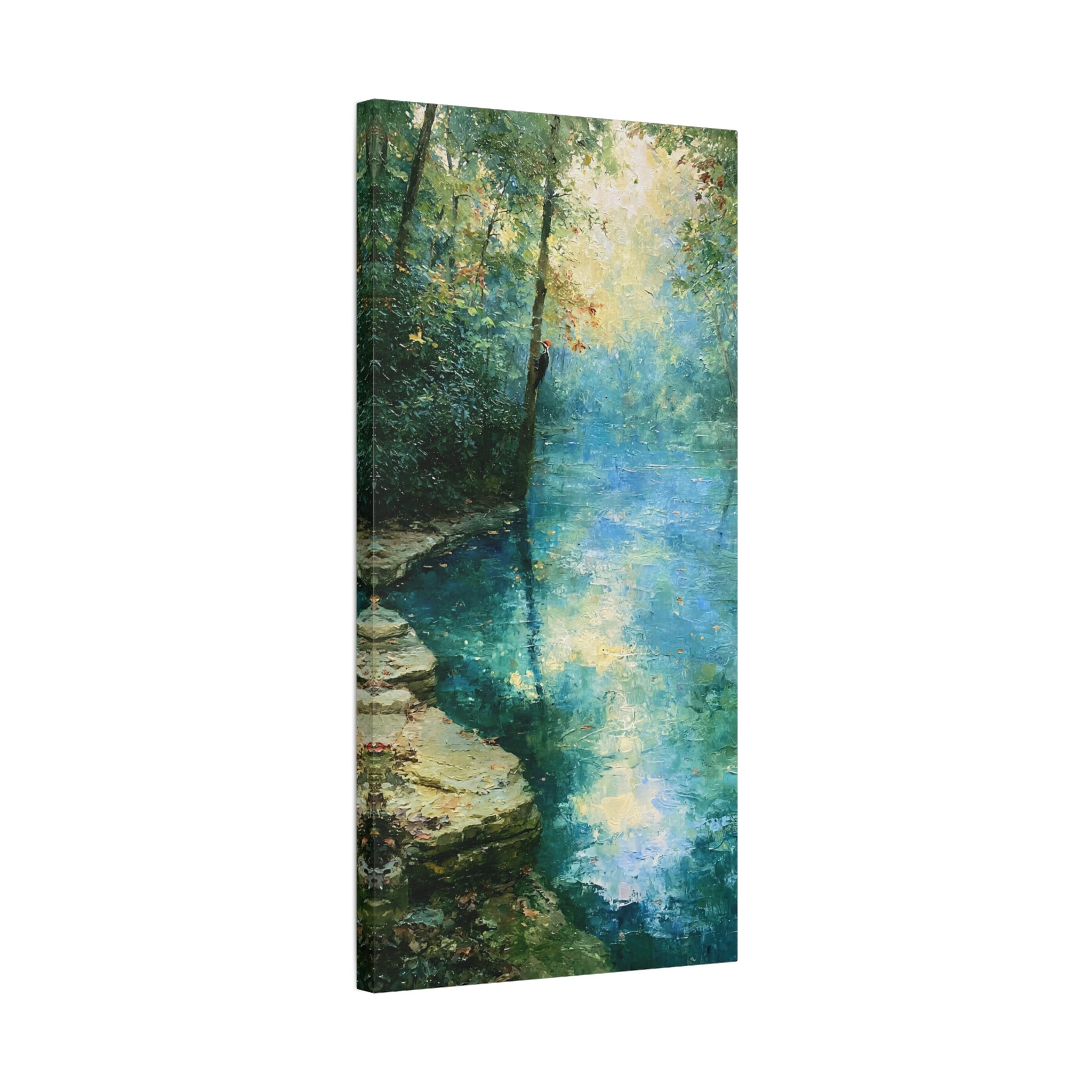
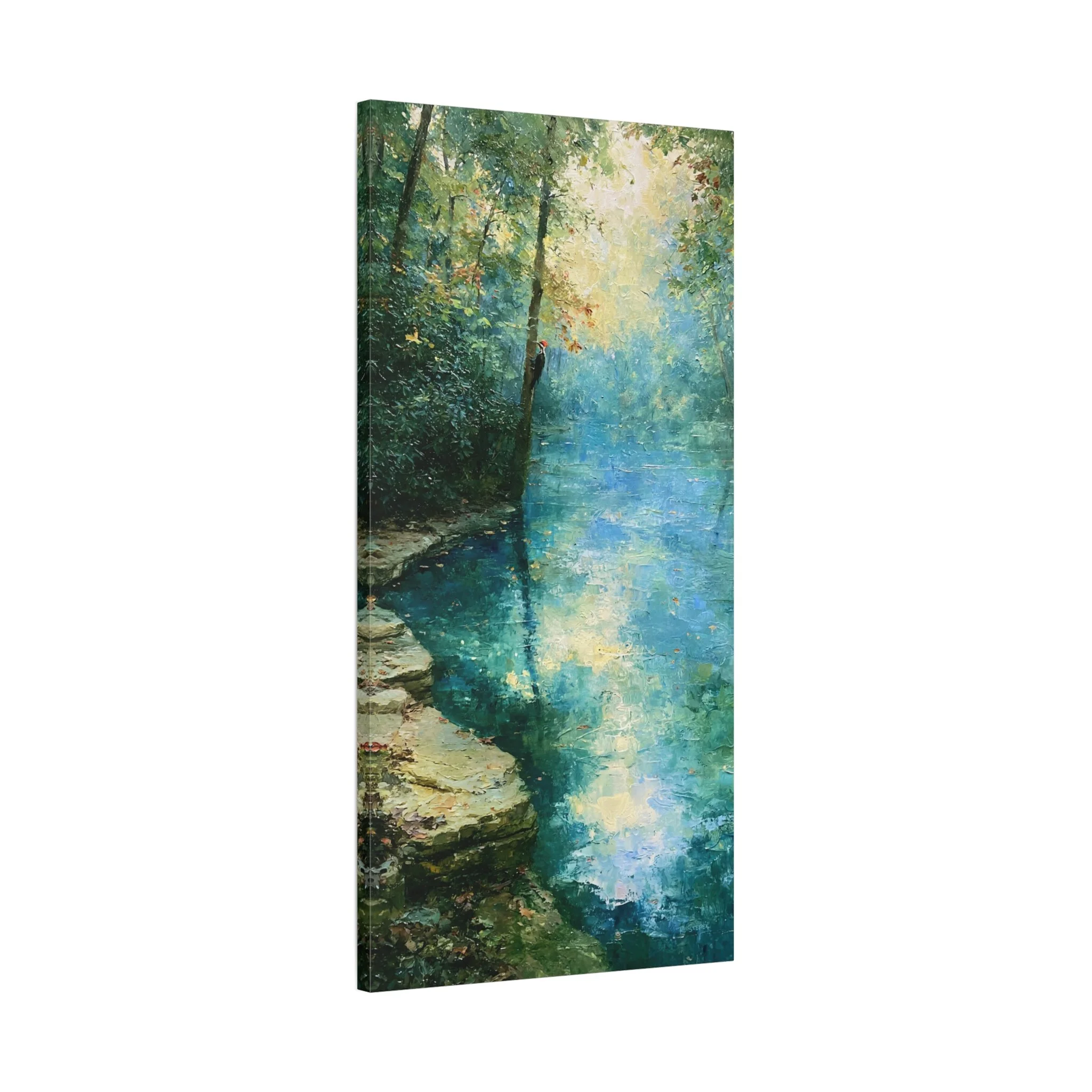
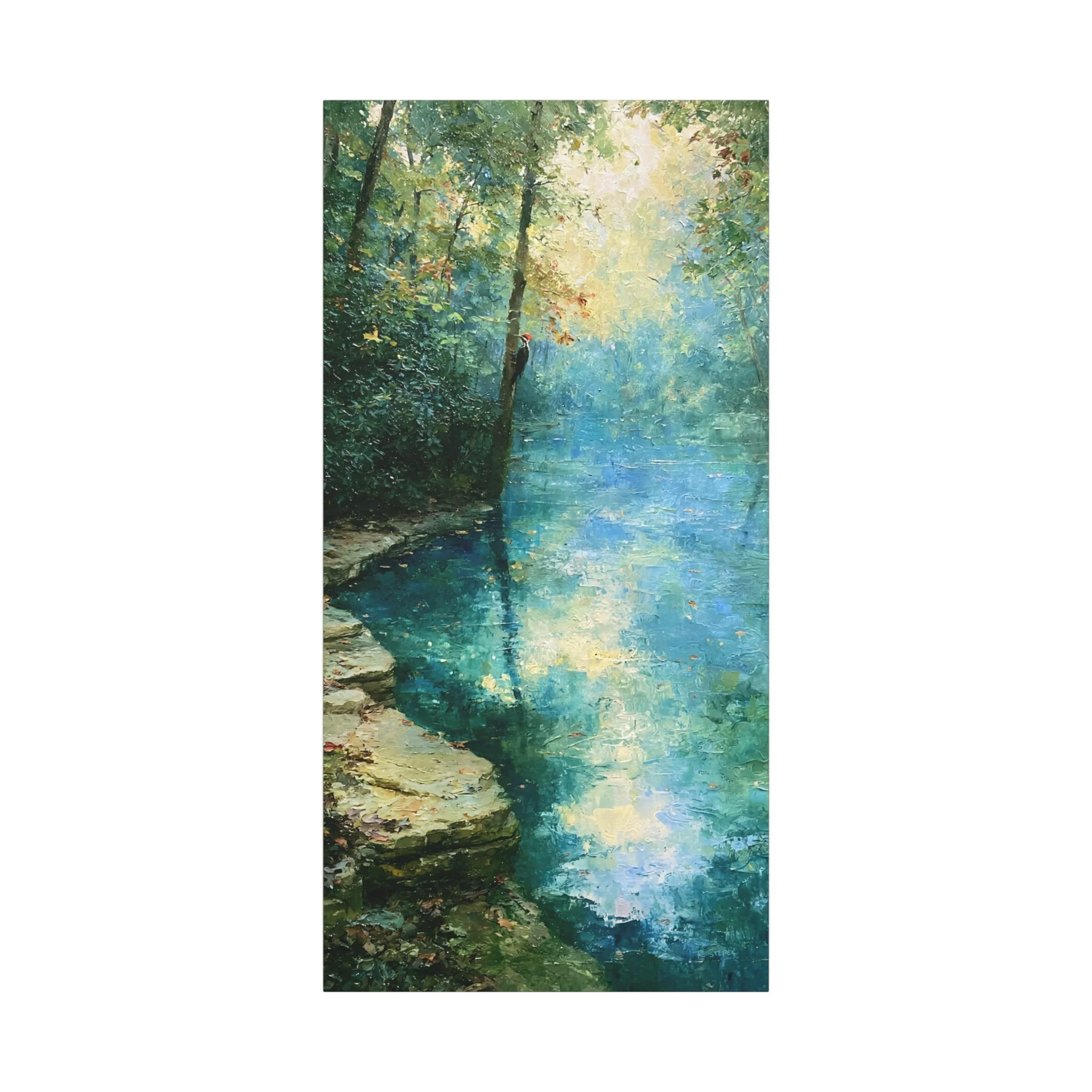
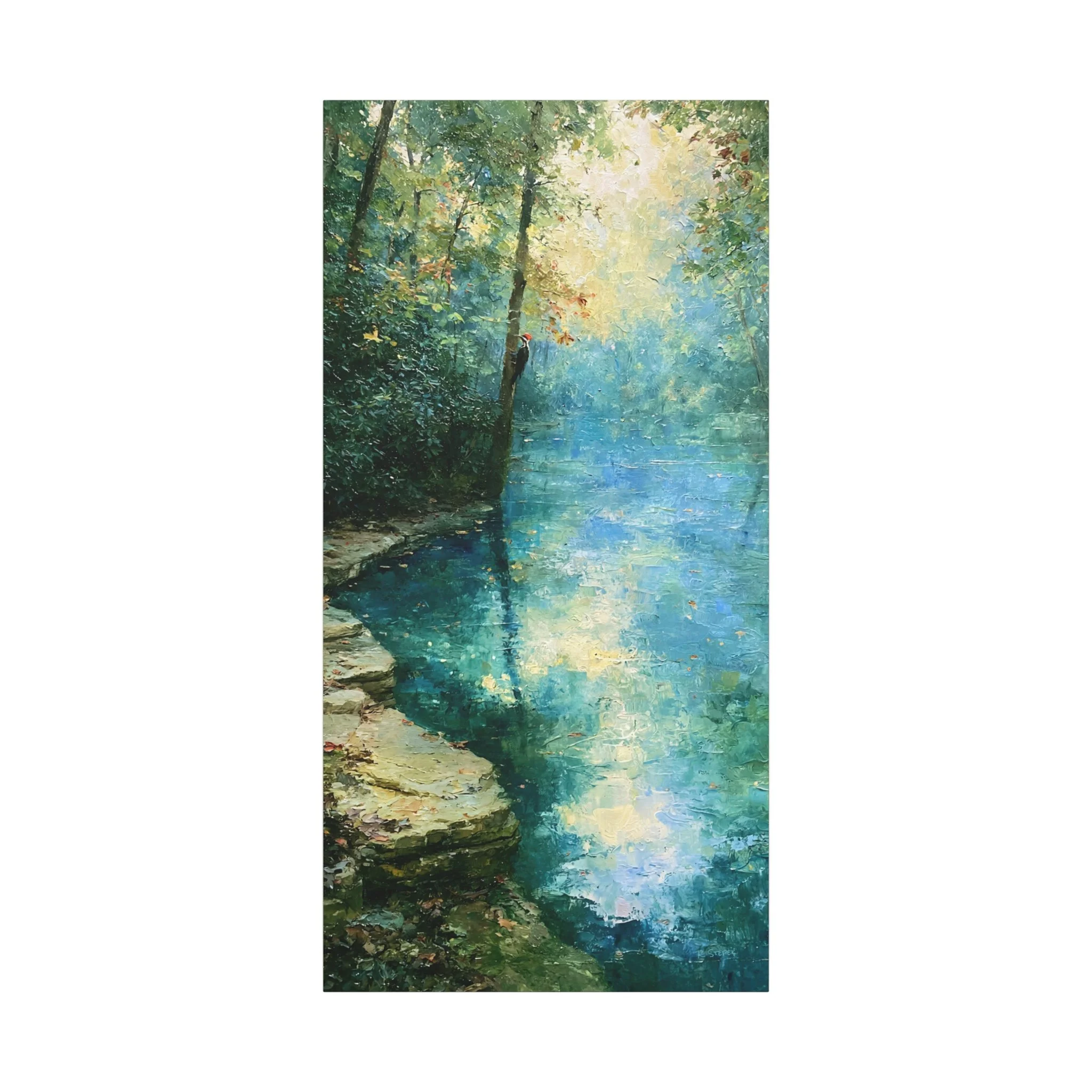
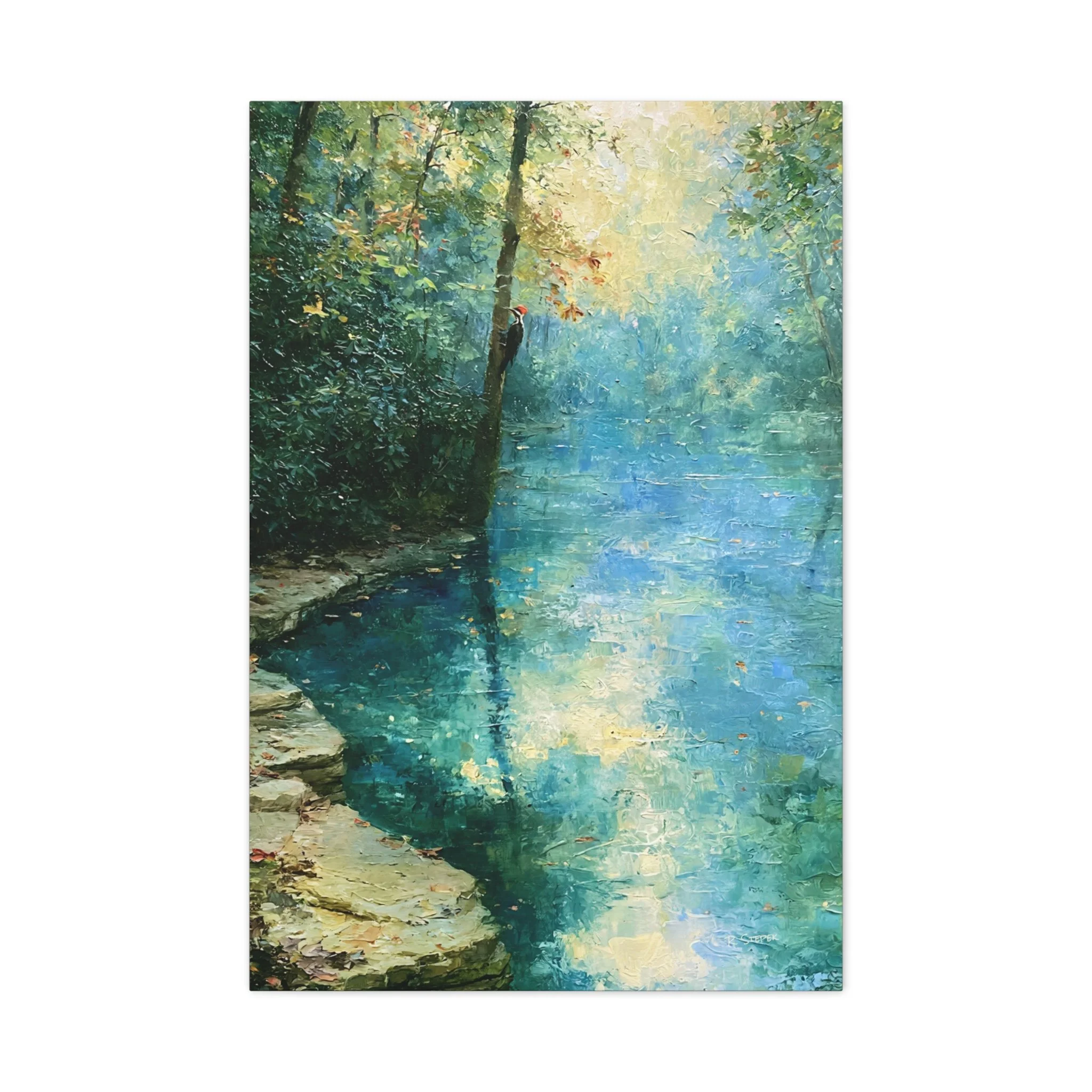
Turquoise water, coral-orange Cumberland azalea, and a black squirrel emerge gradually from a steep bank at Laurel River Lake. A leaning branch, warm stone, and cool forest green keep both subjects inside the place where they were found.
When I first saw the bright orange blooms, I assumed they were Flame Azaleas. Looking them up at home led me to Cumberland azalea (Rhododendron cumberlandense) and botanist E. Lucy Braun, who first described the species in 1941. What had seemed like a beautiful wildflower became a rare Appalachian native with a limited range and a strong connection to the Cumberland region.
After I shared photographs, people recalled patches on ridgetops, places where the flowers still grow, and encounters remembered across decades. The black squirrel carries a more personal story: it entered the painting as a tribute to my lifelong friend Donna, who has always loved squirrels. Melanistic gray squirrels are a familiar but still remarkable sight around my home in southeastern Kentucky.
Neither the azalea nor the squirrel is made the obvious star. Both appeared gradually, and both reward a second look. The tall composition lets the branch, bloom, water, and squirrel unfold vertically.
Color Palette
Leading water color: Turquoise. Botanical colors: Coral orange, rose pink, and cool forest green. Squirrel and shadow: Black-blue and deep moss. Light and stone: Soft aqua, warm limestone, muted cream, and sunlit gold.
Canvas Details
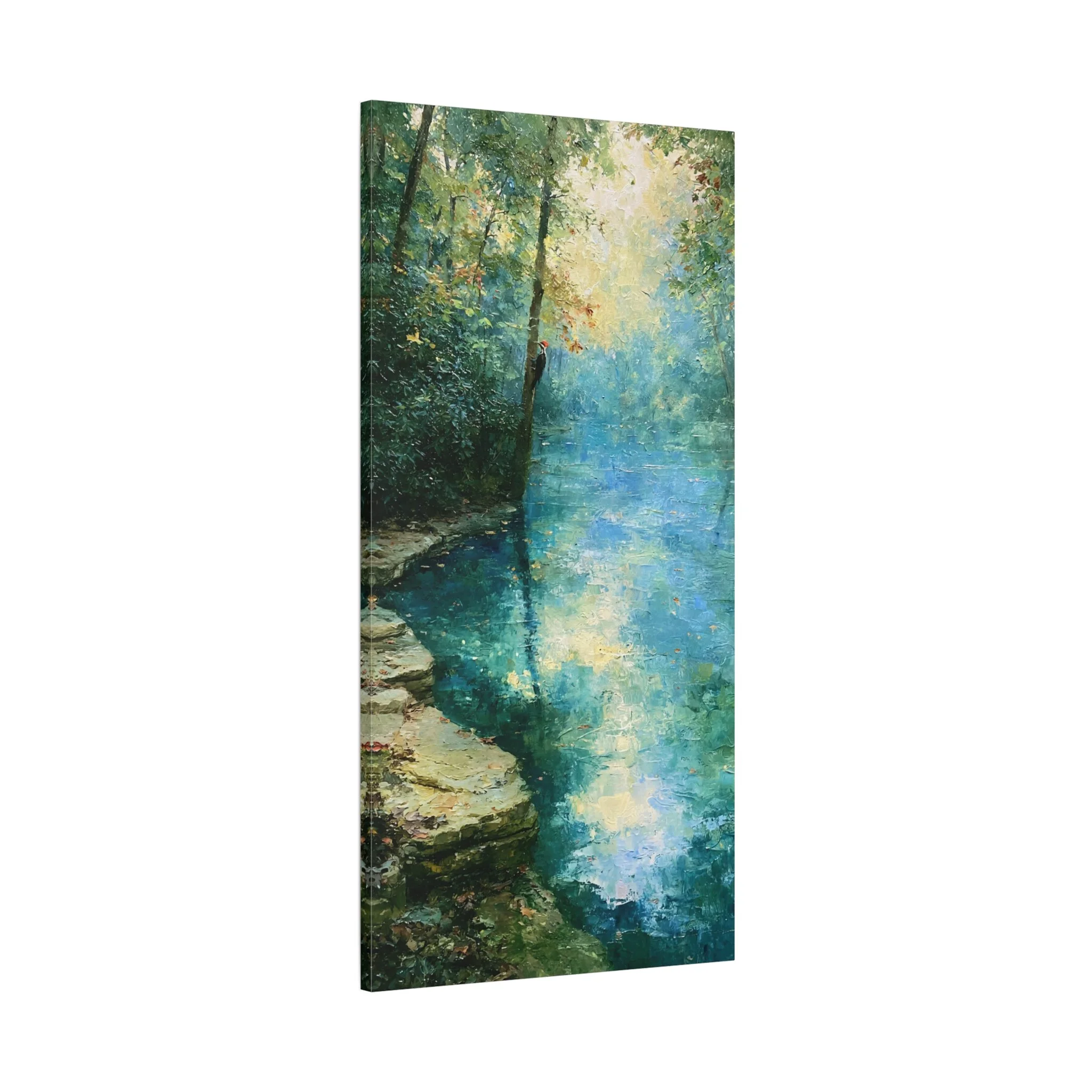
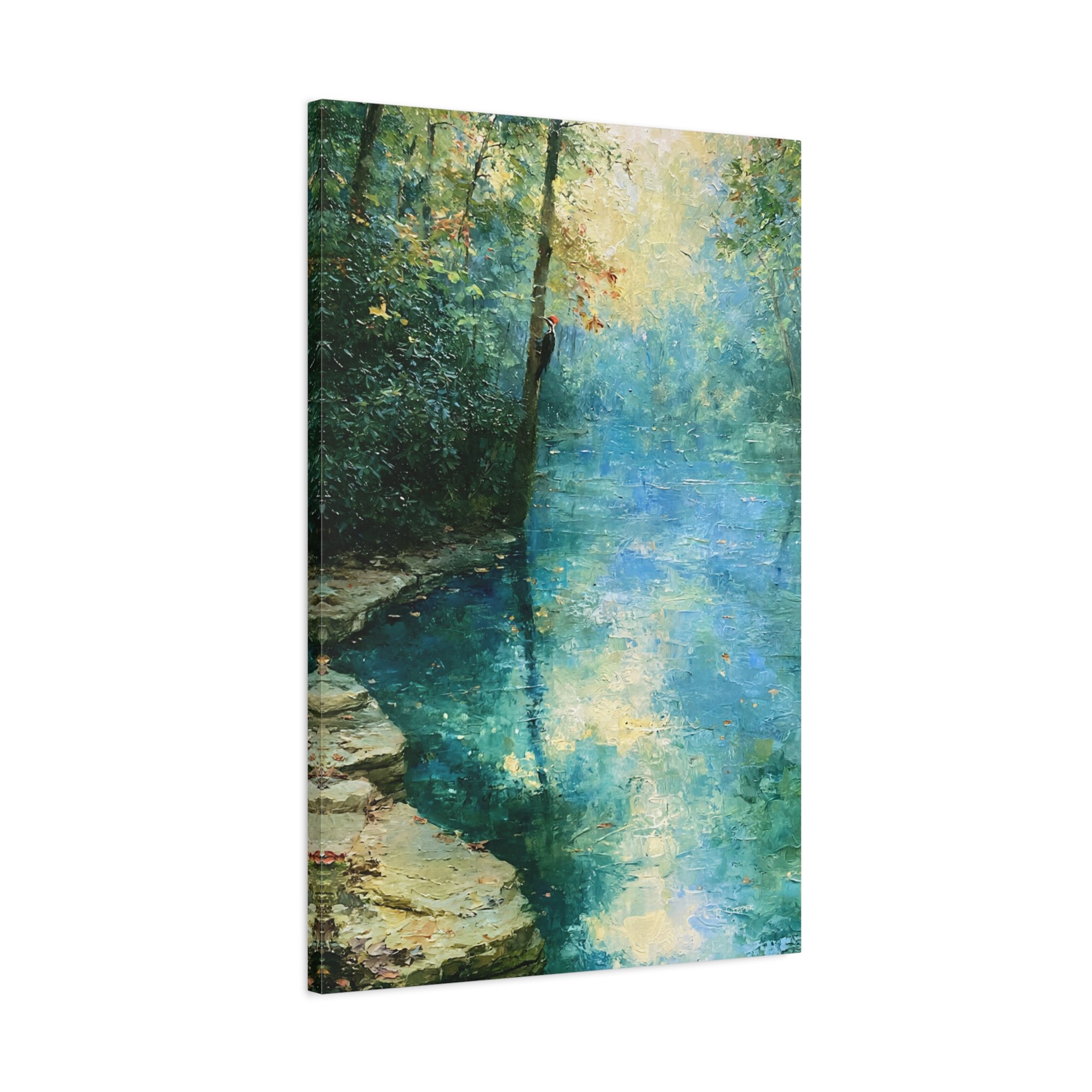
Matte cotton-and-polyester canvas on a radiata-pine frame sourced from renewable forests
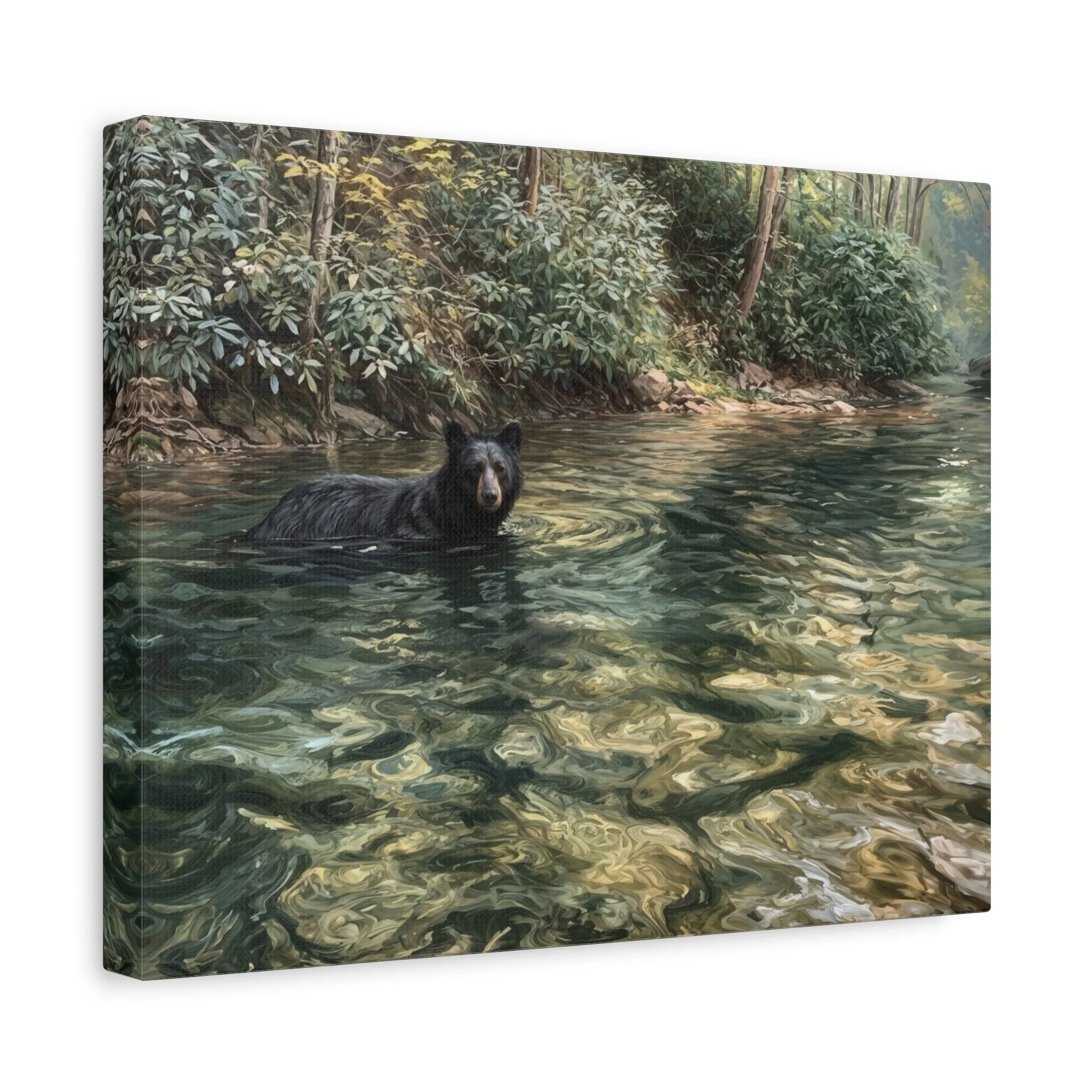
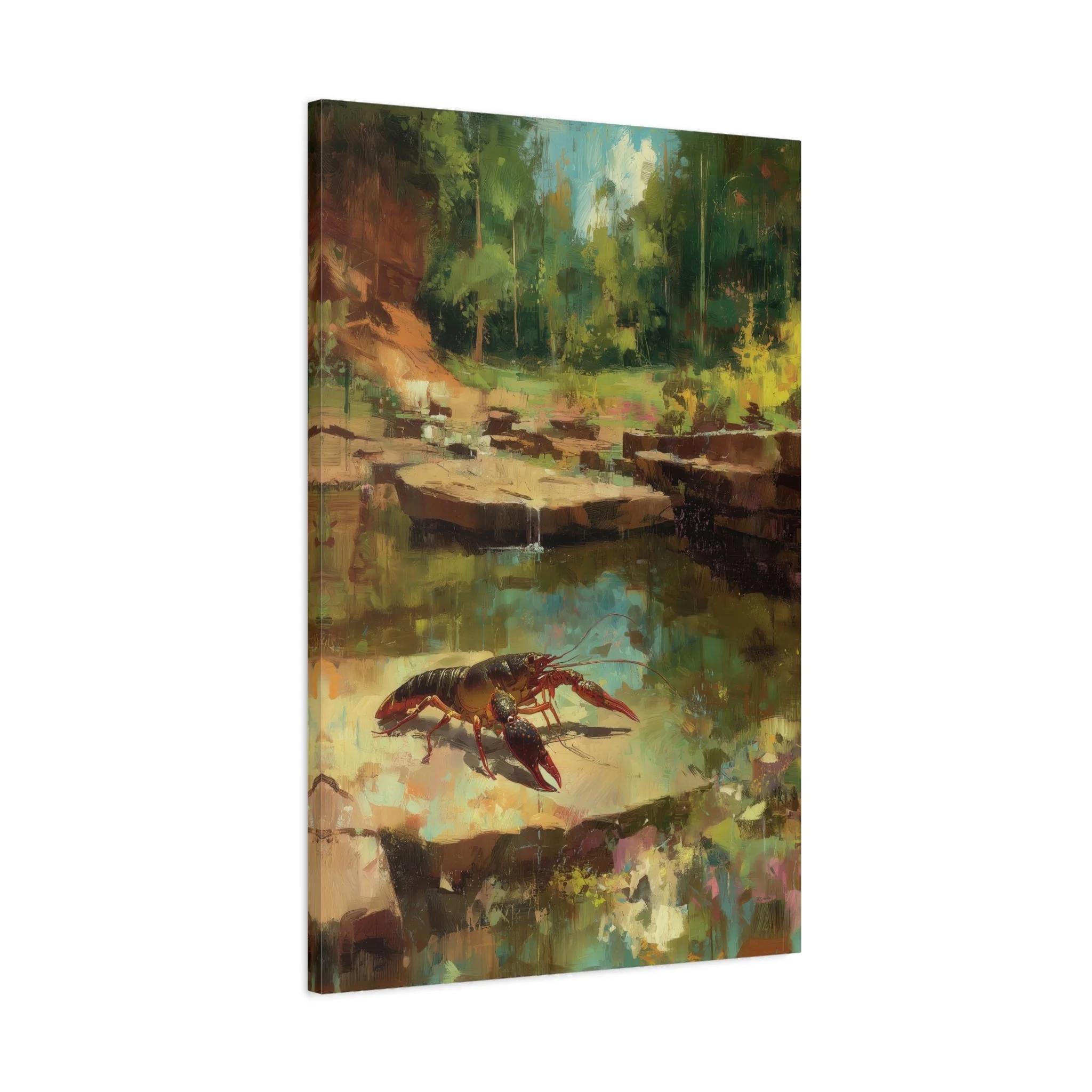
1.25-inch gallery-wrapped profile with finished sides
Printed with archival-quality inks
Sawtooth hanging hardware is already attached
Care
If the canvas gathers dust, wipe it gently with a clean, damp cloth.
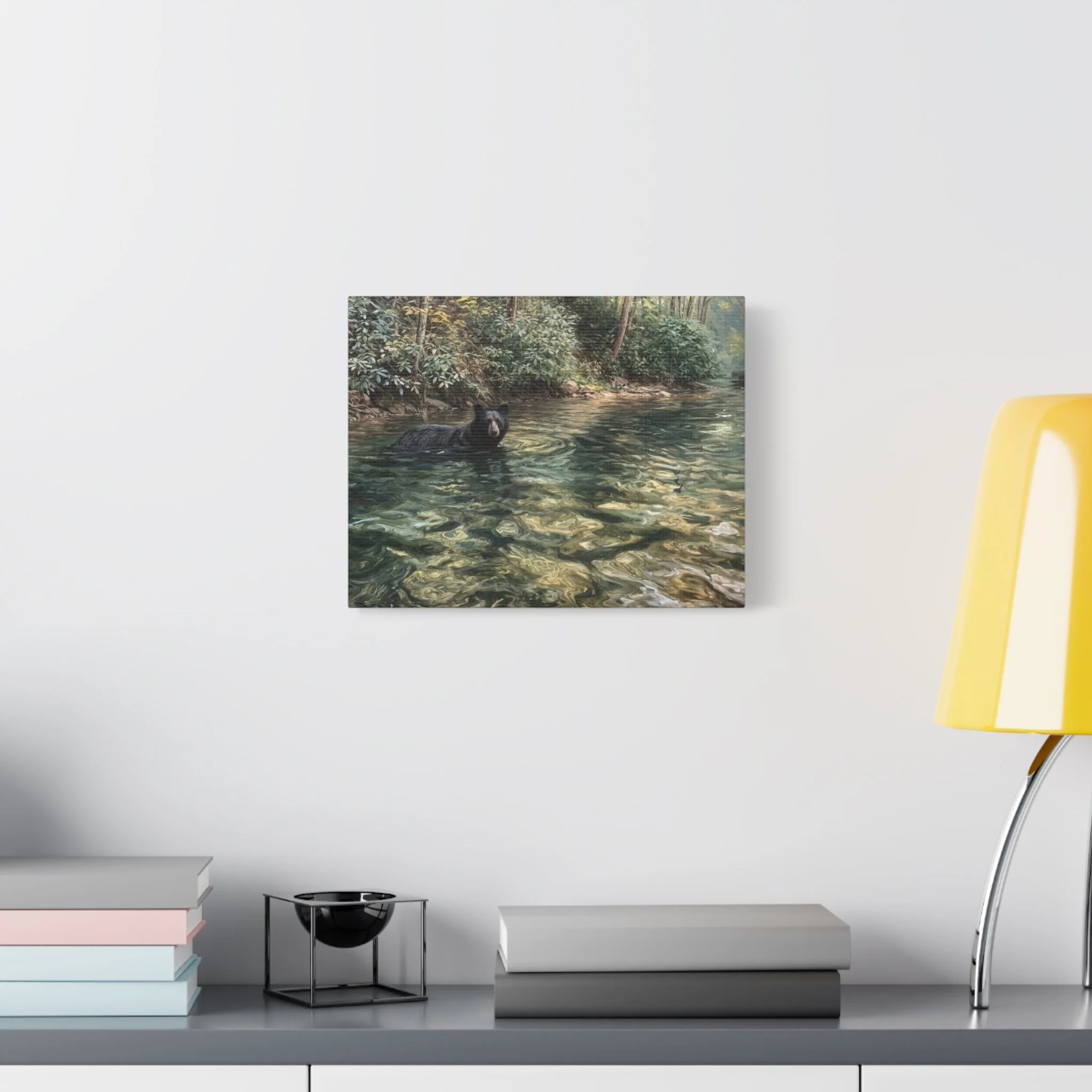
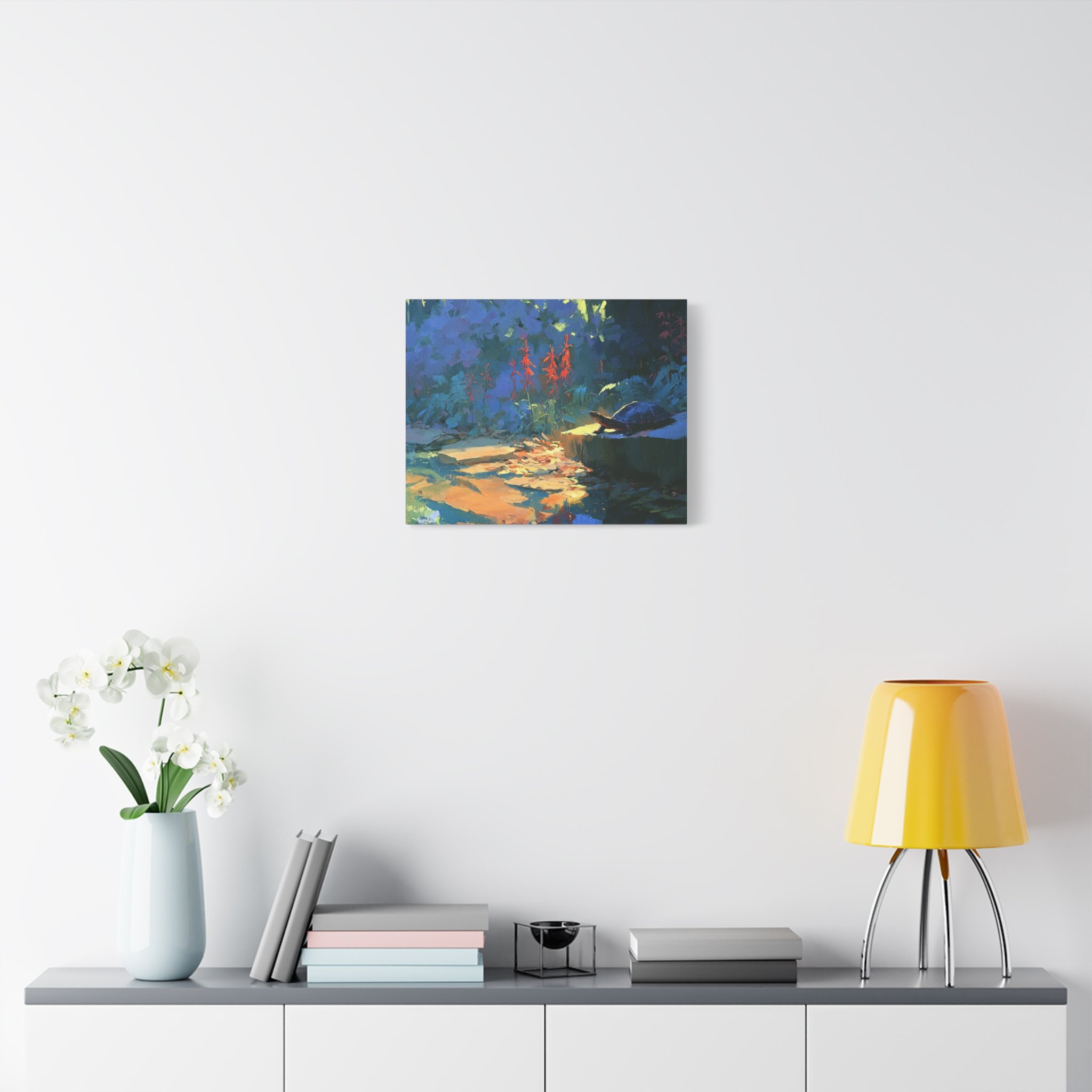
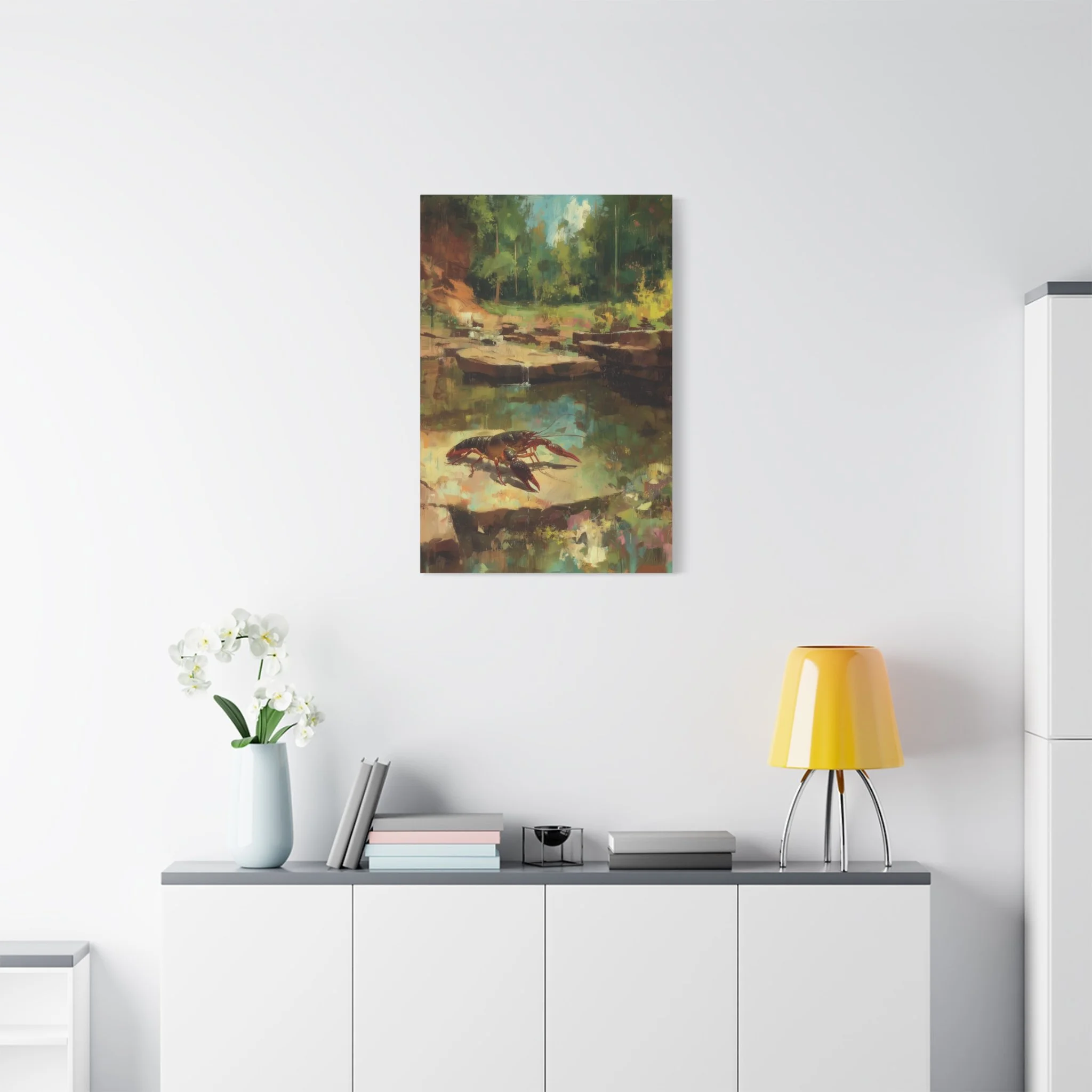
See it in your room →
Turquoise water, coral-orange Cumberland azalea, and a black squirrel emerge gradually from a steep bank at Laurel River Lake. A leaning branch, warm stone, and cool forest green keep both subjects inside the place where they were found.
When I first saw the bright orange blooms, I assumed they were Flame Azaleas. Looking them up at home led me to Cumberland azalea (Rhododendron cumberlandense) and botanist E. Lucy Braun, who first described the species in 1941. What had seemed like a beautiful wildflower became a rare Appalachian native with a limited range and a strong connection to the Cumberland region.
After I shared photographs, people recalled patches on ridgetops, places where the flowers still grow, and encounters remembered across decades. The black squirrel carries a more personal story: it entered the painting as a tribute to my lifelong friend Donna, who has always loved squirrels. Melanistic gray squirrels are a familiar but still remarkable sight around my home in southeastern Kentucky.
Neither the azalea nor the squirrel is made the obvious star. Both appeared gradually, and both reward a second look. The tall composition lets the branch, bloom, water, and squirrel unfold vertically.
Color Palette
Leading water color: Turquoise. Botanical colors: Coral orange, rose pink, and cool forest green. Squirrel and shadow: Black-blue and deep moss. Light and stone: Soft aqua, warm limestone, muted cream, and sunlit gold.
Canvas Details
Matte cotton-and-polyester canvas on a radiata-pine frame sourced from renewable forests
1.25-inch gallery-wrapped profile with finished sides
Printed with archival-quality inks
Sawtooth hanging hardware is already attached
Care
If the canvas gathers dust, wipe it gently with a clean, damp cloth.
See it in your room →

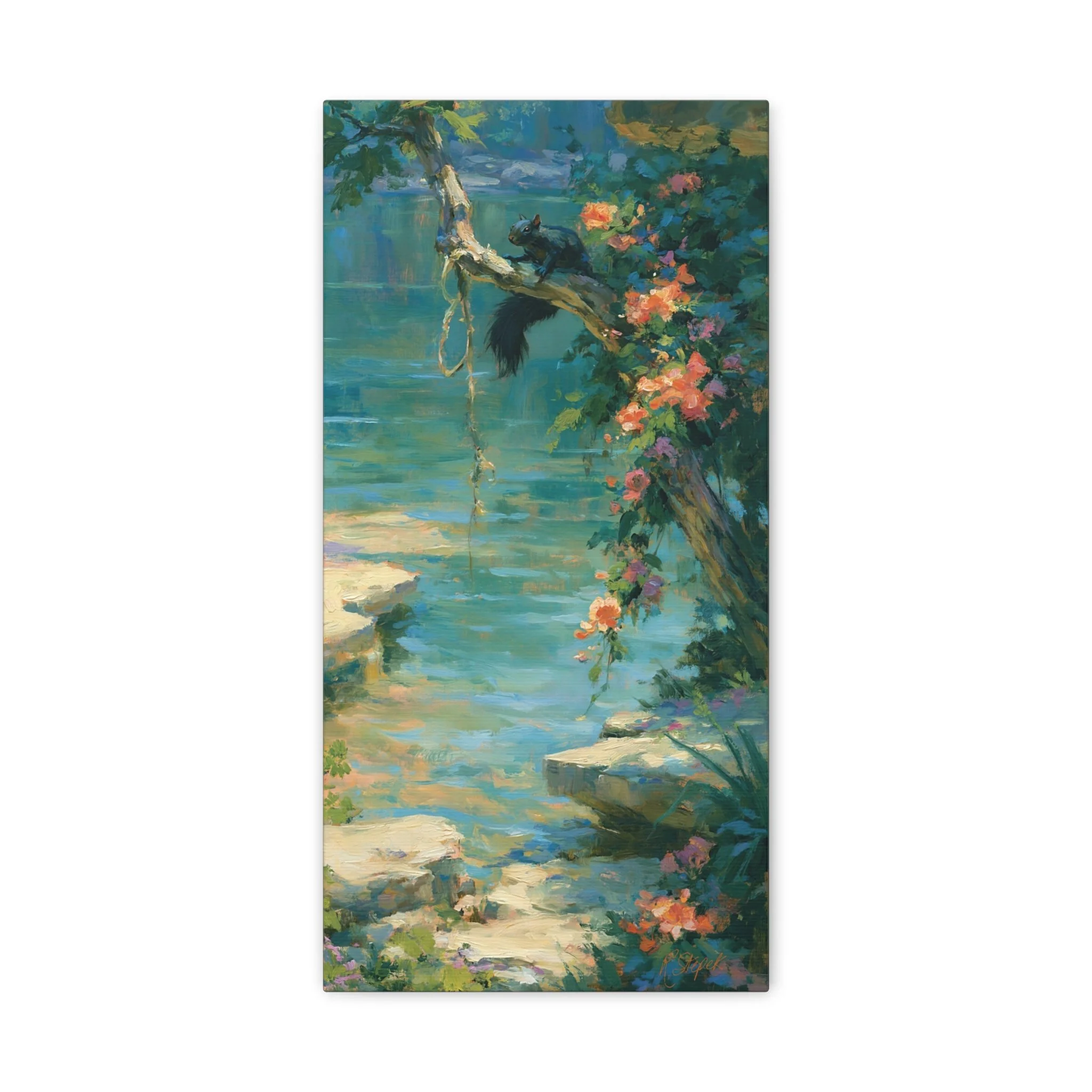 Image 1 of 21
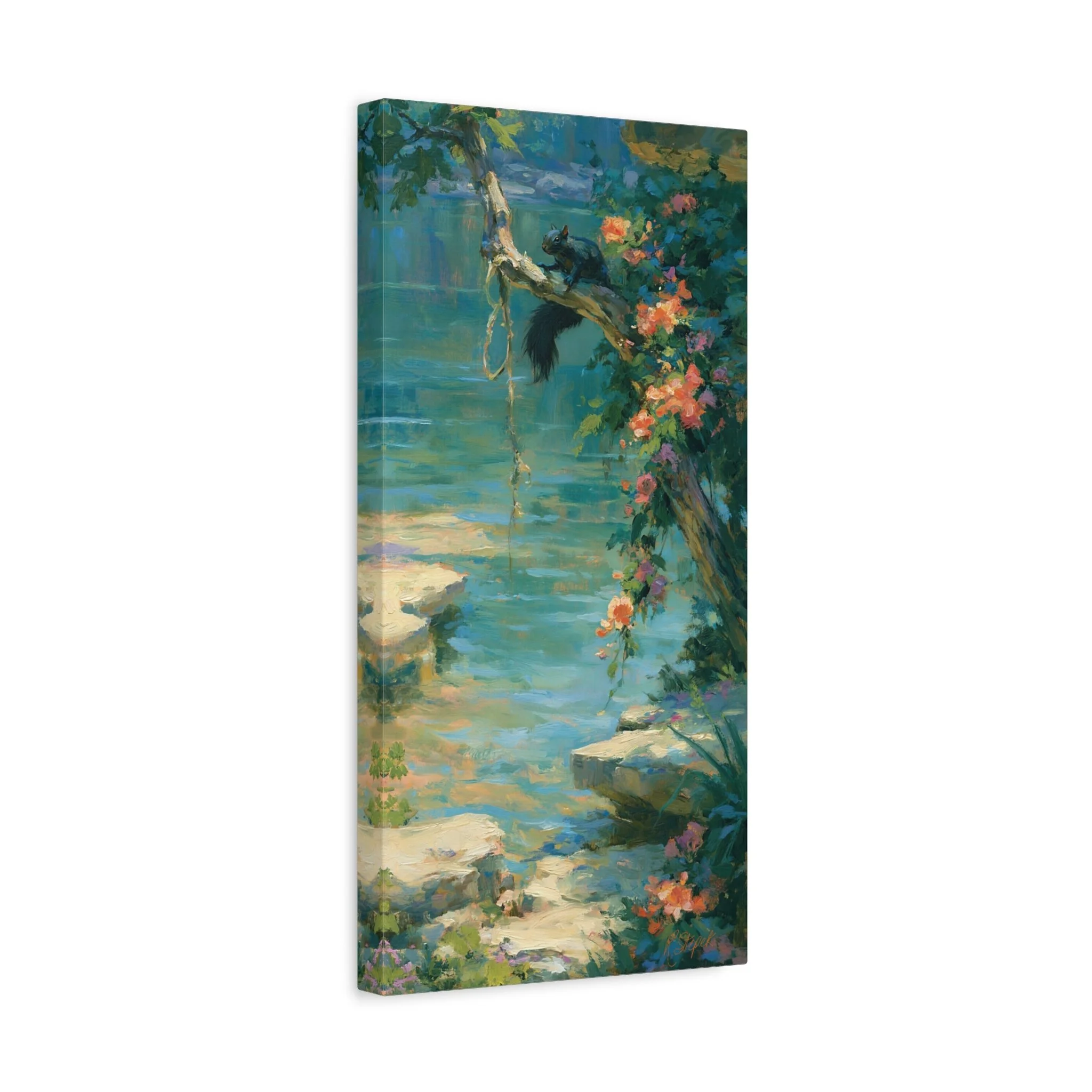 Image 2 of 21
 Image 3 of 21
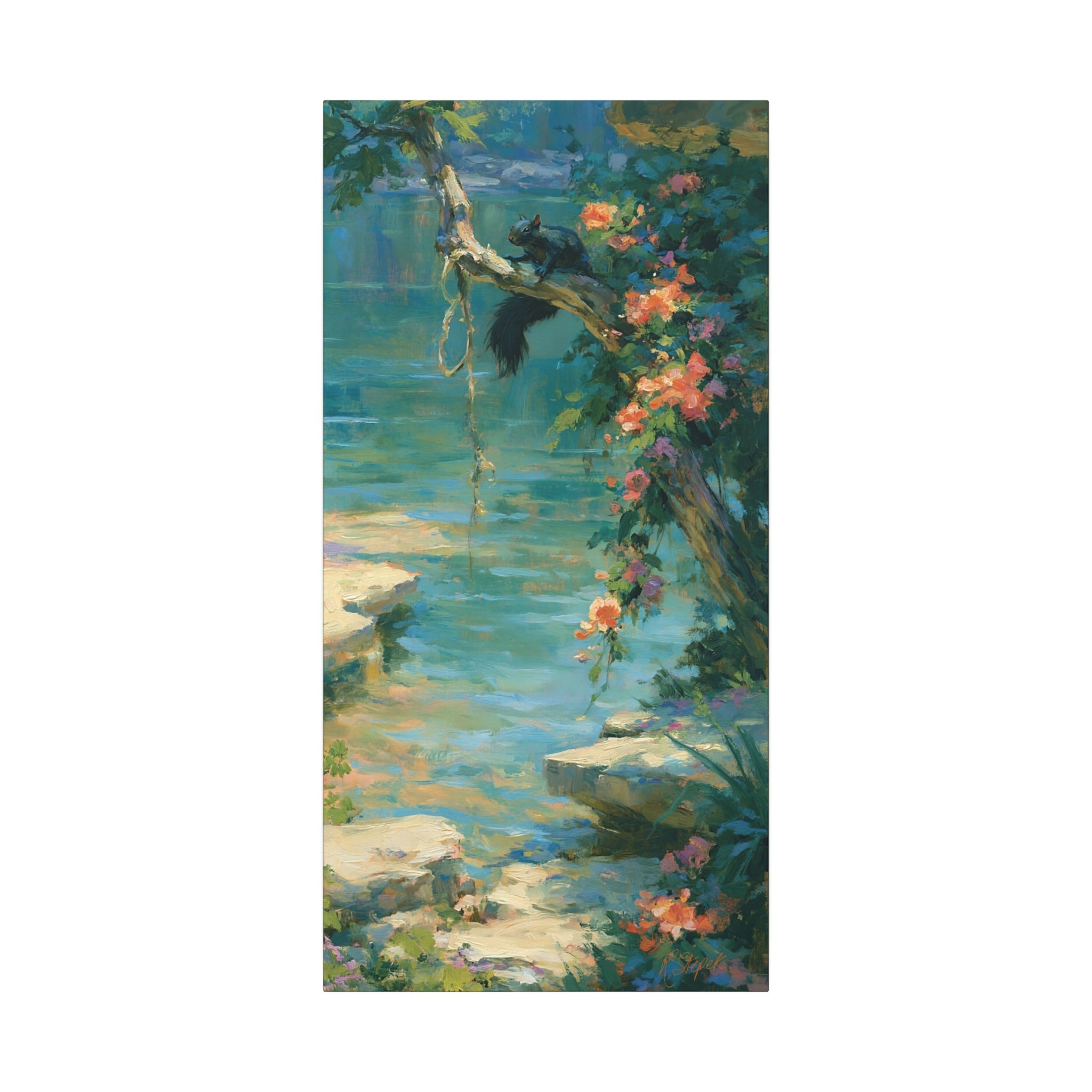 Image 4 of 21
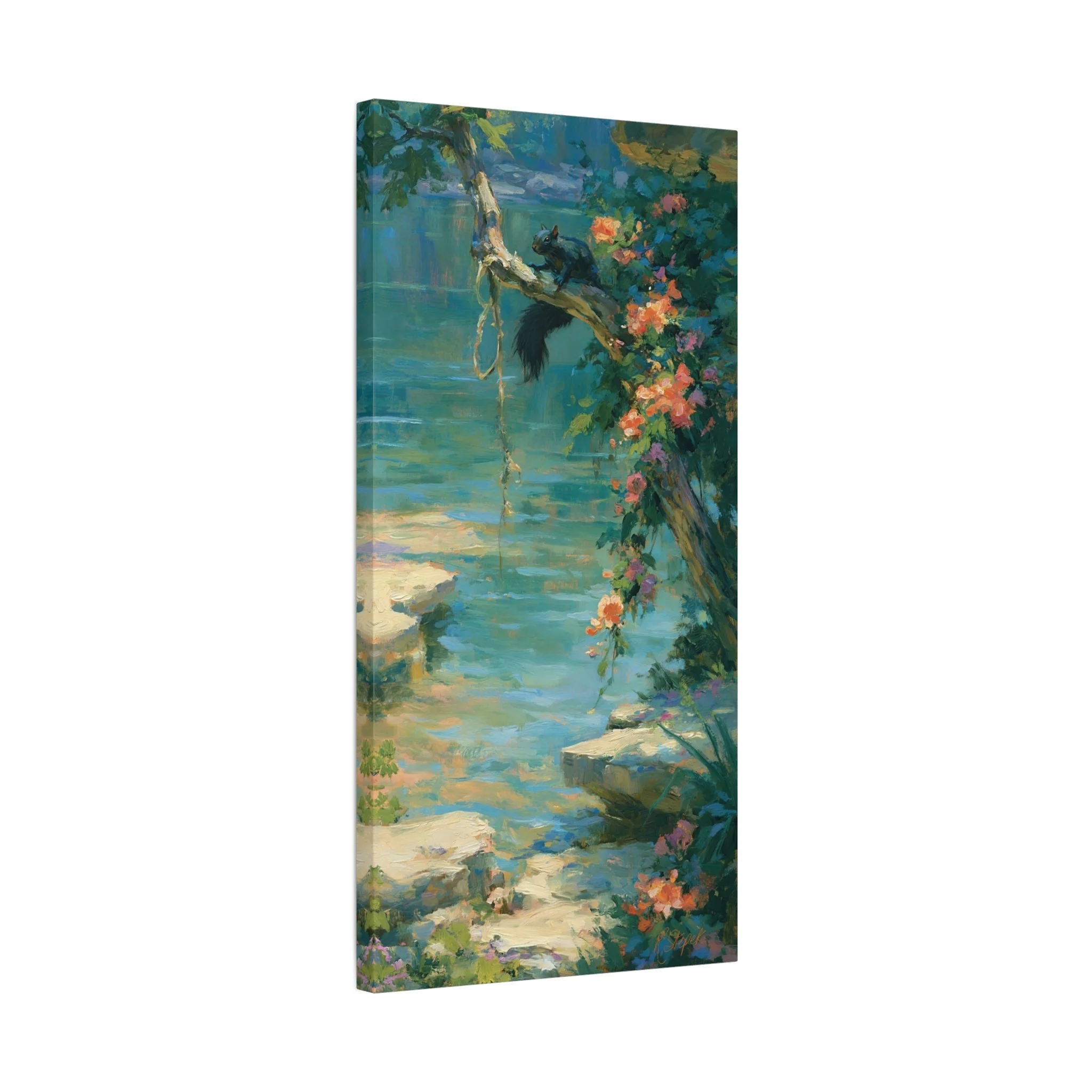 Image 5 of 21
 Image 6 of 21
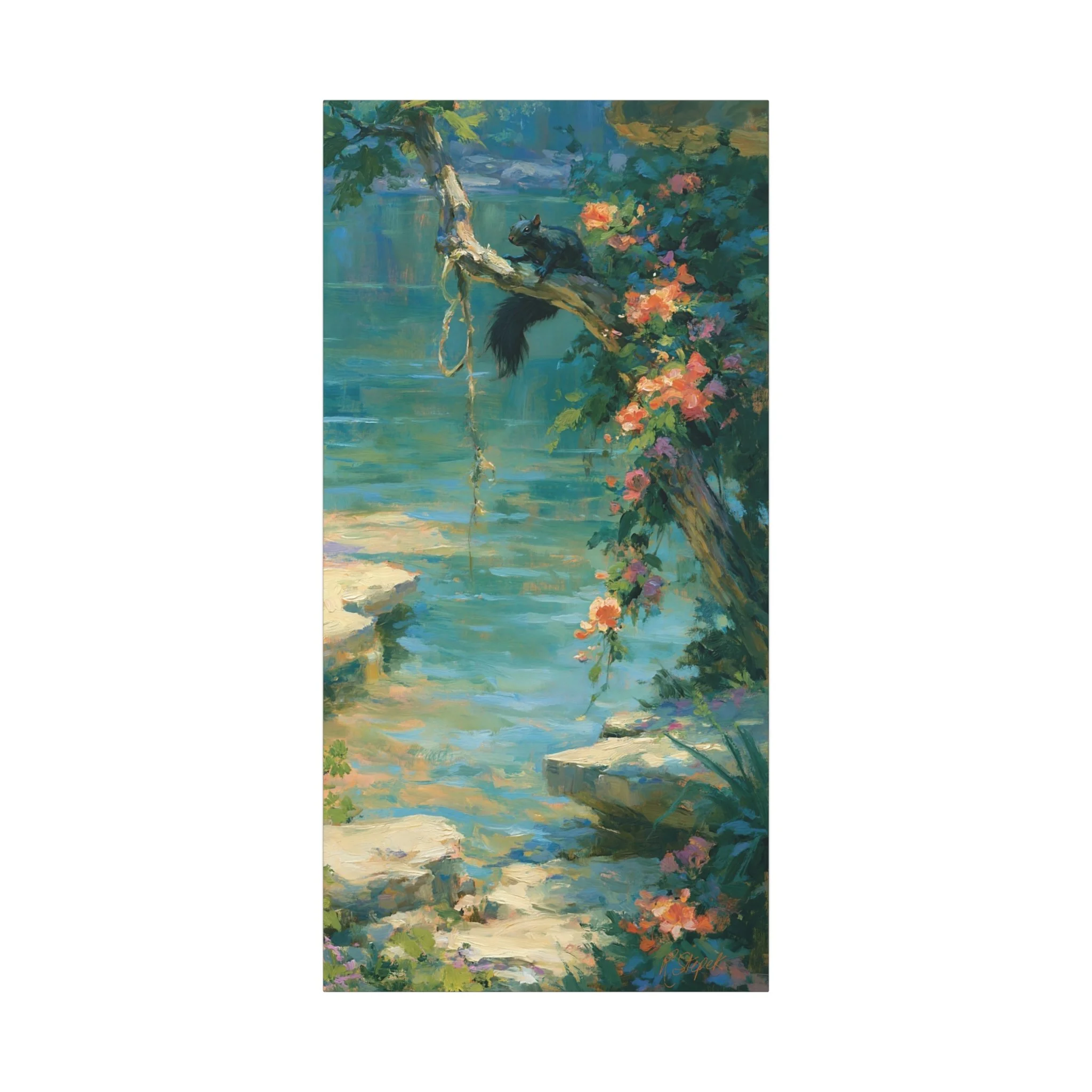 Image 7 of 21
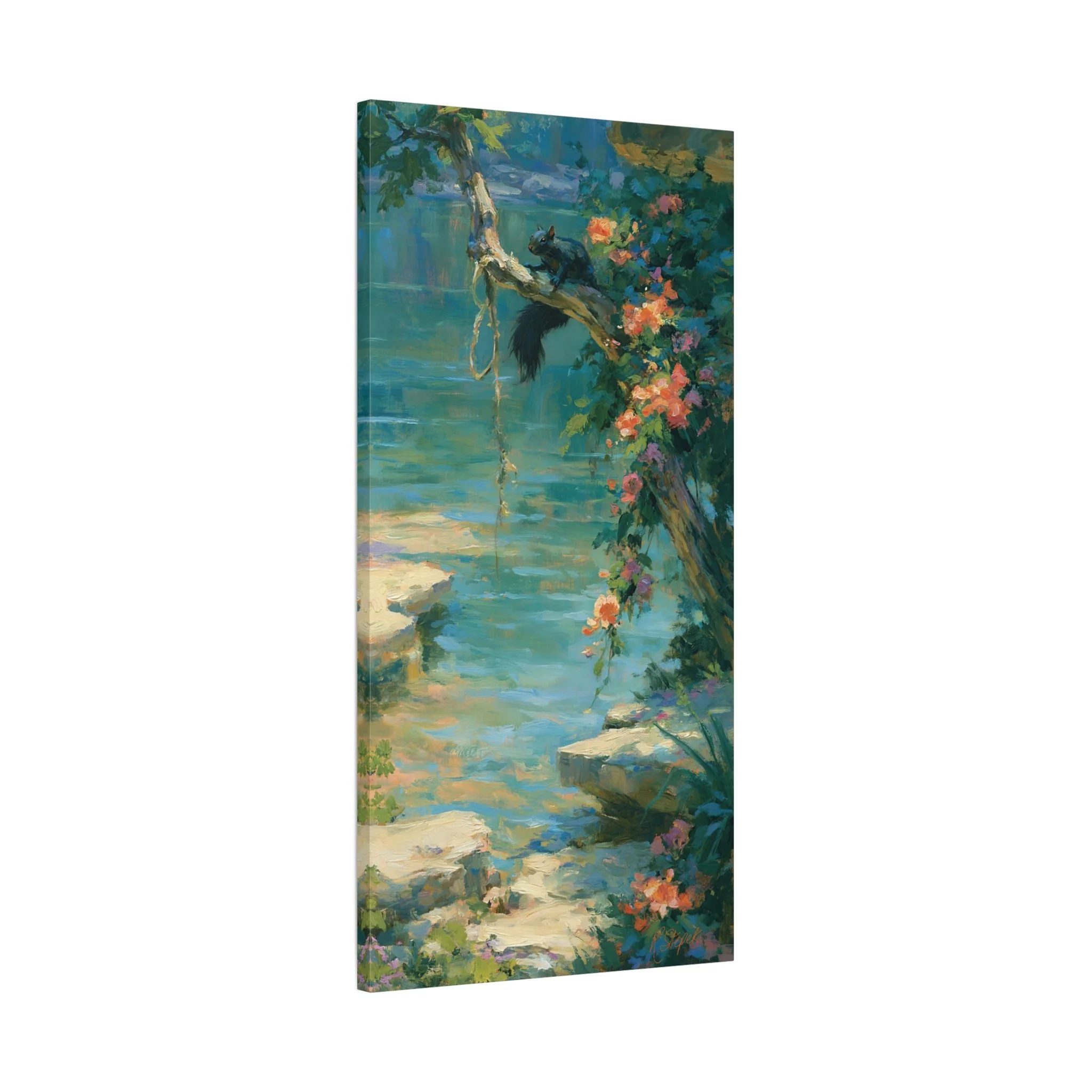 Image 8 of 21
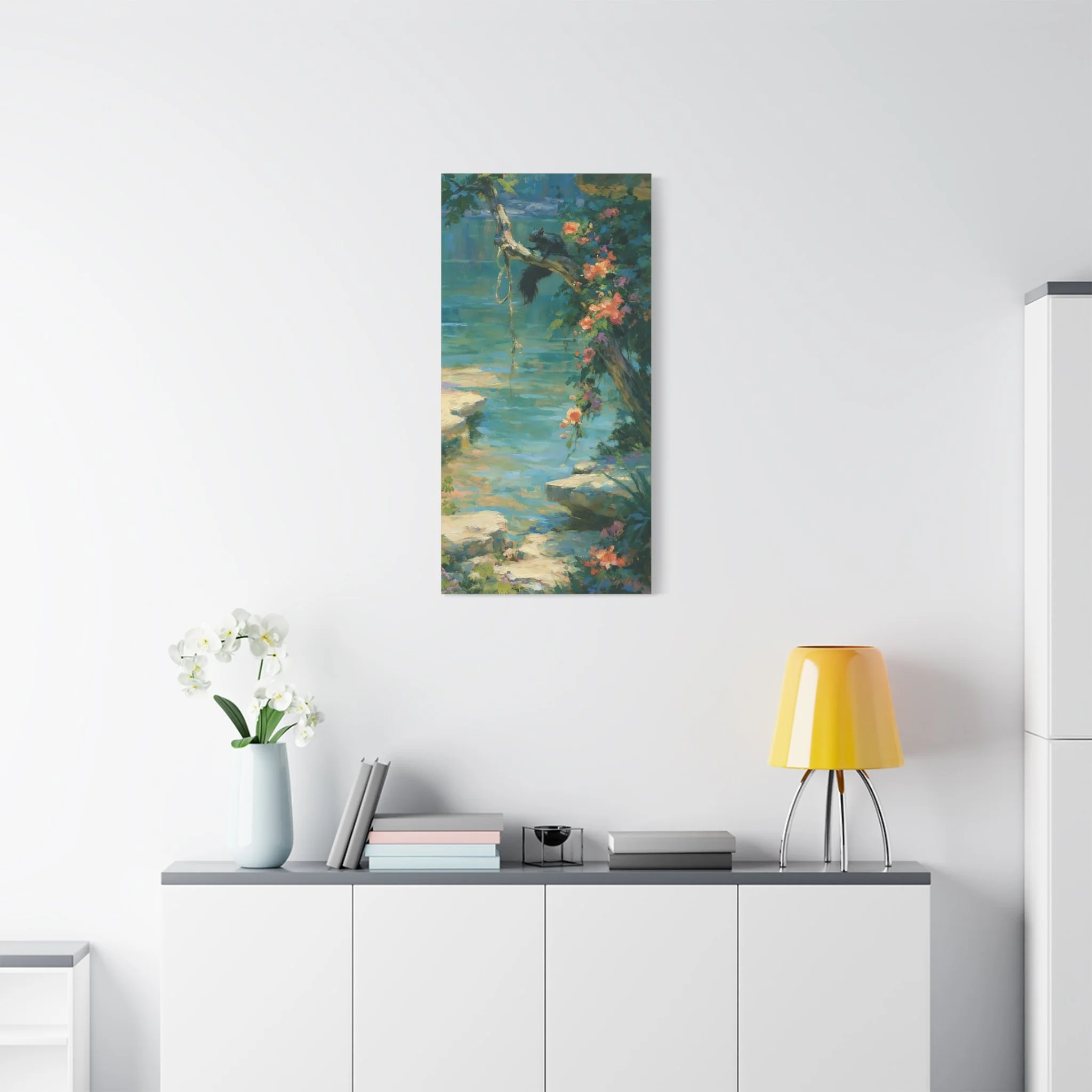 Image 9 of 21
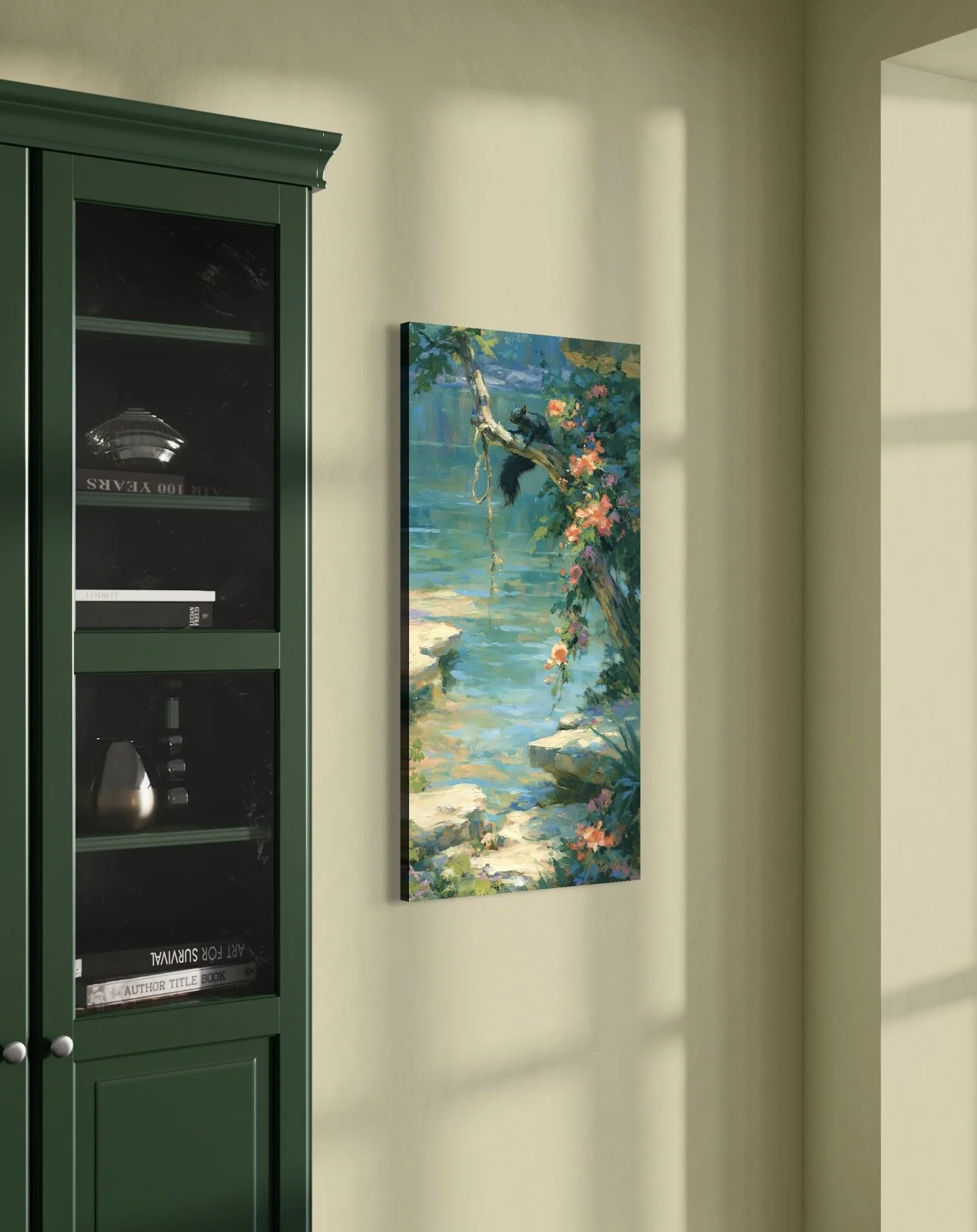 Image 10 of 21
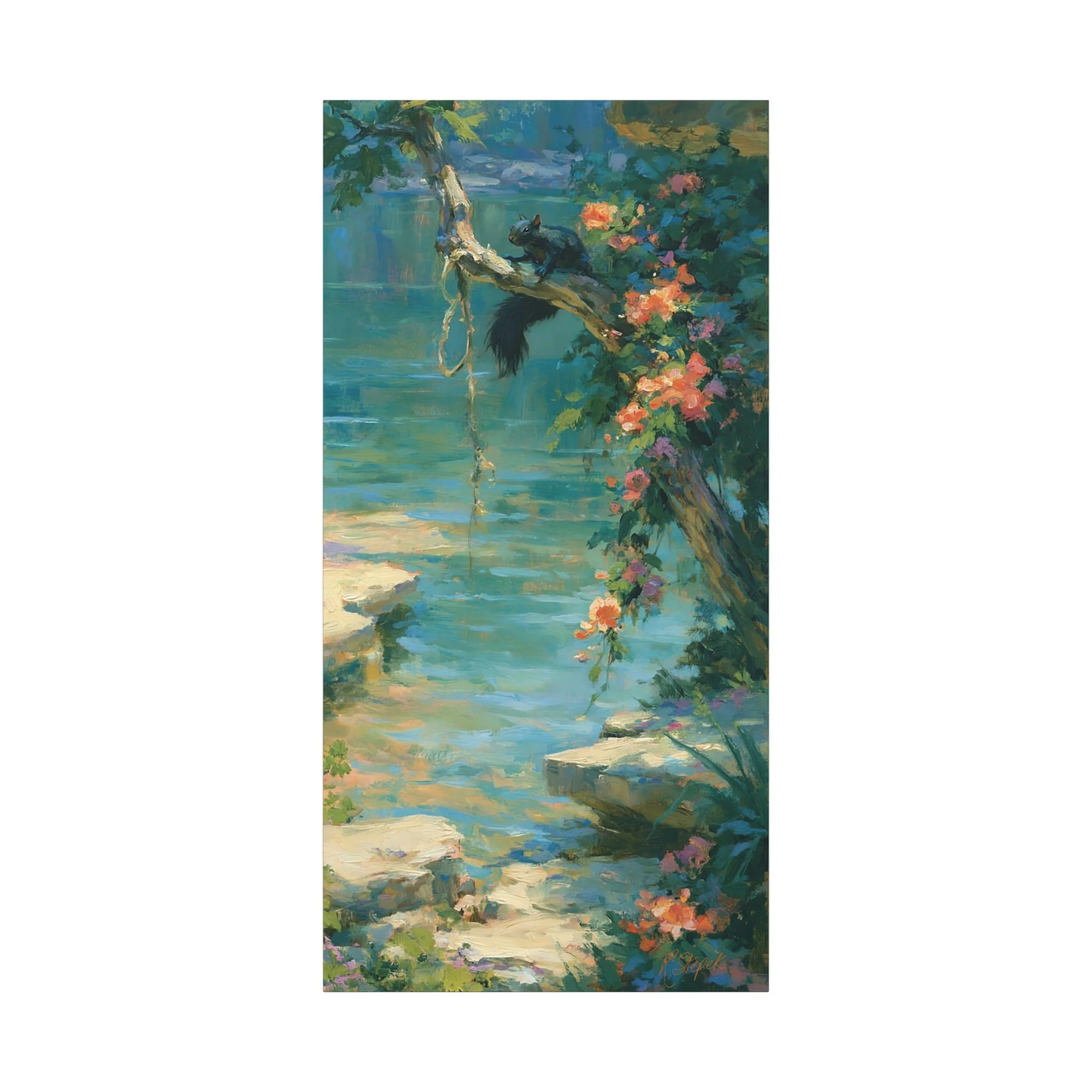 Image 11 of 21
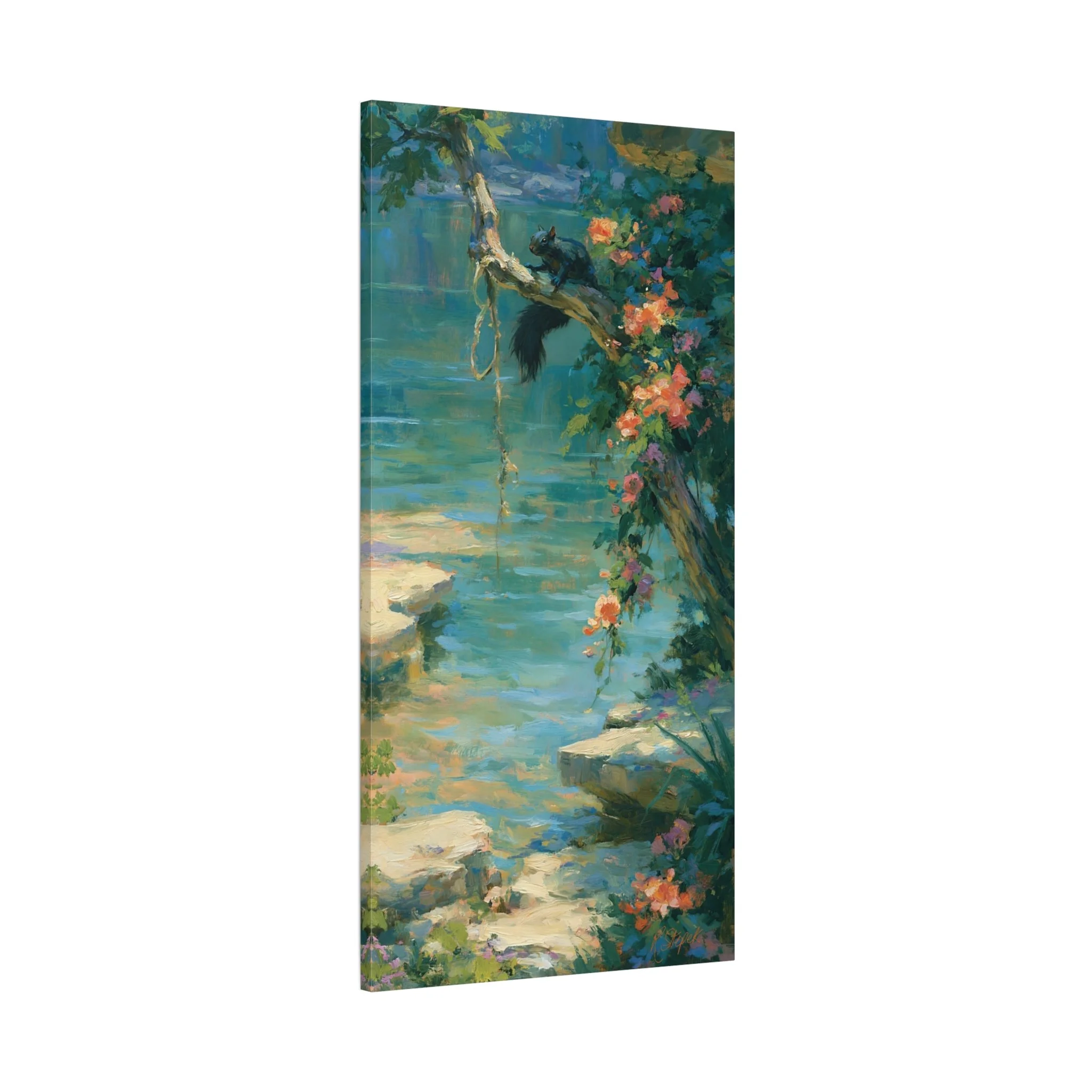 Image 12 of 21
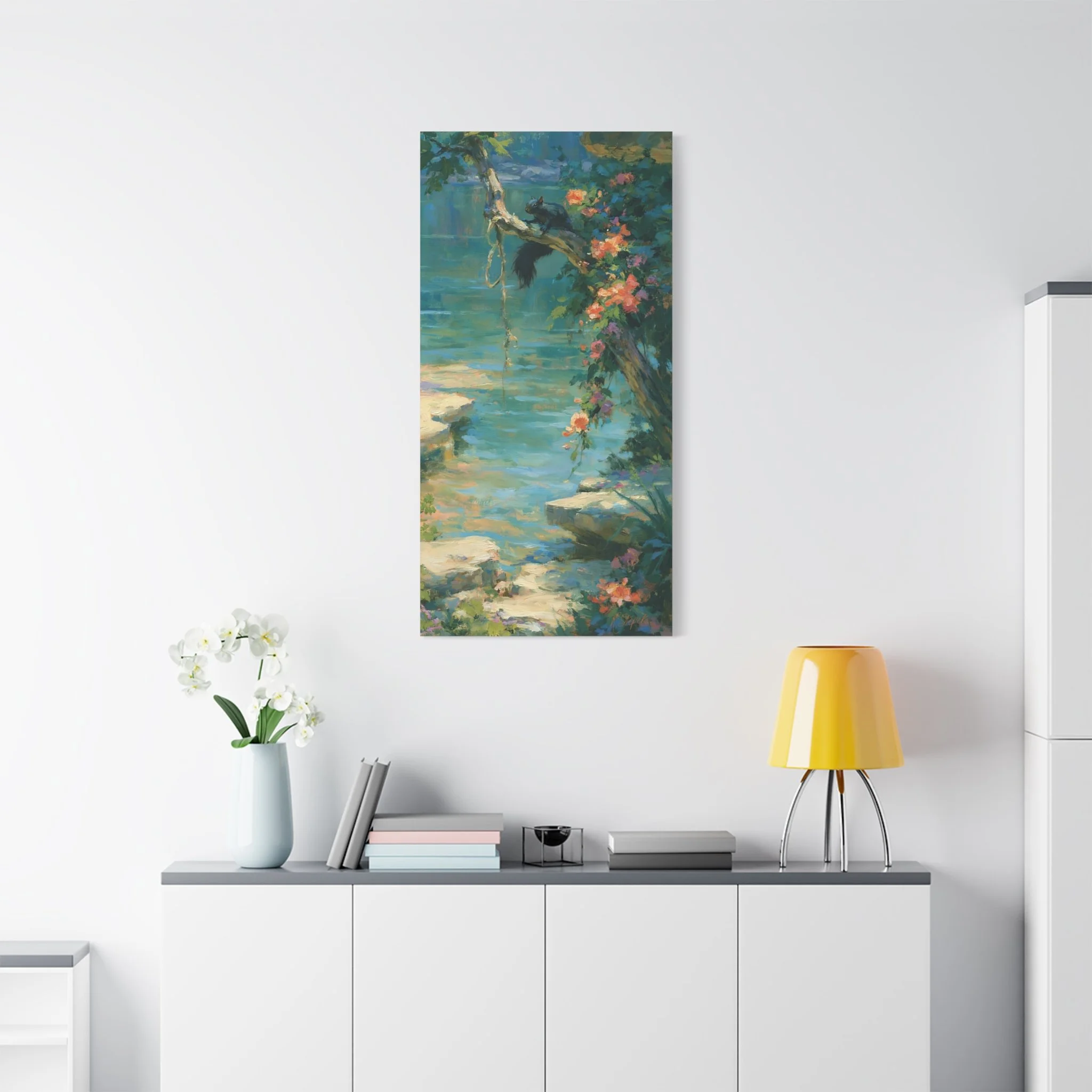 Image 13 of 21
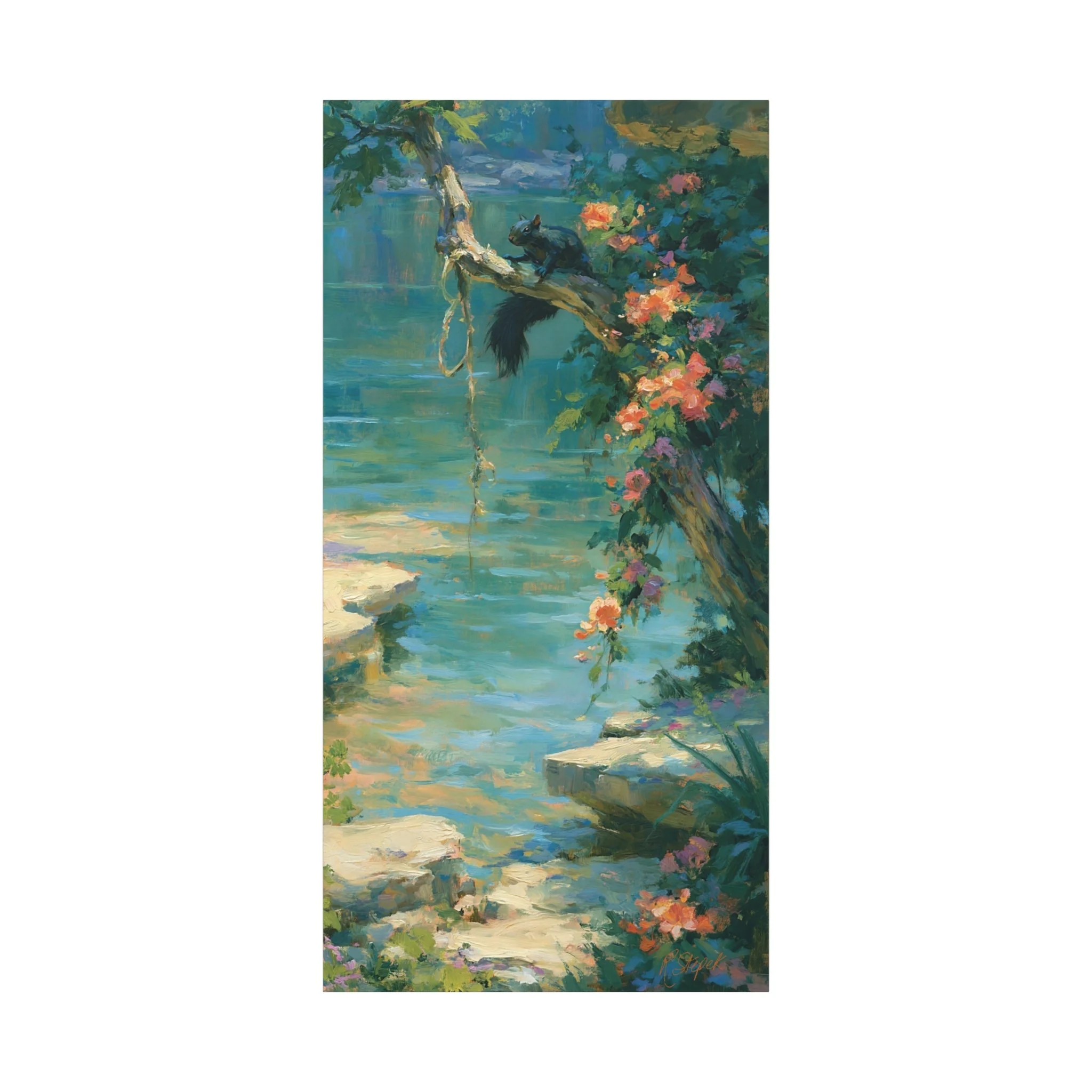 Image 14 of 21
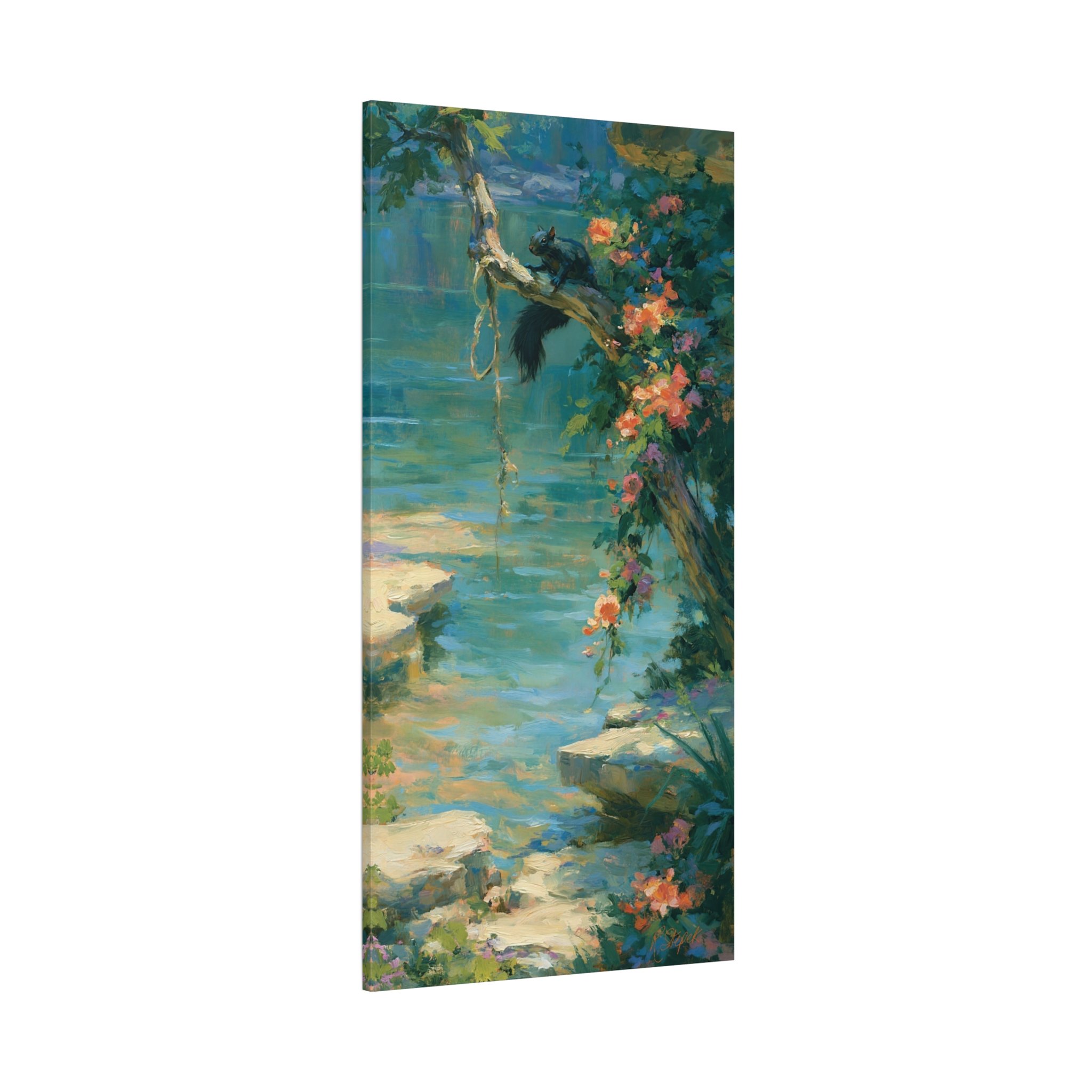 Image 15 of 21
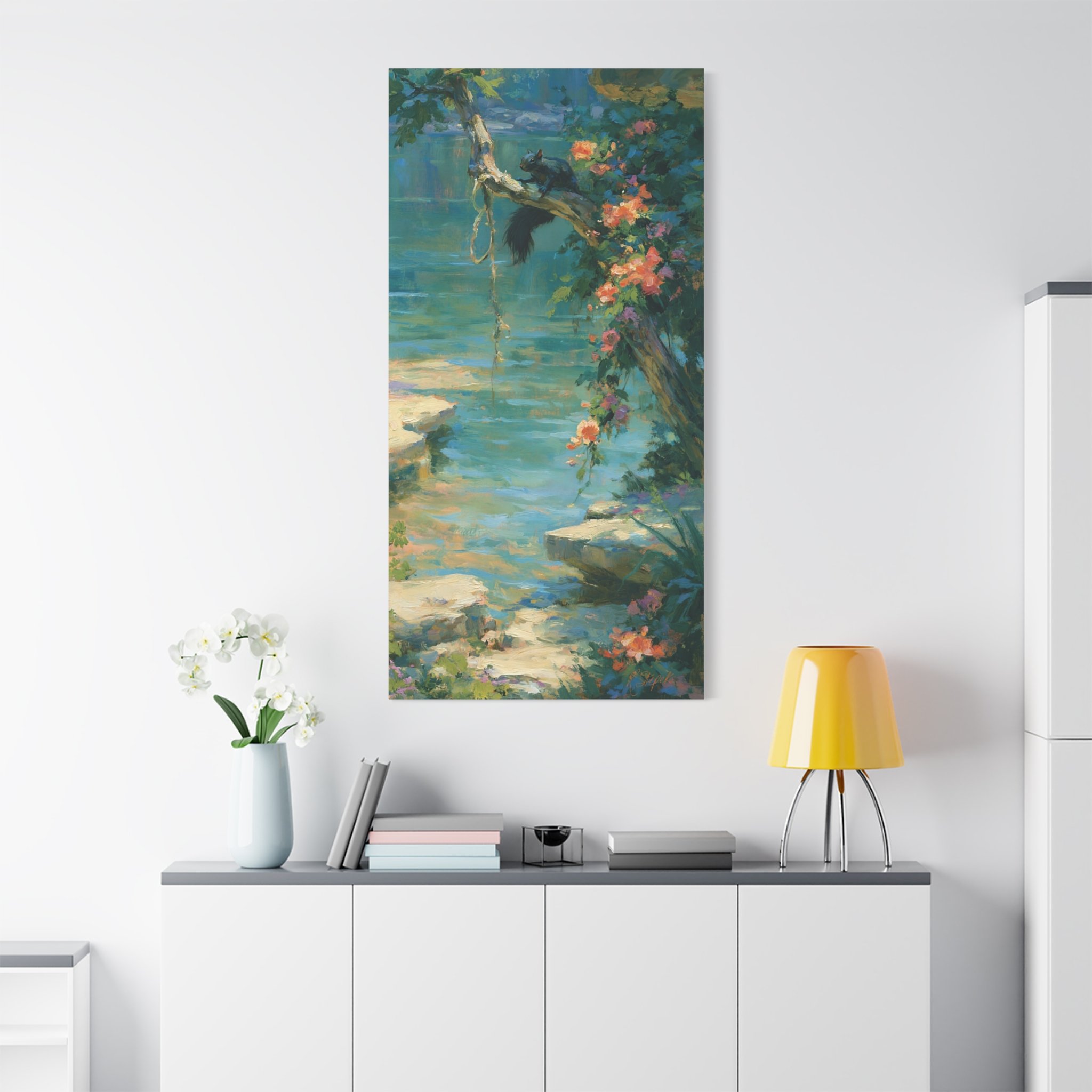 Image 16 of 21
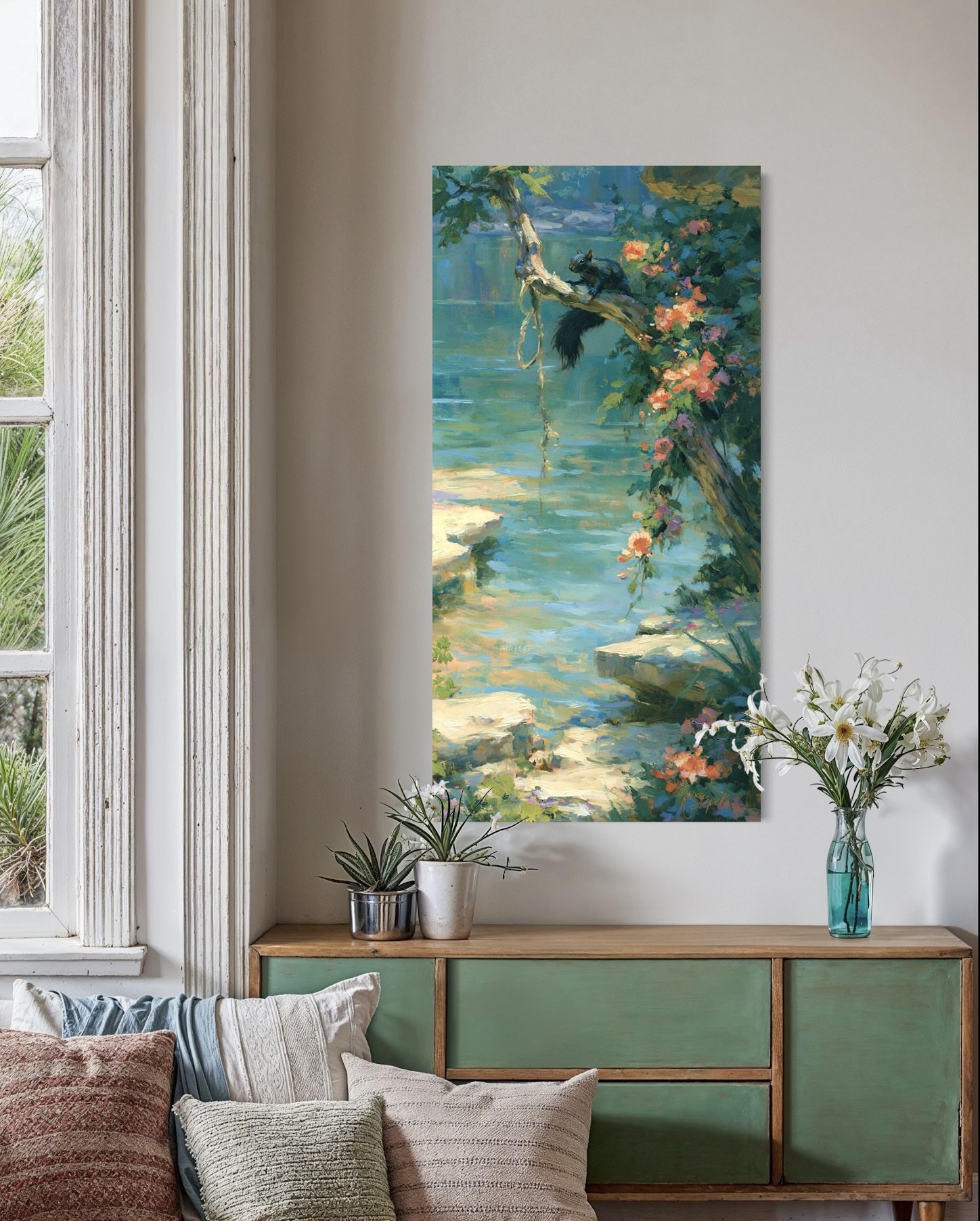 Image 17 of 21
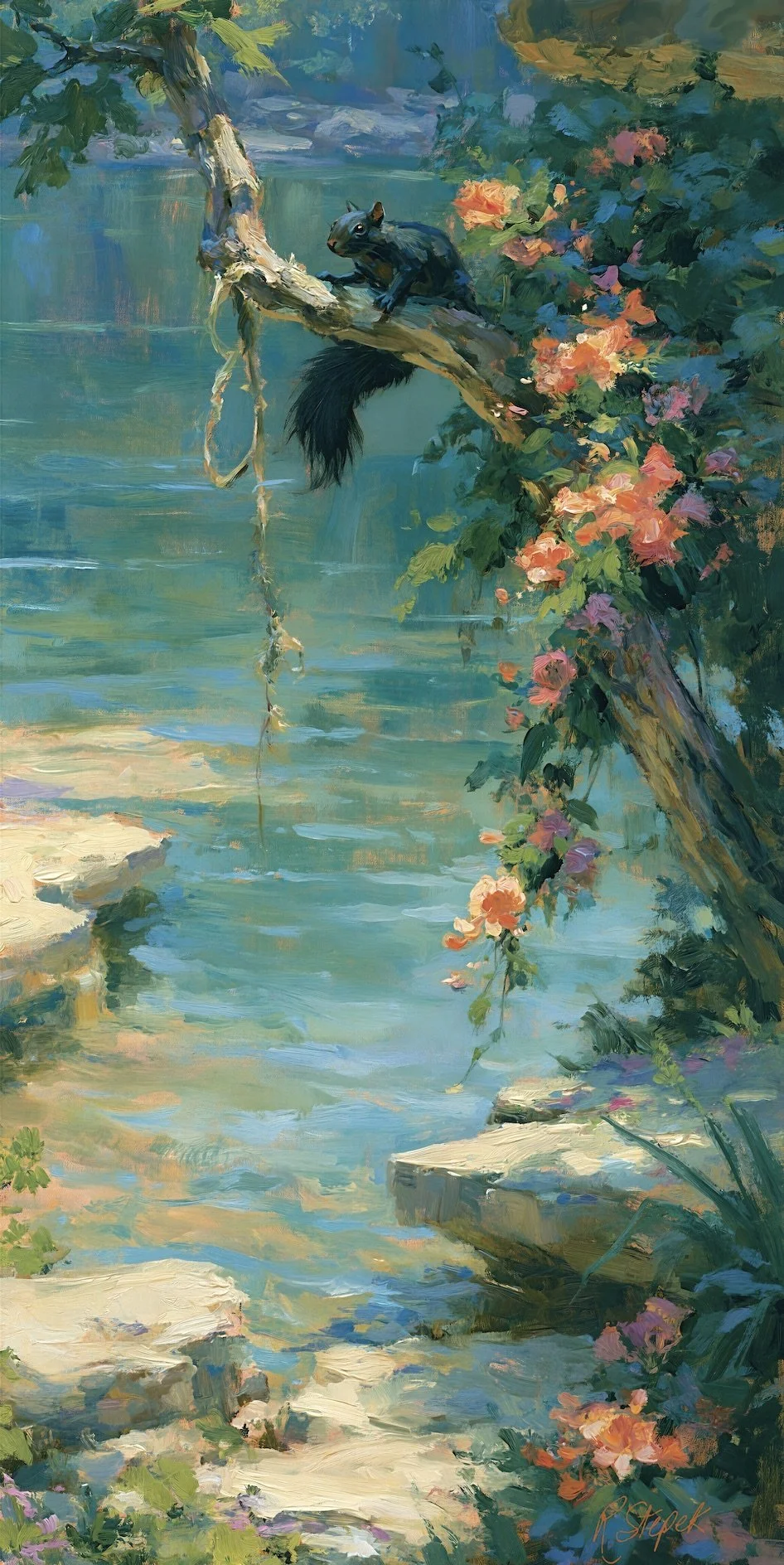 Image 18 of 21
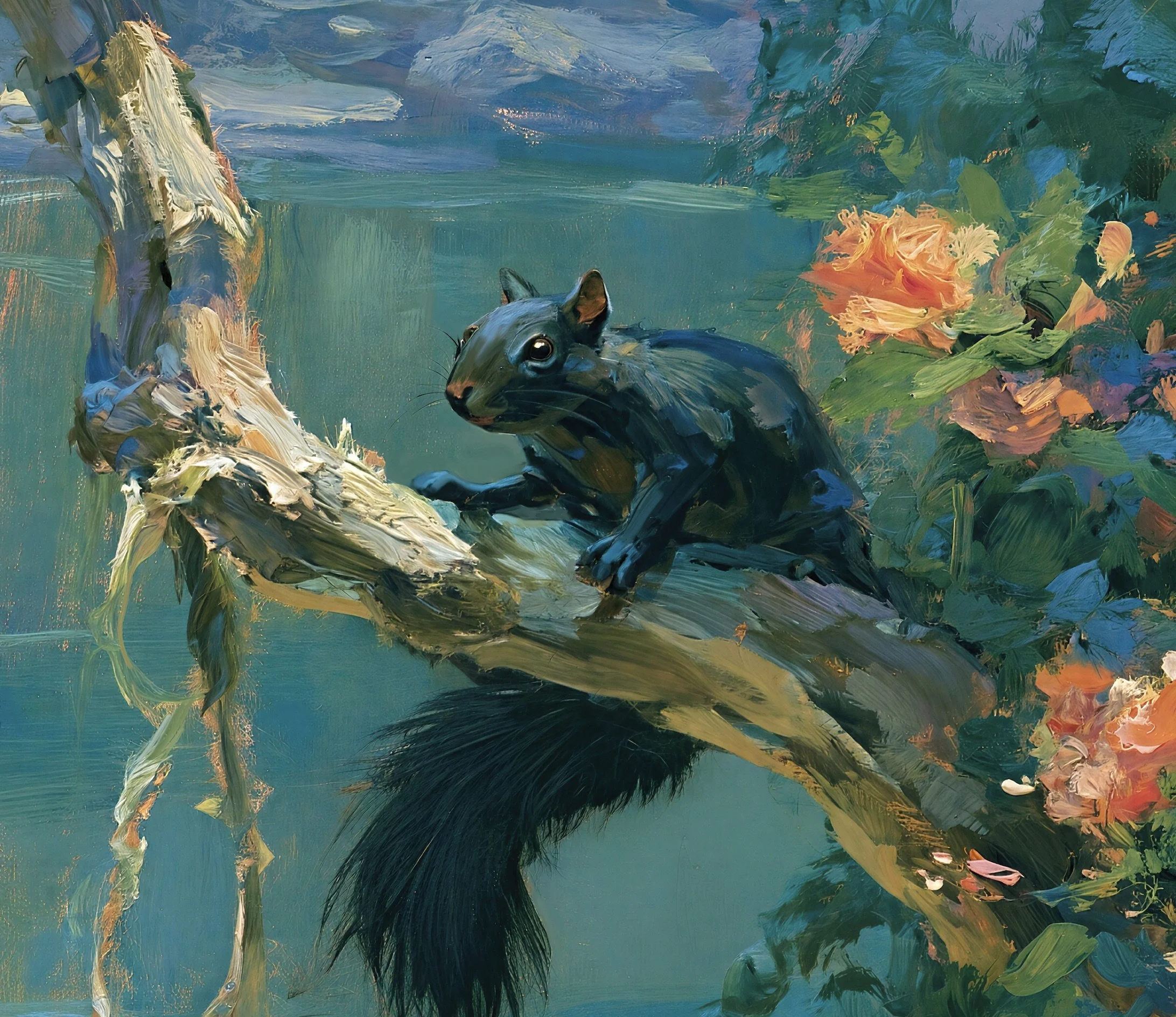 Image 19 of 21
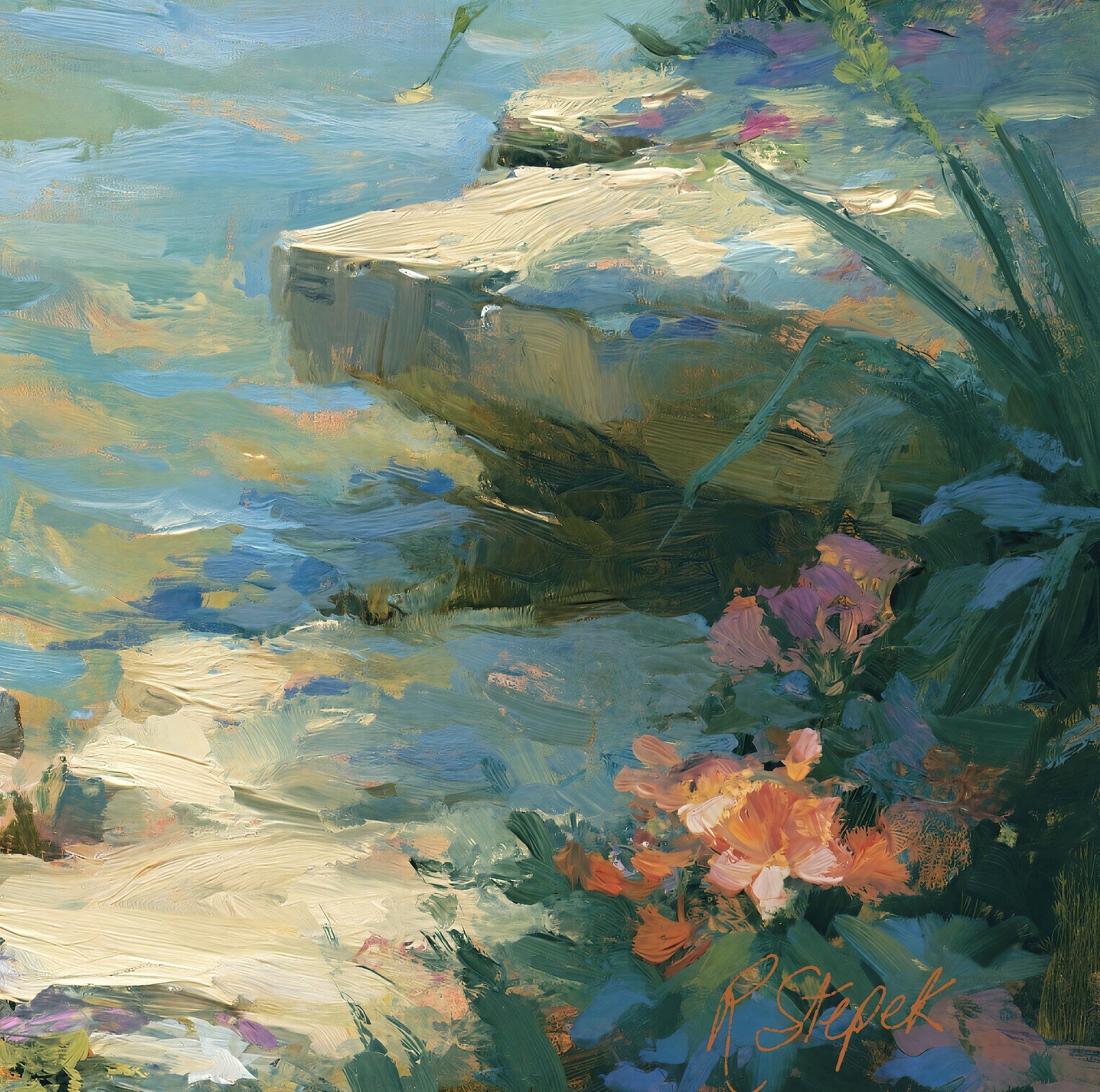 Image 20 of 21
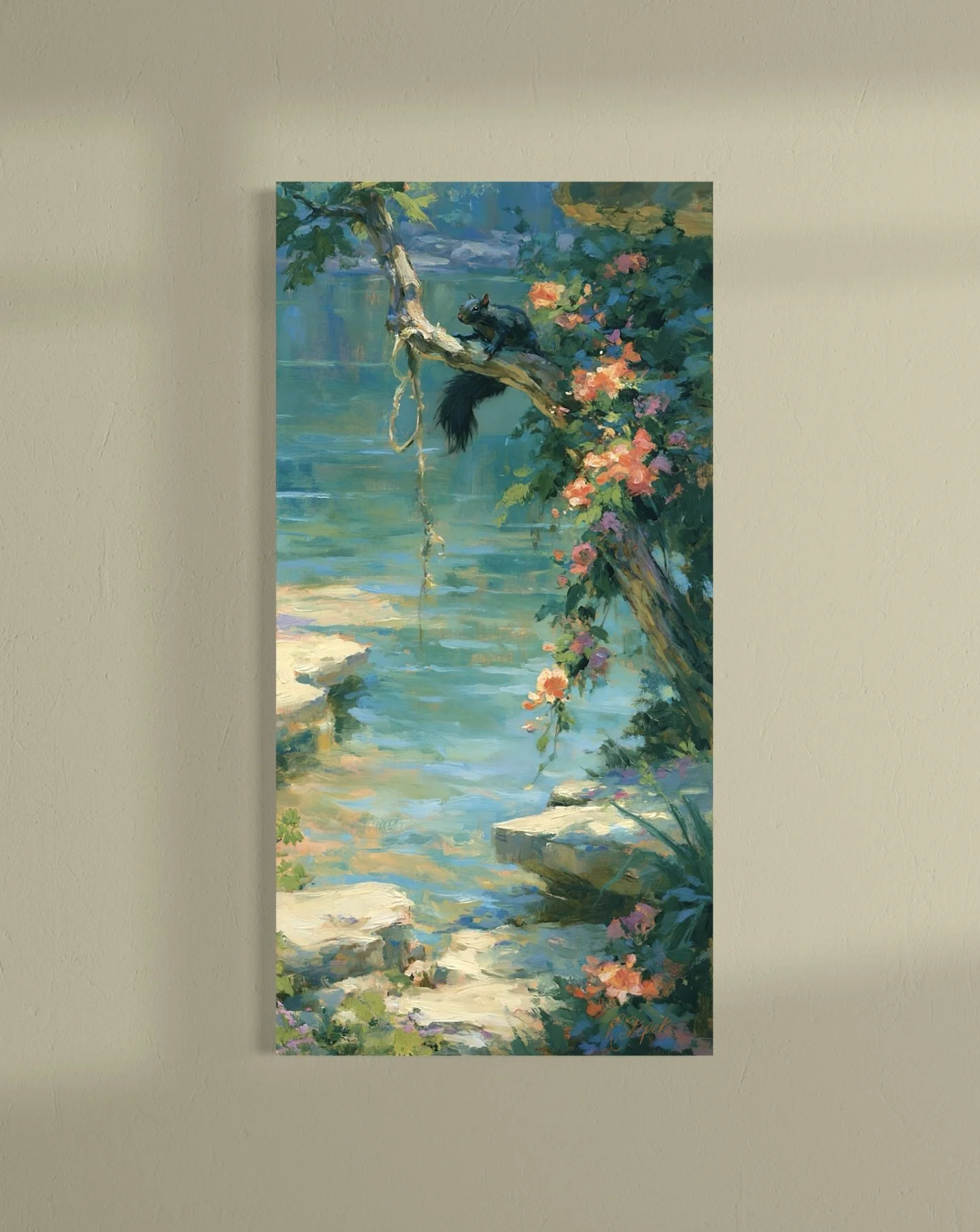 Image 21 of 21