
One artwork, two ways to live with it
Canvas vs. fine art prints
Choose the finished, dimensional ease of canvas or the quieter paper surface and framing freedom of a fine art print. The right one depends on how you want the artwork to arrive and belong in your room.
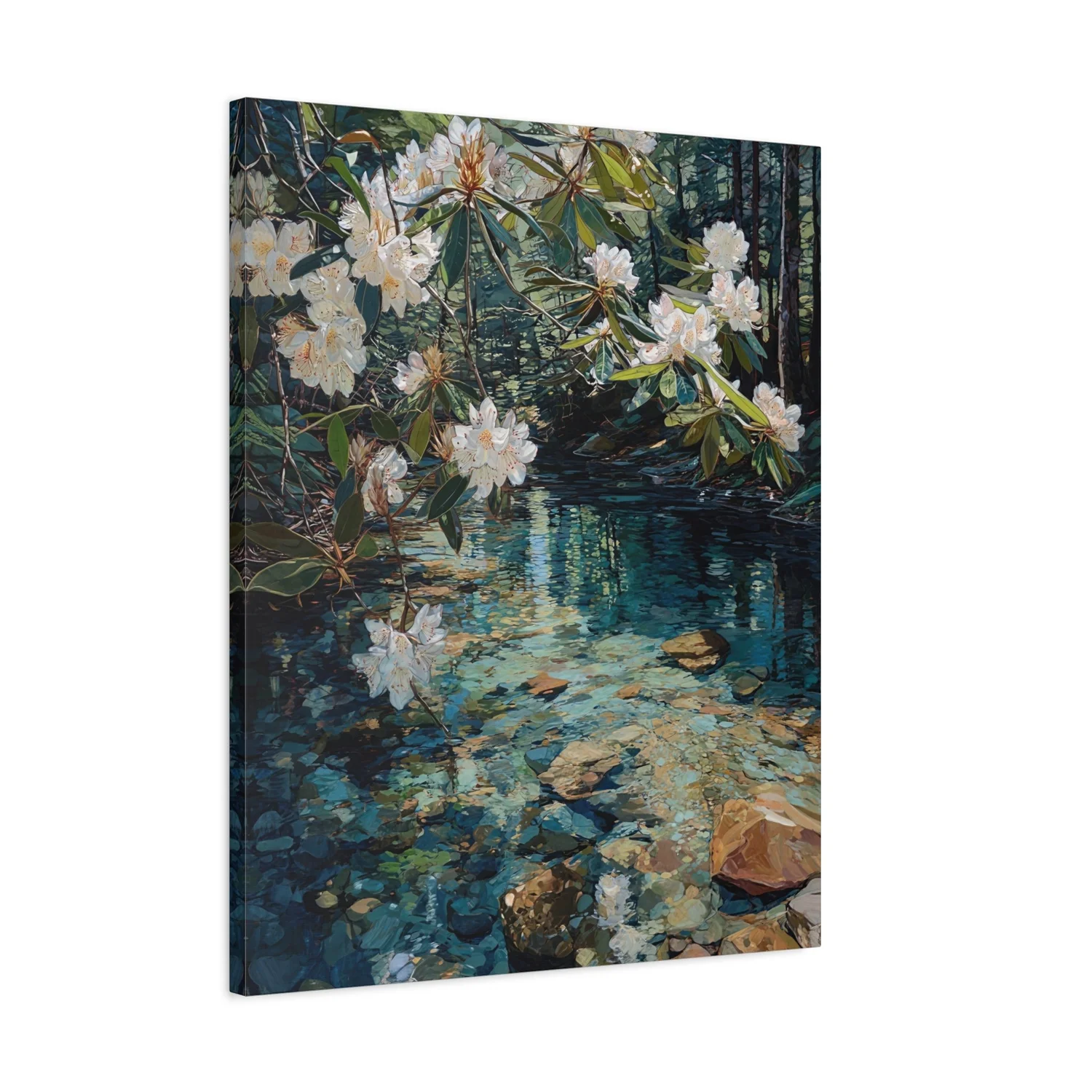
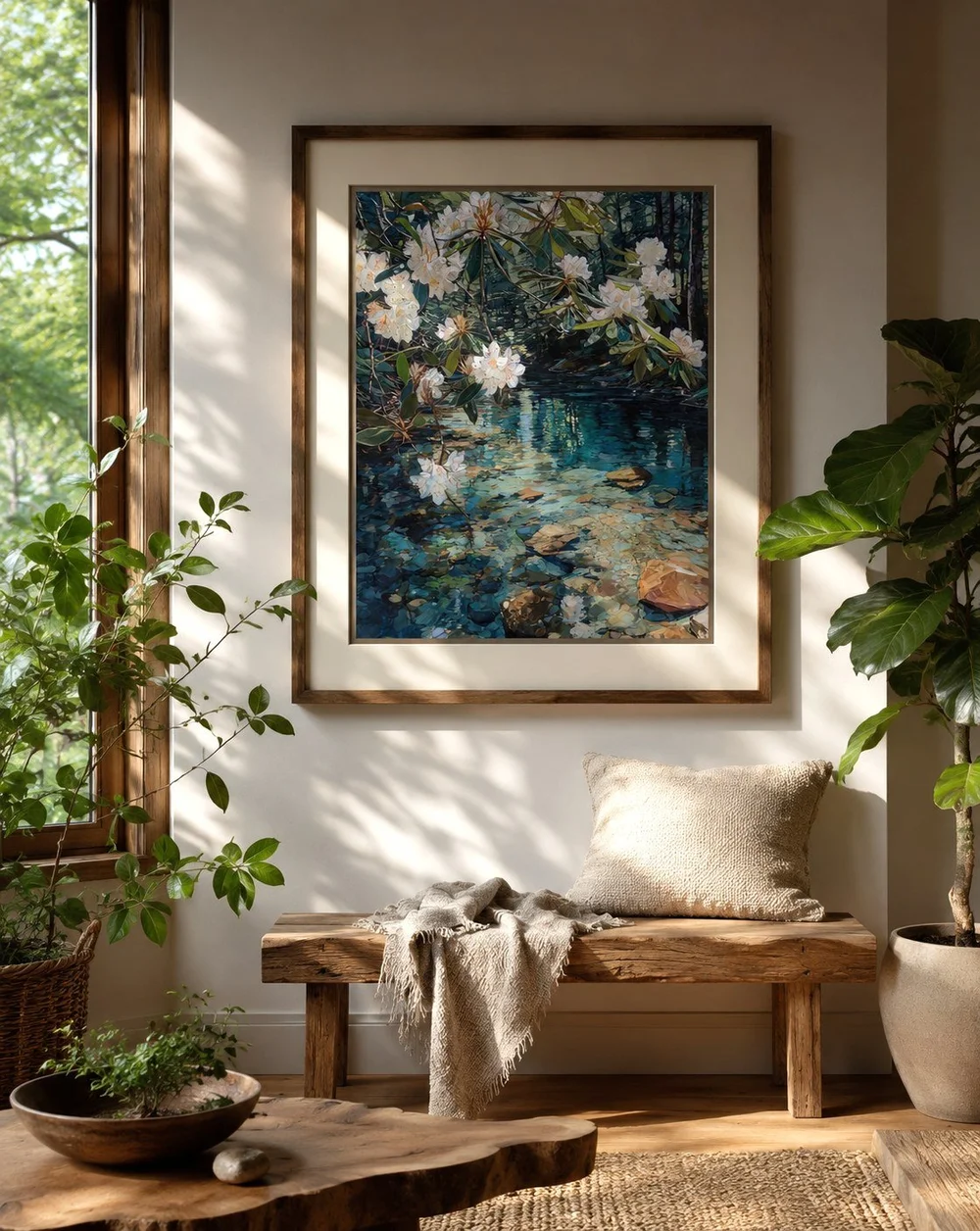
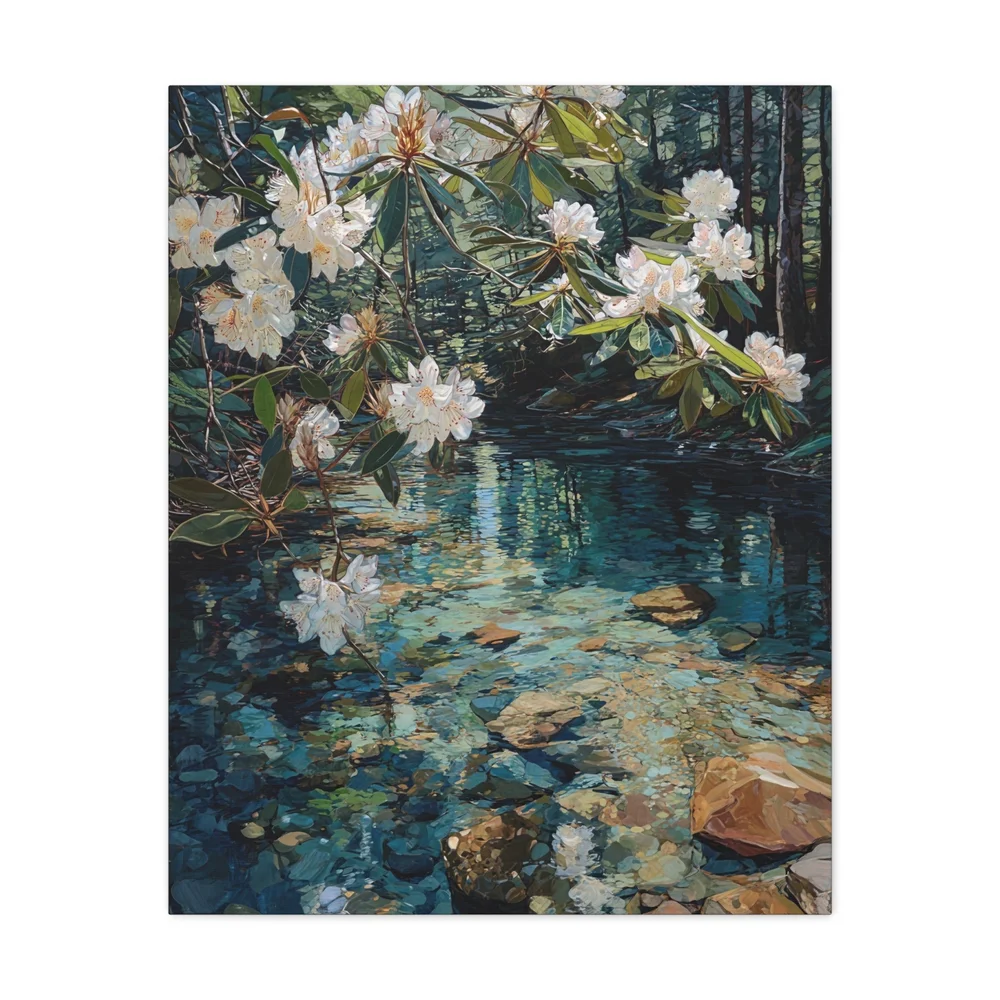
Great Laurel Over Clear Creek by Rachel Stepek. Framed view is for presentation and scale; fine art prints arrive unframed and unmatted.
The quick answer
Start with the finish.
Choose canvas when you want wrapped edges, included hanging hardware, and a piece that is ready for the wall. Choose a fine art paper print when you want to select the frame, mat, glass, and wood tone yourself.
The physical difference
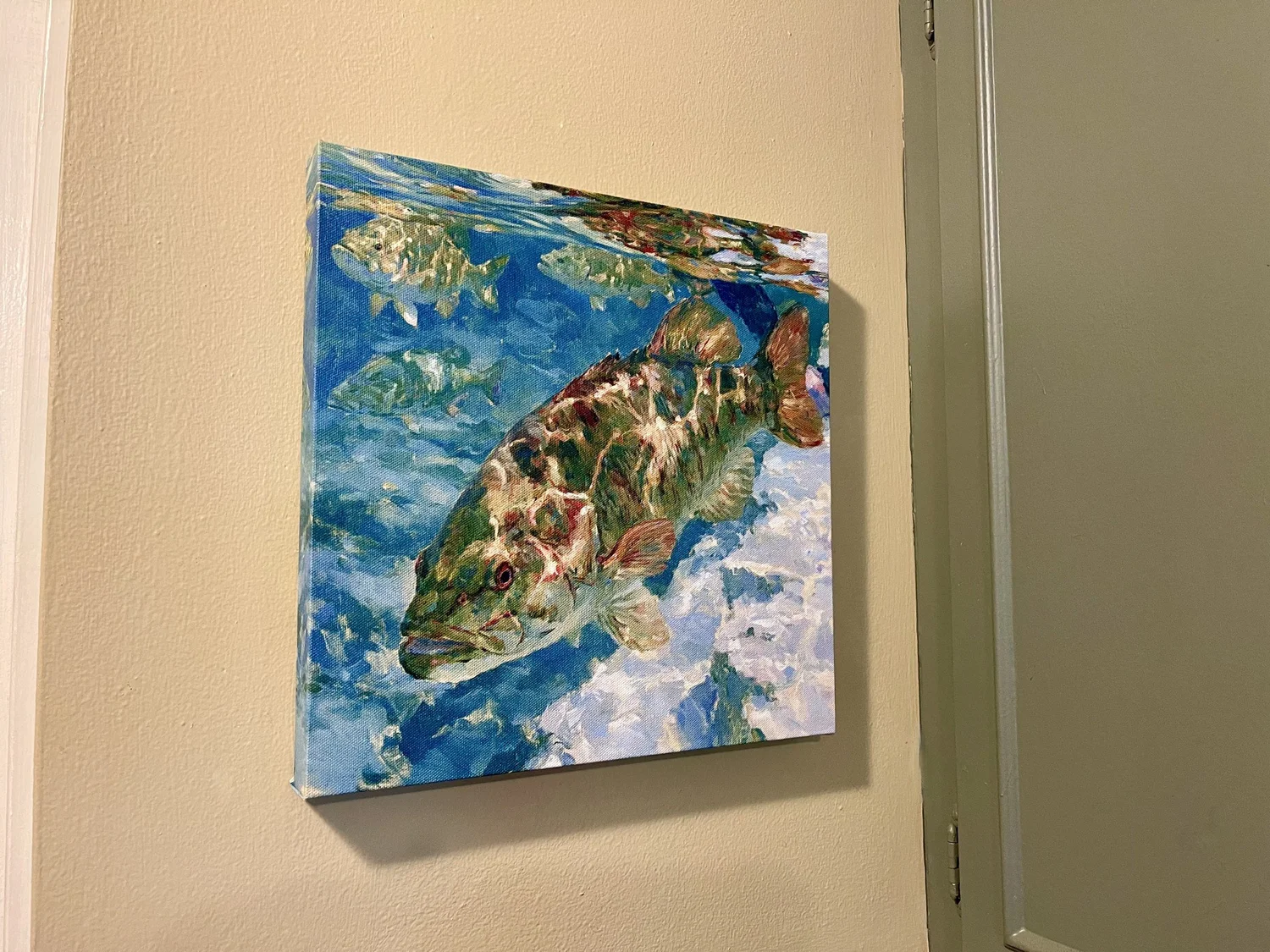
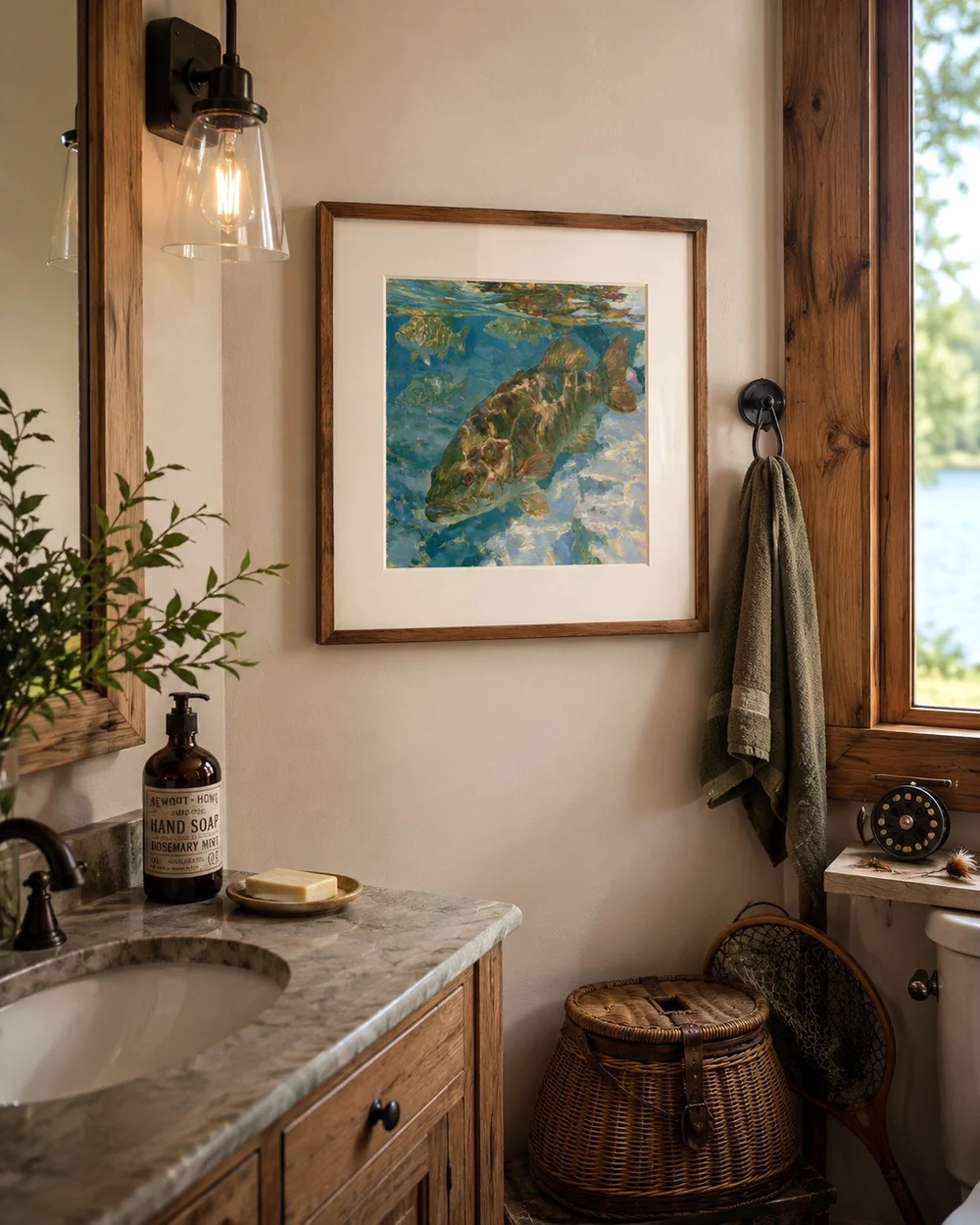
The same artwork on canvas and paper.
The surface, edge, and way light meets the artwork change between canvas and paper. Paper also leaves the frame, mat, glass, and wood tone for you to choose.


Canvas arrives ready to hang. Paper leaves the framing to you.
Gallery-wrapped canvas has visible depth and finished edges. It arrives with hanging hardware, so the piece feels complete before it reaches your wall.
The fine art print is made on low-texture, smooth matte Hahnemühle Bamboo 290 paper with archival inks. It arrives as the artwork print only—unframed and unmatted—so the frame, mat, and glazing become part of your choice.
- Canvas surfaceFinished, dimensional, and shown without glass.
- Paper surfaceQuiet, matte, and meant to be handled carefully before framing.
- CompositionPaper sizes are selected to preserve the original artwork with minimal cropping. Canvas edges may use a mirrored gallery wrap.
Practical comparison
What changes once it enters the room?
Both begin with Rachel’s original artwork and are printed for lasting color. The surface, edge, framing, and way each piece meets the room are what change.
Arrival
Gallery-wrapped, with hanging hardware included. It can go directly onto the wall.
Artwork print only. You choose the frame, mat, and glazing.
Wall depth
The wrapped profile and finished sides give the piece visible depth.
The flatter paper presentation can feel intimate, especially with a generous mat.
Light
Canvas is viewed directly, without the reflections that glass or acrylic can introduce.
Framing can protect the paper, though the glazing may reflect windows and lamps.
Styling
The artwork and wrapped edge carry the presentation without a separate frame.
Use the frame to connect the work to woodwork, furniture, inherited frames, or a gallery wall.
Scale
Useful when one piece needs to feel complete above a bed, sofa, sideboard, or mantel.
Useful for smaller walls, shelves, corners, pairs, and collected arrangements.
Size choice
Canvas sizes vary by artwork and may be square, vertical, horizontal, or panoramic.
Paper sizes vary by artwork so important edges, subjects, and negative space are not forced into the wrong crop.

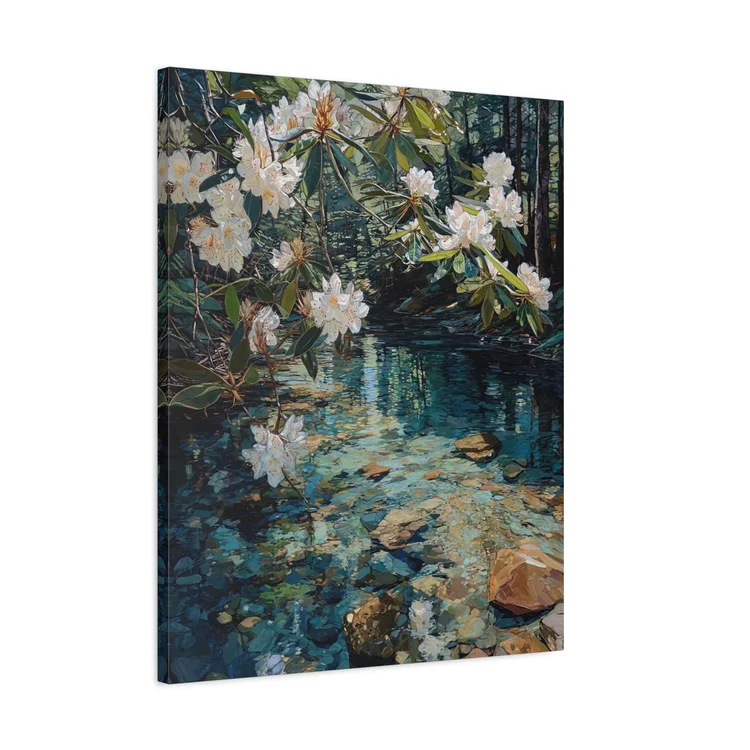
Choose canvas when
You want the piece to arrive complete.
Canvas arrives ready to hang. Its wrapped edge and visible depth give water, branches, wildlife, and reflected color a finished profile on the wall.
- You want finished wrapped edges and included hanging hardware.
- You prefer to view the artwork without glass or acrylic.
- You want one piece to fill a larger wall on its own.
- You like the long relationship between painting and stretched canvas.
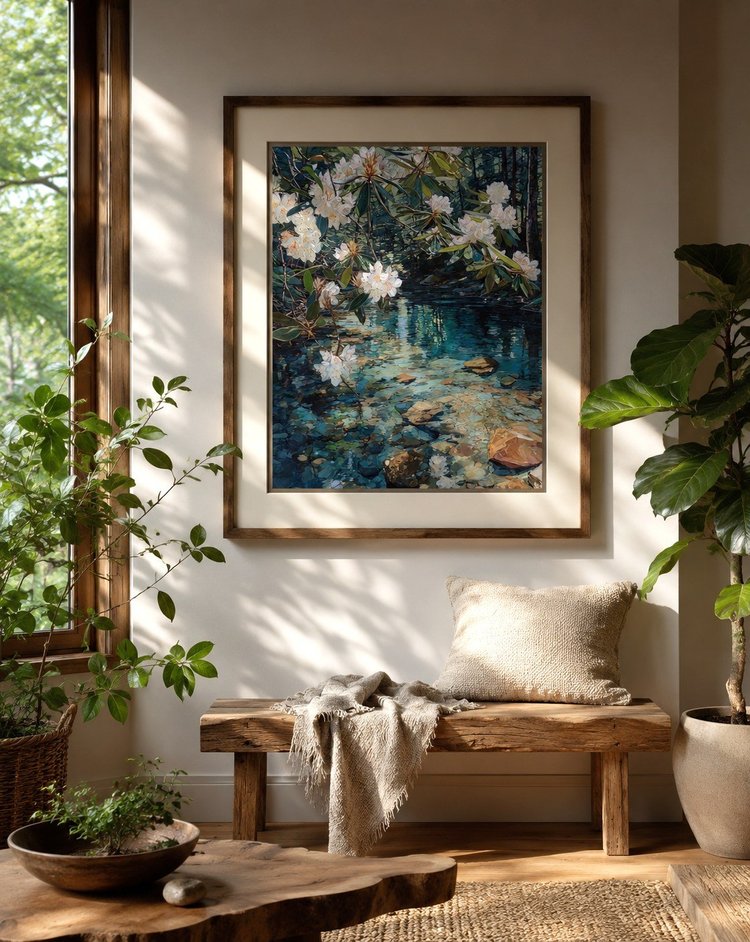
Choose fine art paper when
You want the presentation to become yours.
A paper print leaves room around the artwork—literally, if you add a mat, and visually, through the frame you choose. That can help the piece join a room with old wood, painted trim, inherited objects, or an existing gallery wall.
- You want to choose the frame, mat, and glazing.
- You like a quieter, flatter presentation.
- You are working with a shelf, narrow corner, grouping, or smaller wall.
- You already own a frame you want to use.
Room and size examples
Let the wall tell you what it needs.
Look at the wall itself: its size, nearby furniture, other artwork, and whether this piece will hang alone or in a group.
For one open wall
Canvas can reduce visual decisions and create a finished anchor. Start with the artwork’s shape, then compare scale.
For a collected wall
Paper gives you control over matching—or deliberately mixing—frame profiles, mat widths, and wood tones.
For strong window light
Canvas avoids glazing reflections. With paper, choose framing and placement after watching the room’s light through the day.
Same artwork on canvas and paper
Compare the same subject on both surfaces.
The fairest comparison is not one canvas beside a different paper print. These three works are each available both ways, so you can choose the artwork first and the presentation second.
Appalachian botanical · vertical
Great Laurel Over Clear Creek
White Great Laurel blooms, evergreen leaves, dark reflected water, and clear creek stones. The vertical composition works either as a finished canvas or as a paper print with breathing room around it.
 CanvasPaper, shown framed
Freshwater wildlife · square
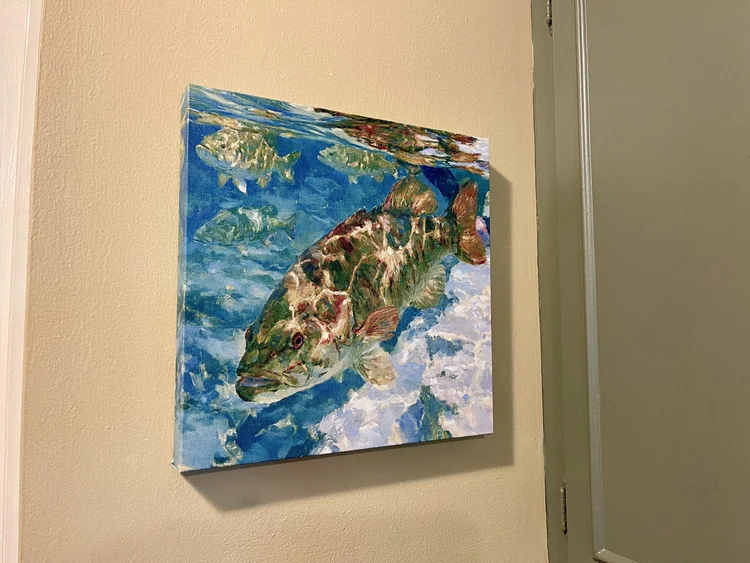
Smallmouth Bass in Clear Water
A square underwater view that can sit neatly on its own as canvas or join a bathroom, office, cabin wall, or grouped arrangement in a chosen frame.
 CanvasPaper, shown framed
Lake Keowee wildlife · vertical
Great Blue Heron on Lake Keowee
A narrow lake-edge scene with green water, filtered light, and an upright heron. Its height suits entryways, hallway ends, reading corners, and vertical wall sections.
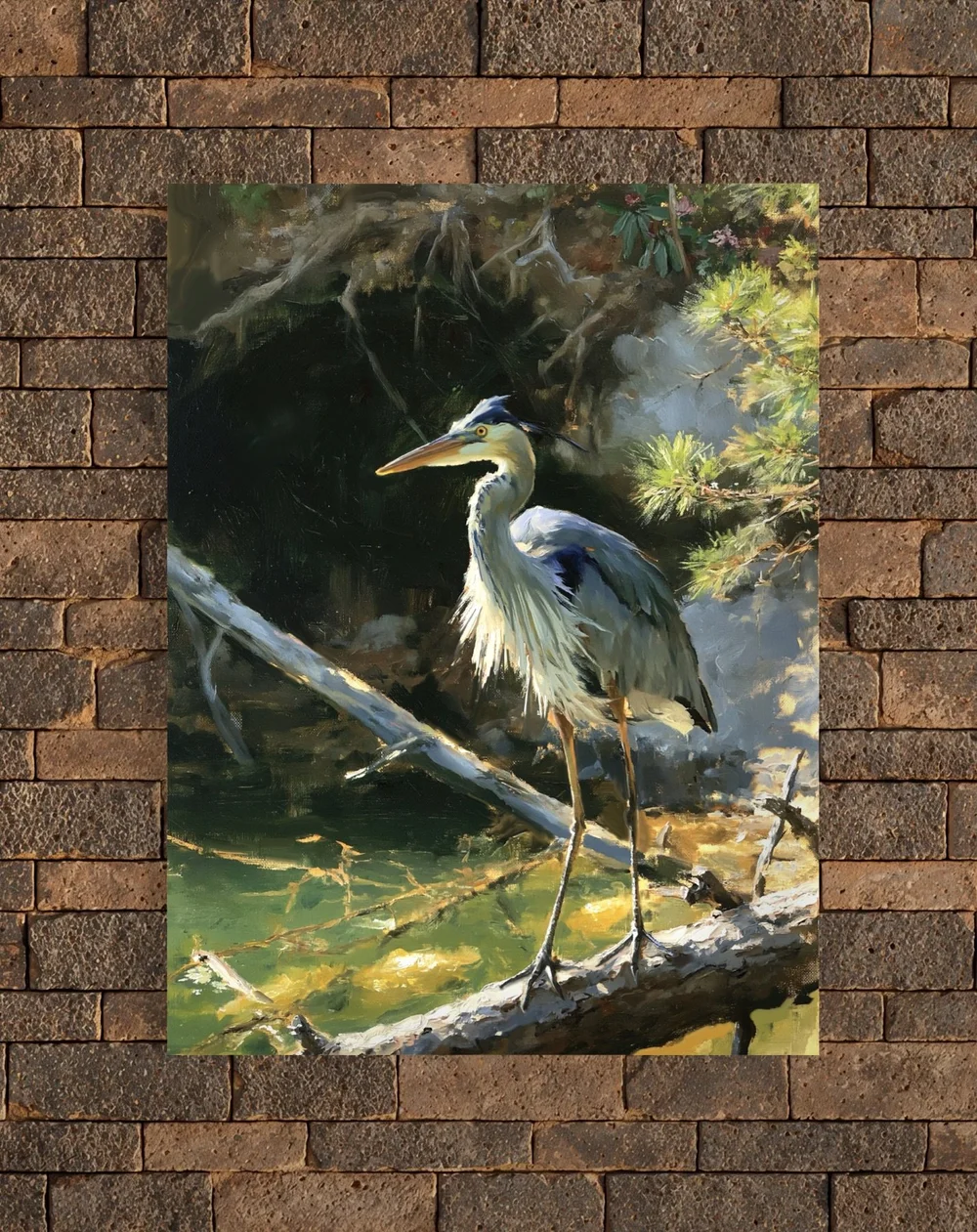 Canvas
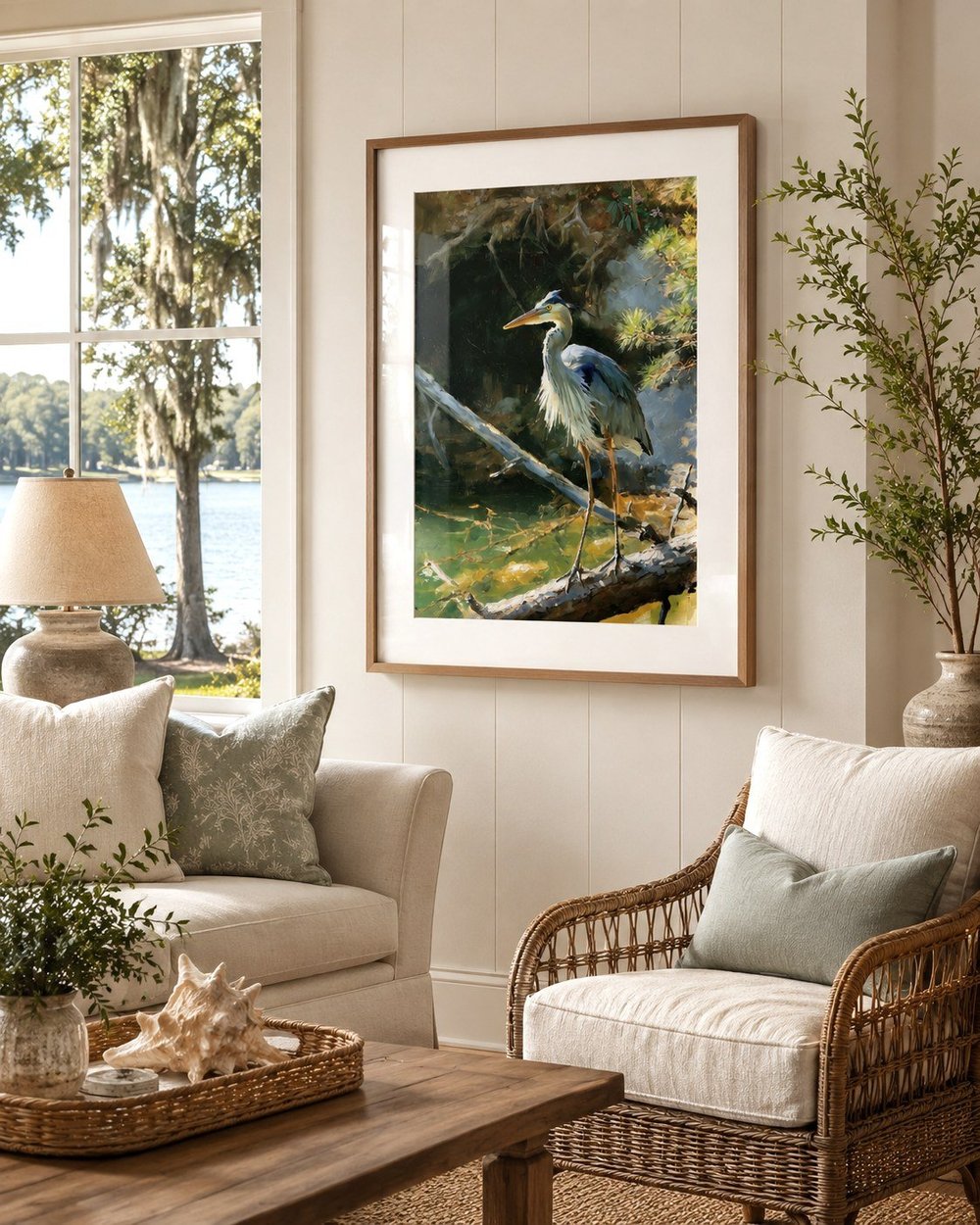 Paper, shown framed
A gentle decision helper
Which sentence sounds most like you?
Choose the sentence that sounds most like you, and the guide will point you toward the most useful place to look next.
Choose the sentence above that feels closest. You can still change your mind after looking at the artwork on canvas and paper.
Looking for a different paper print or a smaller, easy-to-place piece? The Lakehouse Goods art print collection uses different paper and has its own sizes and product details.
Questions before choosing
Canvas and paper FAQs
Is canvas better than a fine art print?
Choose canvas when you want a dimensional piece that arrives ready to hang. Choose fine art paper when you want to select the frame, mat, glazing, and wood tone. Both begin with the same original artwork.
Do fine art paper prints arrive framed?
Lakehouse giclée fine art prints arrive unframed and unmatted as the artwork print only. Framed room images on this page show presentation and scale.
Does canvas need a frame?
Lakehouse canvas prints are gallery-wrapped with finished edges and hanging hardware, so you can display the canvas as it arrives. You can also add a canvas or floater frame made for the same canvas size and depth; glass is unnecessary.
Which choice is better in a bright room?
Canvas may be simpler when you want to avoid reflections from glass or acrylic. A fine art paper print can still work beautifully in a bright room, but the glazing and placement will affect reflections.
Can the same artwork look different on canvas and paper?
Yes. The image remains the same, but canvas adds a wrapped profile while paper is usually viewed inside a frame and may include a mat. Screen settings, framing, glazing, and room light can also affect how color appears.
Which choice is easier to care for?
Canvas avoids glass and a separate frame, while framed paper places the print behind protective glazing. Each has different care needs. Follow the product instructions and use the canvas FAQ or fine art print FAQ if you need more detail.
How do I choose a size?
Begin with the artwork's shape and the role of the wall: small accent, grouped piece, or main anchor. Canvas and paper sizes vary by artwork so the composition is protected. Use the canvas size guide for visual scale, then check the size selector on the exact product page.
What if I still cannot decide?
Choose the artwork first. Open its canvas and fine art print pages side by side, then ask one practical question: do I want this to arrive finished, or do I want to frame it myself? If neither canvas nor paper feels quite right, you may be looking for something softer or more textural, such as a Lakehouse Goods wall tapestry. You can also email studio@lakehouseportraits.com for help with a specific wall.
Choose the artwork first. Then choose how it meets the room.
Canvas offers wrapped edges, visible depth, and included hanging hardware. Fine art paper offers a smooth surface and the freedom to choose the frame. Let the wall and the way you want the artwork finished guide the choice.
Ask about a specific wall →