
How to Choose the Best Photo for a Custom Lake House Portrait
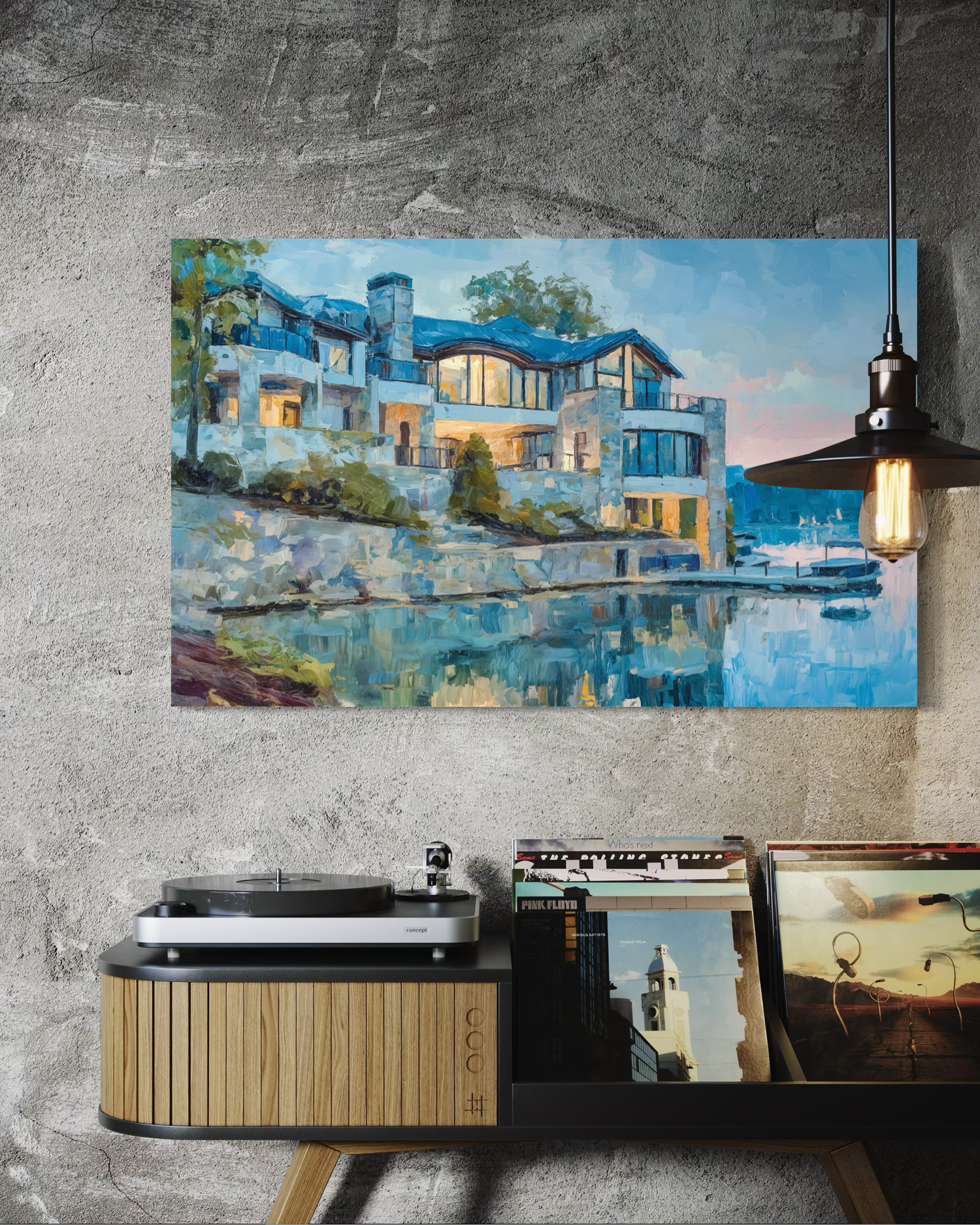
A guide to choosing your photographs
The best view is the one your family recognizes.
A phone photograph, a view from the boat, or several familiar angles can give me the house, water, light, and details I need to create your custom lake house portrait.
Send Your Photos for ReviewThe photograph does not need to look like a listing photograph. It needs to show me the place you know.
For one family, that may be the roofline appearing between trees as the boat comes around the bend. For another, it is the dock in front of the house, the pontoon tied where it always sits, or the porch lights beginning to glow over the water.
The strongest source photograph is the one that makes someone in your family say, “Yes—that is our place.” A polished camera image can be useful, but recognition matters more than polish. The relationship between the house, shoreline, dock, boat, trees, and water is often what turns a building into a lake house people remember.
I use your photographs as the foundation, then create the artwork by hand. This guide will help you choose one primary view and the supporting photographs that explain the details.
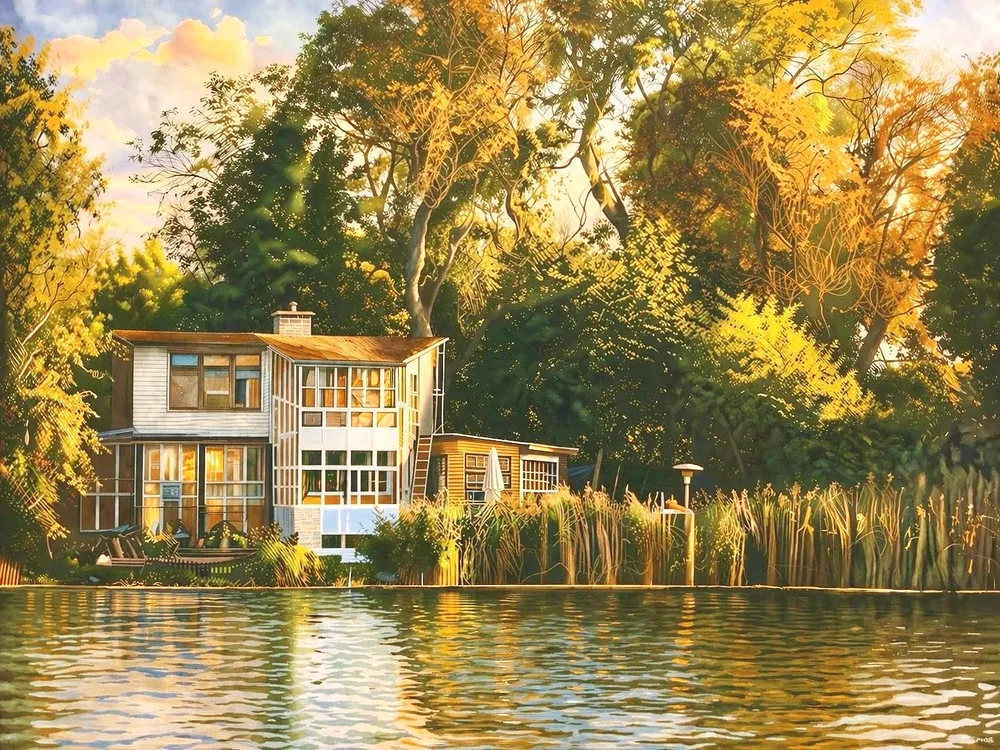
Choose the primary view
Start with the way you arrive.
The most useful primary photograph gives me the overall composition: the shape of the house, the angle of the bank, the water in front, and the features that establish where everything belongs.
A view from the water is often especially strong because it shows the house in its lake setting. It may include the dock leading toward the porch, the shoreline beneath the trees, or the boat that is part of every summer. A photograph from land can work beautifully too when that is the view your family knows best.
Look for the angle that feels like arriving, not simply the angle that shows the most architecture. The lake, land, and house should have a relationship on the page.
More than one photograph is welcome
The main view sets the composition. The others explain the place.
Your primary photograph does not need to contain every useful detail. Supporting photographs can show what is difficult to see from across the water: windows, porch railings, stonework, steps, the end of the dock, the shape of the boat, or the way the house turns at one side.
A closer photograph can clarify the architecture. A wider photograph can explain how the house sits against the bank. A picture taken in another season may show the trees or water color you remember most clearly. If one feature matters deeply to your family, send a view where I can understand it.
Think of the group as a small visual introduction to the property. One photograph says, “This is the view.” The others say, “These are the details that make it ours.”
See how the commission process works
Light and season
One photograph can give me the structure. Another can give me the day you remember.
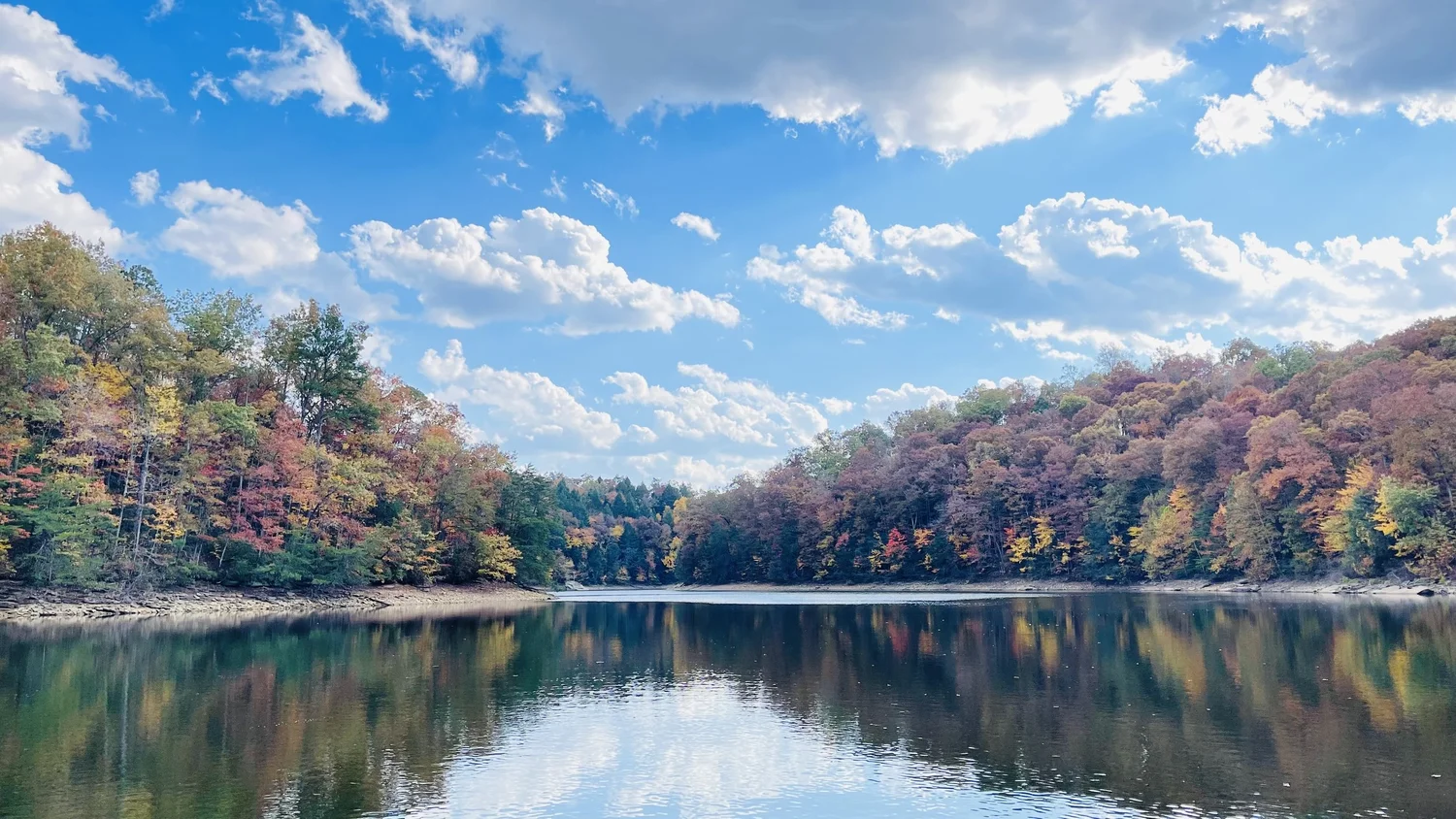
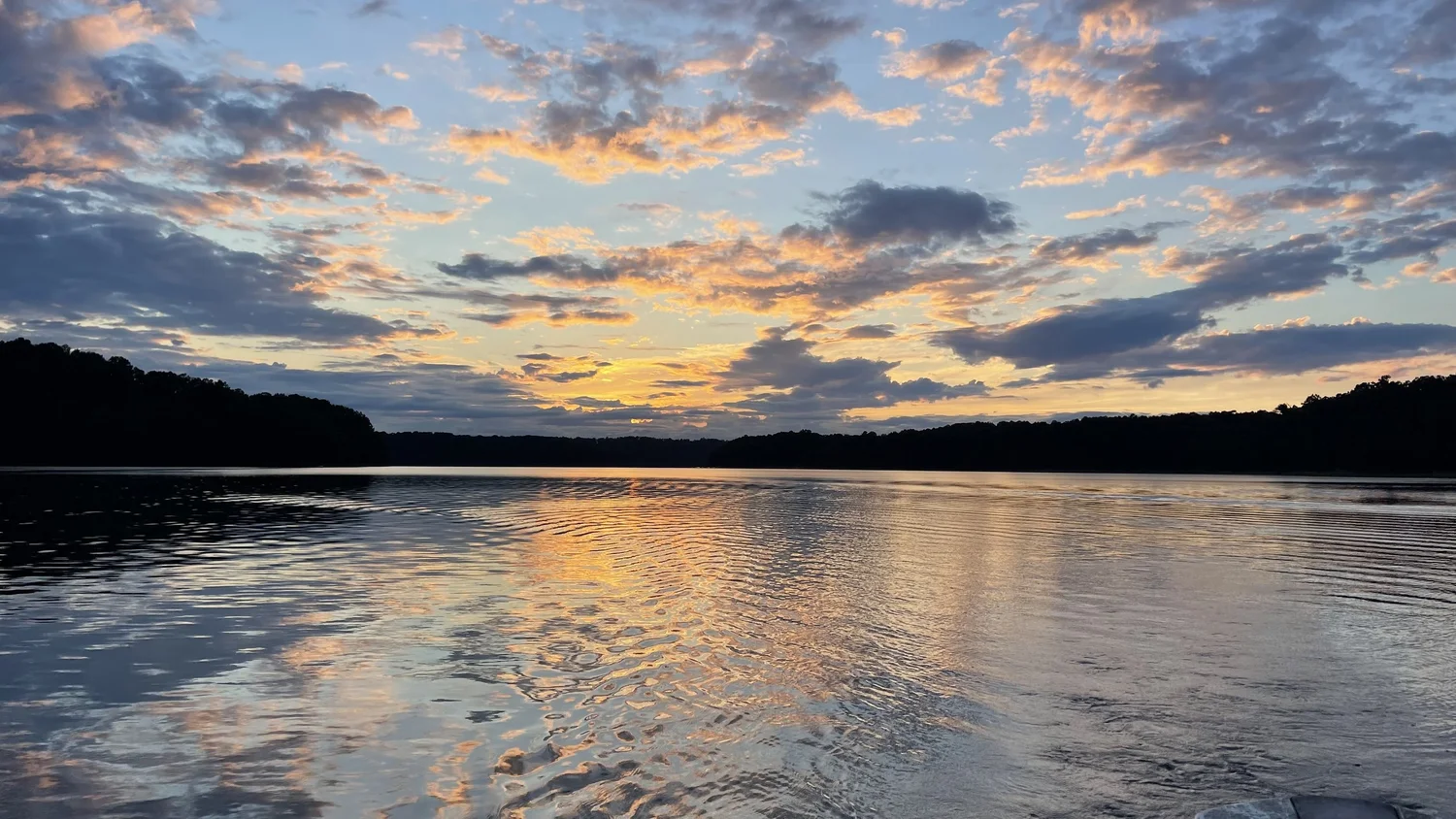
The house may be clearest in a bright afternoon photograph while the lake feels most like itself at sunset or in autumn color. Supporting photographs can show the blue-green water, deep summer trees, late-afternoon gold, reflected clouds, or warm evening light that belongs in your memory of the place.
These Rachel-taken lake photographs are examples of useful environmental information: season, shoreline color, sky, reflection, and the changing surface of the water. They are not client before-and-after images.
The artist's decisions
Keep the place unmistakable. Give the composition room to work.
A custom portrait should still look like your lake house. The roofline, windows, porch, dock, bank, boat, and relationship to the water are not interchangeable details. They tell me what must remain true.
At the same time, a photograph may include things that happened to be there: trash cans near the house, another boat passing behind the dock, harsh midday contrast, a branch crossing the roofline, or a crop that leaves the water feeling cramped. I can shape the composition, light, color, and visual emphasis so the finished artwork reads clearly while the property remains recognizable.
The most helpful instruction is specific. Tell me which boat belongs, which porch light matters, whether the stone bank is part of the story, and which tree or architectural feature your family would notice immediately if it disappeared.
Can be shaped
Composition, light, and distractions
- Awkward cropping or empty areas
- Flat, harsh, or uneven light
- Visual clutter around the dock or house
- Color balance, reflection, and emphasis
Should stay recognizable
The details that make it yours
- Architecture and roofline
- House, bank, dock, and water relationship
- An important boat or family-specific detail
- The features you identify as essential
Before you send them
Five questions for choosing your photographs.
You do not need to stage a new photo session. Use these questions to find the strongest view in the photographs you already have.
- Does this view look like the way you remember arriving?
- Can I see the shape of the house clearly enough to understand it?
- Are the dock, boat, bank, water, or trees part of what makes the place yours?
- Is there another photograph that shows an important detail more clearly?
- Which details would your family notice immediately if they were missing?
From your photographs
Three physical artworks, each made for your place.
The photographs can lead to a ready-to-hang custom canvas, a hand-painted watercolor, or a large original oil painting. Each begins with the house and view your family recognizes.
24 × 36 · $295
I create the artwork by hand from your photographs, then have it printed with archival inks on thick gallery-wrapped canvas. It arrives as a finished physical artwork, ready to hang. There is no download.
24 × 18 · $995
I paint the watercolor by hand on paper from your photographs. Standard U.S. shipping is included, and you choose the final framing presentation for your room.
48 × 36 · $4,800
I build the original oil painting slowly in layered paint. The commission begins with a $2,400 deposit; the $2,400 balance is due after final approval and before hand delivery or insured shipment.
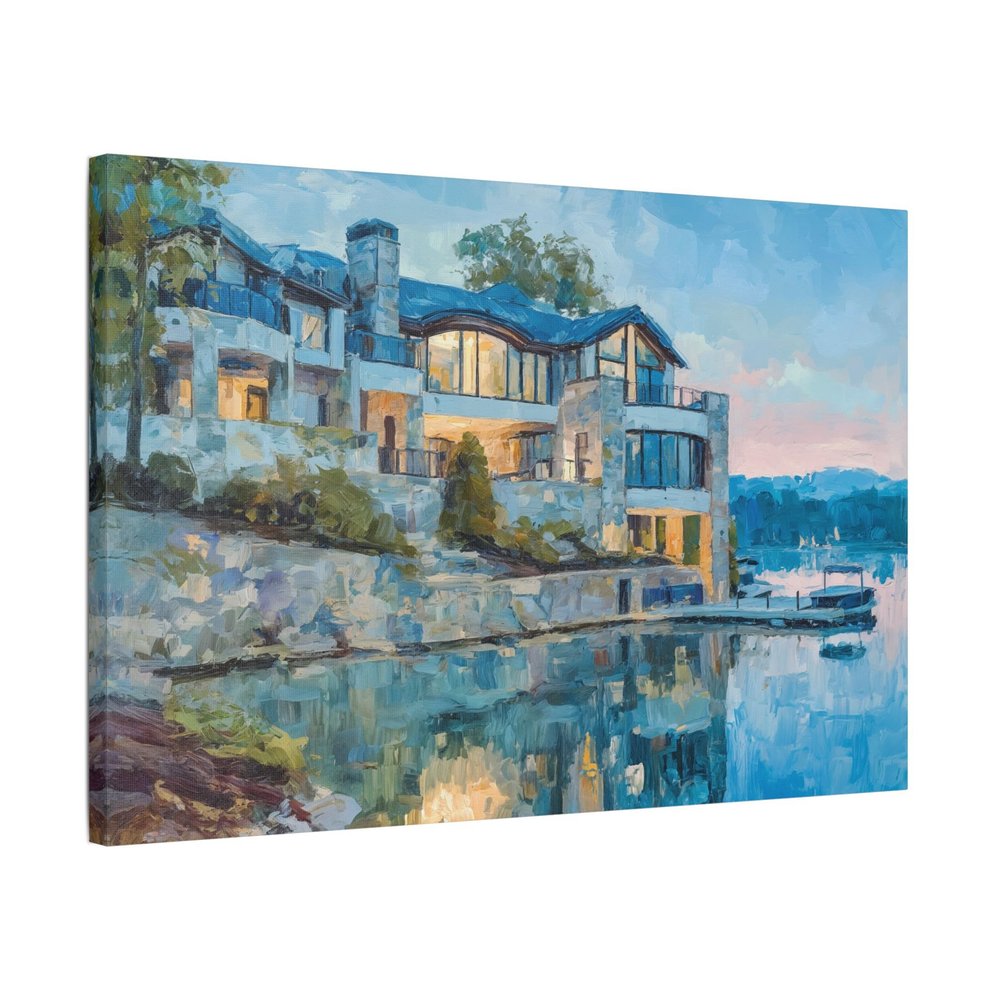
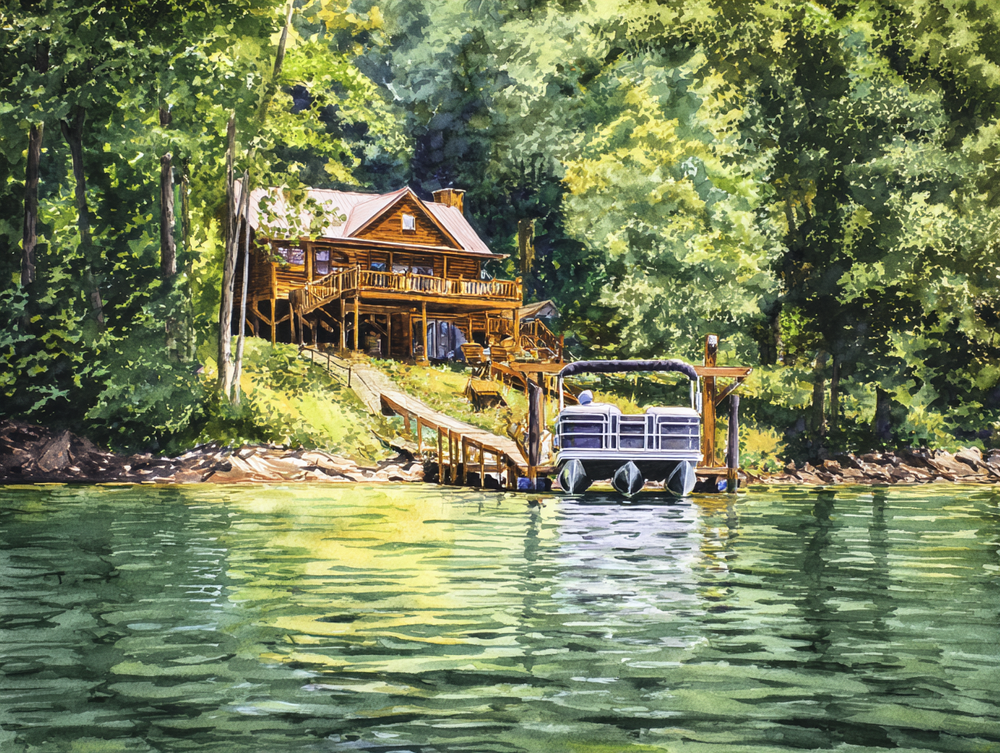
Photo questions
A good photograph gives me somewhere true to begin.
These are the practical questions people ask before sending a lake-house view.
Can I use a phone photo for a custom lake house portrait?
Yes. A clear phone photograph can provide the composition, architecture, shoreline, water, and familiar details I need. Send the view that feels most like the place, even if it was not taken professionally.
Can I send more than one photograph?
Yes. Choose one photograph as the primary view, then include closer or alternate photographs that clarify the house, dock, boat, bank, trees, season, light, or another detail that matters.
What if the best view has clutter or imperfect light?
Send it. I can shape the composition, light, color, and visual emphasis while keeping the property recognizable. Tell me which details belong and which distractions do not need to appear.
Can a boat, dock, or shoreline be included?
Yes. Boats, docks, banks, trees, water, and shoreline details often explain how a family knows the property. Include photographs that show those features clearly when they belong in the artwork.
What happens if another angle would help?
I review the photographs and let you know if another angle or a closer view would give me useful context before I make the work.
Your place, from the view you know
Send the photograph that feels most like arriving.
Begin with that one, then add any closer views that explain the details. I will review what you have and tell you whether another angle would help.
