
Crawfish at the Water’s Edge | Bold Art for Dining Spaces
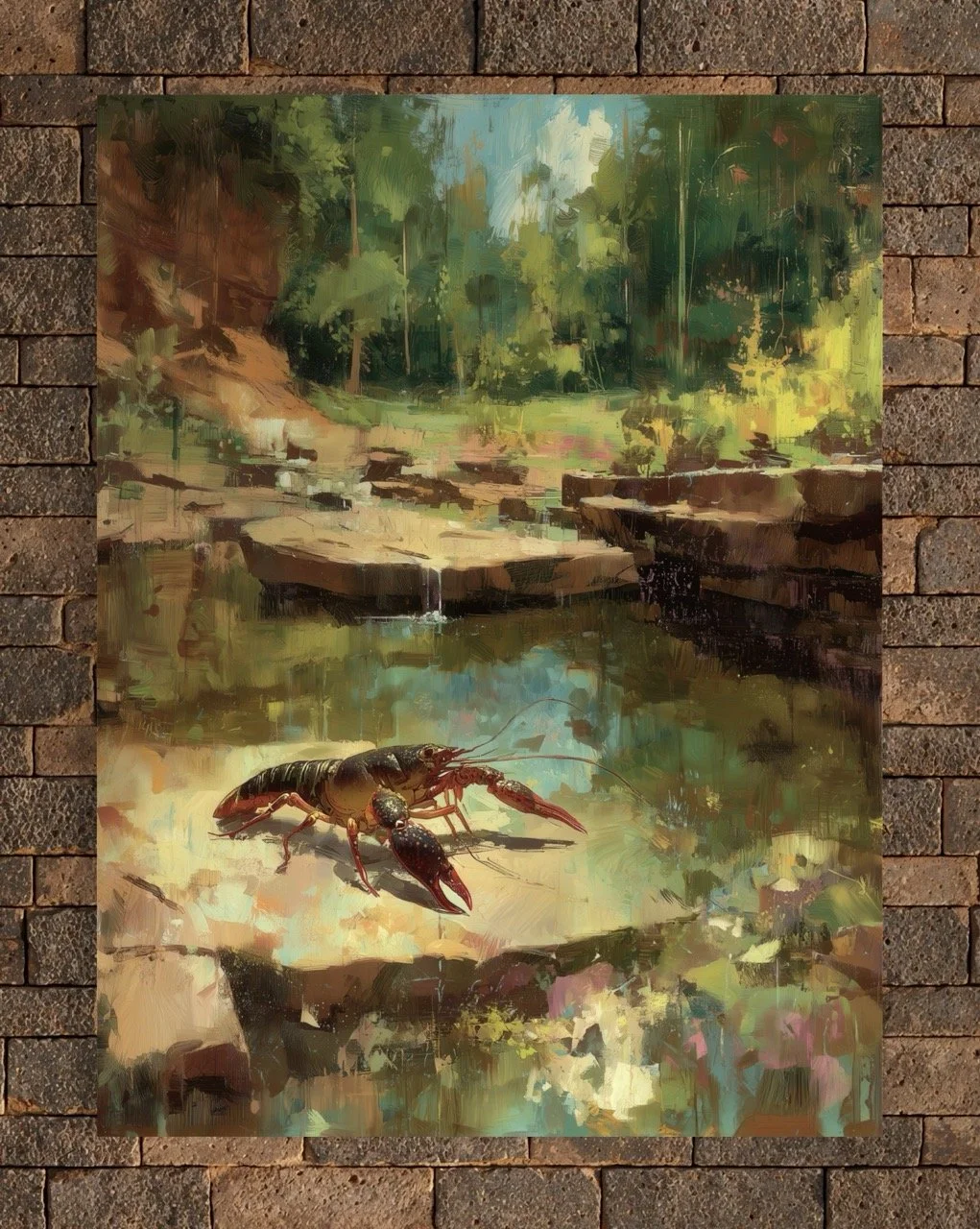
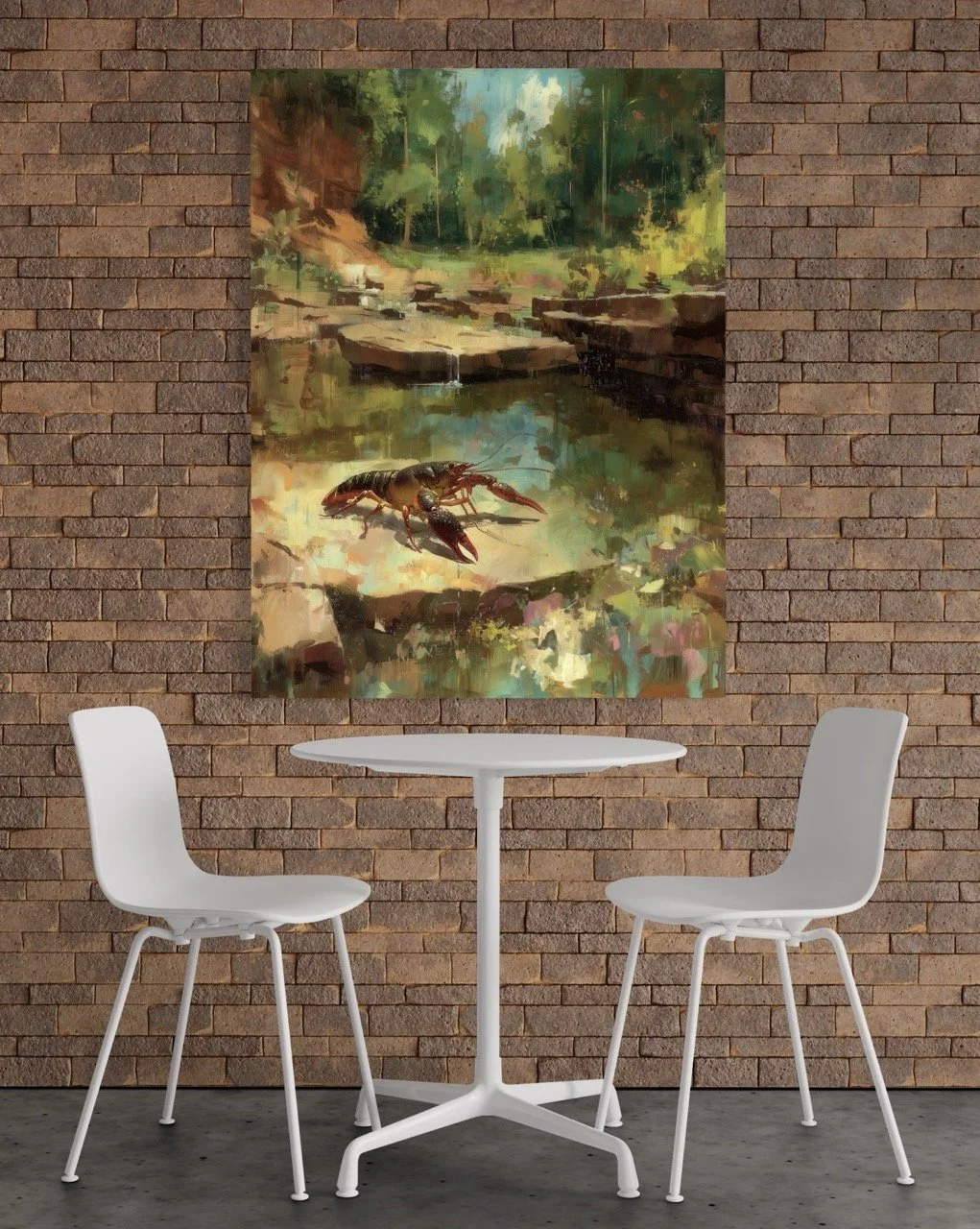
There are some paintings that arrive quietly, and others that carry a pulse from the very beginning. Crawfish at the Water’s Edge feels like the second kind.
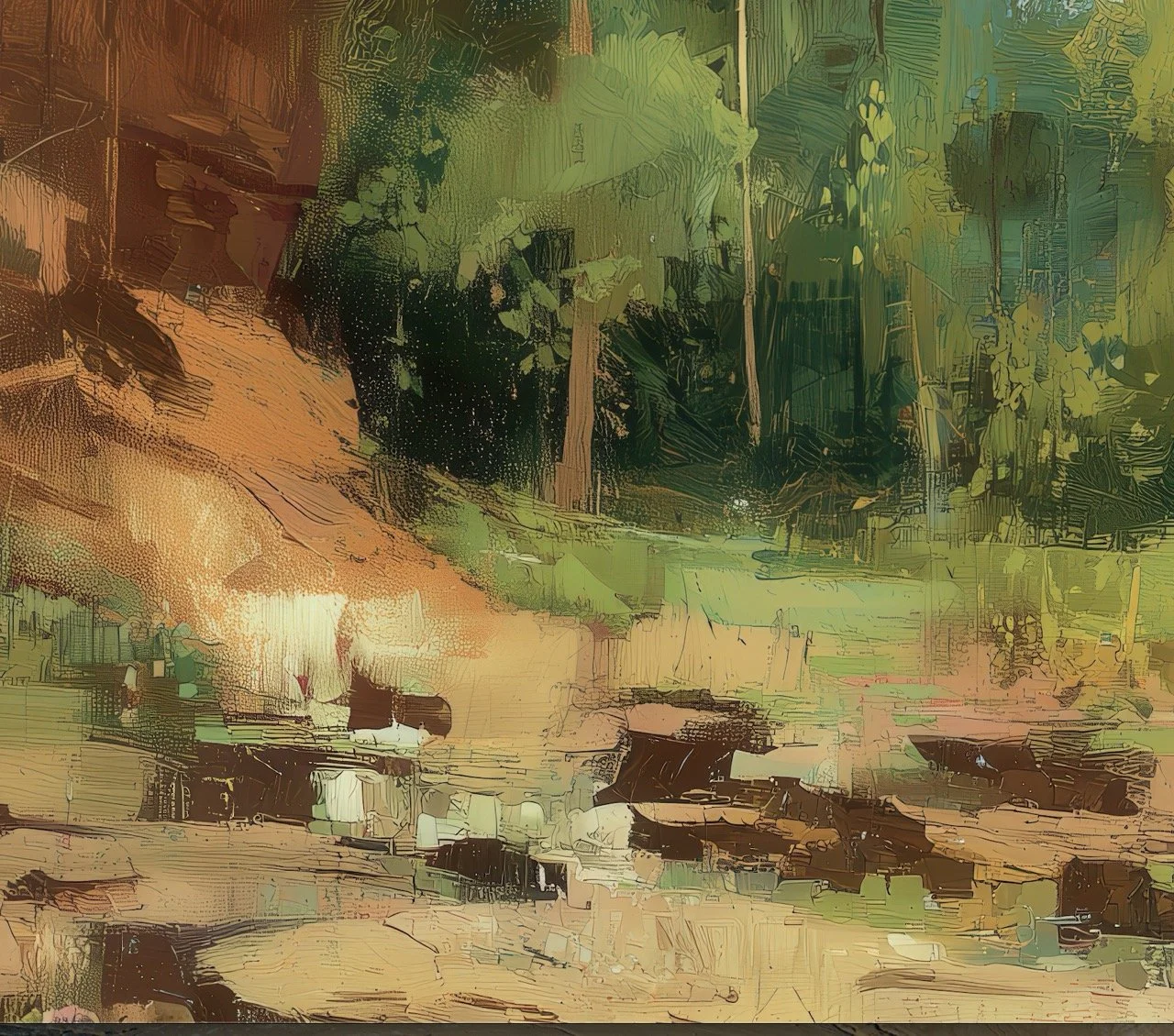
At first glance, the scene appears peaceful: a sunlit stretch of water, layered greens, warm stone, and the hush of a still afternoon. The landscape opens with softness and familiarity, drawing from the feeling of Kentucky’s natural places and the reflective beauty of inland waterways. Light moves gently across the water. The surrounding trees seem to hold the heat of the day. Everything feels suspended in that particular kind of summer silence that is never truly empty, only waiting.
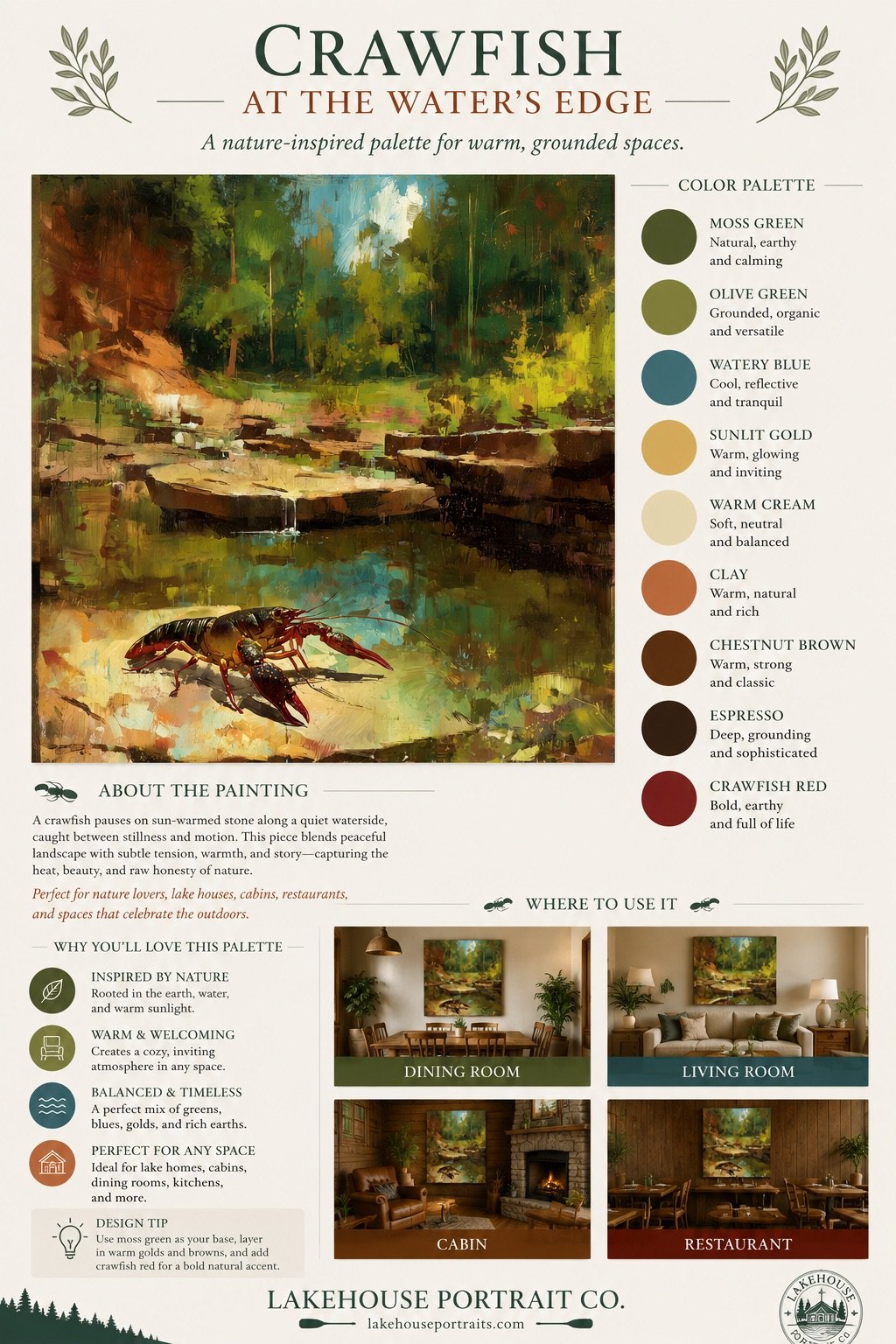
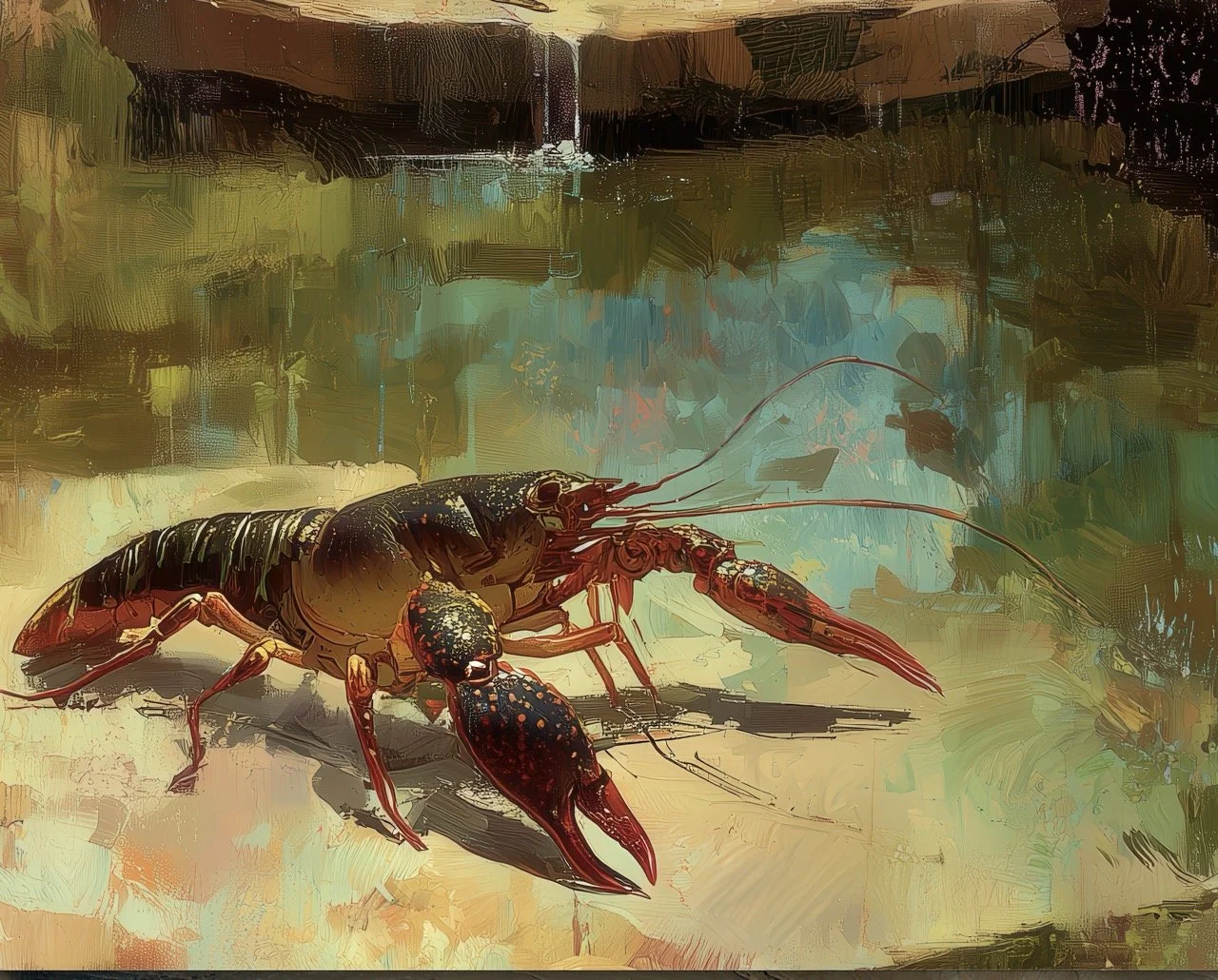
And then there is the crawfish.
Growing up, I called them crawdids or crawdads. Some people call them crayfish. These days, I usually call them crawfish, partly because that name stayed with me through life with Nathan, a trained Cajun and Creole chef. But whatever name they go by, they have always felt like creatures with personality, presence, and a strange kind of drama built right into them.
Positioned out of the water on a bright, heated stone, the crawfish changes the emotional temperature of the entire painting. What might otherwise read as a tranquil landscape becomes something more charged, more intimate, and more dramatic. The crawfish introduces a sense of urgency, vulnerability, and motion paused at a critical moment. It is a small creature, but here it holds enormous presence. Its deep red body cuts through the greens, golds, and watery blues with unmistakable force, becoming the visual and emotional anchor of the composition.
That tension is part of what gives the piece its life.
There is something slightly surreal in the image, not because it leaves nature behind, but because it heightens it. The crawfish feels both fully at home in the world of the painting and briefly, precariously exposed within it. Beauty and danger exist together here. The atmosphere is warm, almost heavy, and the stillness is not passive. It feels as though something is about to happen. That suspended quality gives the painting its dramatic edge and transforms it from a simple nature scene into something more psychological and evocative.
What I love most about this piece is the way it honors an often overlooked subject. The crawfish is not treated as incidental detail, but as a worthy focal point, something vivid and alive within a much larger landscape. It becomes a way of talking about place, fragility, instinct, and survival. It also becomes a way of talking about attention itself, about what it means to really look at the natural world and find meaning in its quieter forms.
The color palette deepens that experience. Moss green, olive, reflective blue, sunlit gold, clay, chestnut, and deep crawfish red create a world that feels grounded, organic, and warm. These are colors that carry memory. They evoke riverbanks, tree cover, worn stone, heat, and the glow of late afternoon. Even with its dramatic center, the painting remains welcoming. It feels rustic, collected, and deeply connected to the land.
As wall art, Crawfish at the Water’s Edge brings more than color to a space. It brings atmosphere. It offers warmth, story, and a little tension beneath the surface. It feels especially at home in dining rooms, lake houses, cabins, restaurants, and interiors that celebrate nature, texture, and a sense of place. It is a piece for those who are drawn to art that feels both beautiful and alive, art that invites a second look and lingers in the mind.
This painting is, in many ways, about that lingering. About the emotional charge hidden inside an ordinary moment. About heat, stillness, and the wild honesty of the natural world.
